

The Pound Rolls Downhill Against the Dollar… How Do We Stop the Snowball?
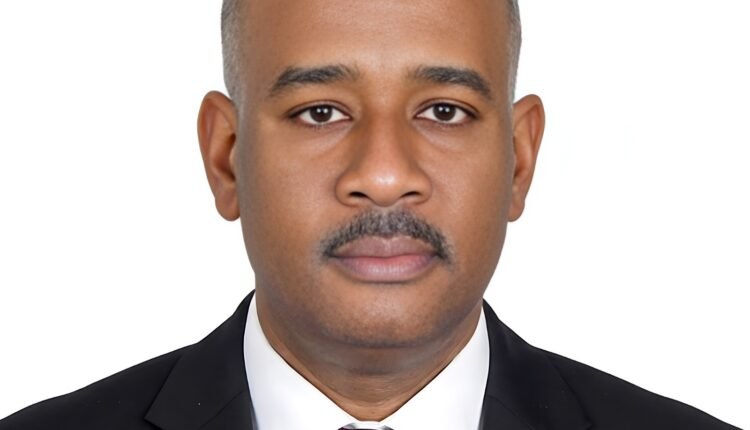
Muhannad Awad Mahmoud
Setting aside the political momentum surrounding the national dialogue, which has begun to rekindle hope among the Sudanese people—and with our sincere wishes that it may lead to comprehensive national consensus—we must now issue an urgent warning about the greatest danger capable of paralysing the state and undermining its institutions: the economy.
The dollar has reached 8,000 pounds, while the dirham has exceeded 2,200 pounds, coinciding with a fuel crisis that requires additional foreign currency to settle the cost of vessels berthed at Port Sudan. If current policies continue at the same pace, it will be difficult to predict how far the dollar’s price may rise.
A clear reading of the course of events shows that the pound’s depreciation is accelerating, while exports and production are declining at a time when demand for foreign currency to finance fuel, medicine, and necessities is increasing. This is occurring alongside the government’s continued borrowing from the banking system.
Every new rise in the exchange rate automatically increases the cost of transport, electricity, food, medicine and production inputs, with citizens paying the price directly.
We spoke repeatedly about the snowball when it was still small, warning against policies and decisions that paralysed exports, encouraged smuggling, weakened production and expanded the parallel market. But the snowball has kept rolling and growing, making it harder and more costly to address today, while some authorities still pursue the consequences instead of tackling the causes.
Who Created the “Paper Companies”?
Arresting currency traders, or those known as “paper traders”, will not resolve the crisis. The state spends money and effort monitoring, pursuing, and arresting them, even though clear banking and commercial regulations could stop their activities within days.
Strict application of “Know Your Customer” (KYC) procedures, together with verification of the beneficial owner, the company’s premises, its employees, the movement of its accounts, and its actual capacity to purchase, store, transport and export goods, would be sufficient to expose paper companies, revoke their licences and prevent them from conducting commercial or banking transactions.
In many cases, a single visit to the company’s registered address might be enough to reveal that it has neither an office nor employees nor any genuine business activity.
But before arresting the “paper traders”, we must ask: who created them and encouraged exporters to resort to them?
Since the dollar exceeded 1,000 pounds, banks have continued demanding that exporters account for old export proceeds calculated at the pre-war dollar rate, when it stood at around 500 pounds. As a result, exporters have been required to cover differences that are economically impossible to bear.
If the Central Bank of Sudan has finally allowed—according to what we have heard—those proceeds to be calculated at today’s screen rate, we can only say: better three and a half years late than never. But how many exporters suspended their activities during those years? How many companies relinquished the use of their own names and commercial histories? How many business owners were forced to resort to “paper traders” or operate under alternative names to escape demands they couldn’t meet?
Before placing the entire responsibility on paper traders, we must acknowledge that misguided decision-making encouraged their activities, destroyed exporting companies, and drove experienced businesspeople with genuine commercial records out of the market.
An Urgent Rescue Prescription
First: Immediate cancellation of all export fees and levies
All fees and levies imposed on exports by central government, states and localities should be abolished for at least one year. We cannot ask exporters to bring foreign currency into the country and then pursue them with dozens of fees and receipts until Sudanese goods can no longer compete.
This decision would reduce export costs, encourage exporters to return, increase export proceeds, and improve the prices producers receive instead of exhausting the value of their goods through fees and levies.
Second: Close the file on pre-war export proceeds
Close this file through a final, fair, and time-bound settlement that ends existing claims based on differences created by previous policies.
The objective should be to return genuine exporters to the market, not to keep them accused indefinitely and drive them to operate again under alternative names and companies.
Third: Cancel taxes for the years 2023 to 2026
Taxes, penalties and estimated claims for the years 2023 to 2026 should be cancelled for companies and establishments affected by the war.
It makes no sense for a company considering returning to Sudan to find the Taxation Chamber waiting with years of claims when it lost its premises or stock, or was forced to suspend operations.
If the state is serious about restoring national capital, it must welcome it through a window for restarting operations—not through seizure orders, claims and penalties. Current policies still make returning to Sudan more dangerous than remaining outside the country.
Fourth: Address murabaha and musharaka debts
The Central Bank of Sudan should instruct commercial banks to arrange long-term settlements for war-affected murabaha debts—potentially extending to ten years—with a genuine grace period proportionate to the scale of the destruction and the suspension of business activity.
As for musharaka arrangements, under which banks demand that clients repay the entire principal because the funds belong to depositors, these must be addressed in accordance with the nature of the musharaka contract, which is fundamentally based on the sharing of profit and loss.
Banks demand that companies protect depositors’ funds, and this is understandable. But the question is: who protects the funds of companies and business owners?
They, too, have lost their factories, warehouses, goods and capital in a devastating war. Yet banks now demand that they repay the money in full, as though nothing had happened.
Profit cannot be shared when things go well, only for the client to bear the entire loss when disaster strikes. Genuine musharaka means sharing both profit and loss, and the Central Bank of Sudan must resolve this issue with fairness and clarity.
Fifth: Immediately halt government borrowing from the banking system
It is impossible to control the exchange rate while the government continues injecting more pounds into the economy to chase a limited supply of foreign currencies and goods. Every pound injected without genuine production becomes fresh fuel for inflation and currency depreciation.
Accordingly, halting government borrowing from the banking system and ending deficit financing is not a theoretical option. It is an essential condition for any serious programme to rescue the pound.
Sixth: Treat gold as a national-security issue
Establish official purchasing windows in production areas, offering competitive prices and operating through swift procedures. Simplify supply and export processes, and provide clear incentives to producers and traders who deliver gold through official channels.
The use of pick-up vehicles—known locally as bakasis—to transport passengers in the states of River Nile and Northern should also be stopped immediately, while alternative transport is provided for citizens.
These vehicles are unsuitable for passenger transport and have increasingly become a means of smuggling and concealing gold amid the movement of travellers. Such a decision would help rapidly narrow smuggling routes and strengthen oversight of gold movements in two of the country’s most important producing states.
Seventh: Establish a genuine economic emergency room
A high-level economic emergency room with limited membership should be established, bringing together the Central Bank of Sudan and the ministries of finance, trade, energy, minerals and agriculture, alongside customs, taxation authorities, the chamber of commerce, and genuine representatives of exporters, producers and banks.
What is needed is not another committee added to the dozens already in existence, but a daily executive room with clear powers, defined deadlines and measurable results.
The current crisis exposes weak coordination among state institutions and the considerable gap between them and the private sector. The private sector is not merely an entity summoned to pay taxes and fees. It is a partner that knows where mistakes occur, which decisions obstruct production and exports, and which measures could quickly restore activity.
The state cannot reform the economy from inside government offices alone.
Eighth: Unify government revenues and strengthen transparency
Bring all government revenues under a unified financial system. No institution should be allowed to retain or spend revenues outside official channels. Reinforce the Ministry of Finance’s authority over public funds, and require it to publish regular reports to enhance transparency and accountability.
The deficit cannot be controlled, nor priorities determined, unless the state knows precisely how much money its institutions collect and how that money is spent.
Ninth: Launch an urgent programme to increase exports within 90 days
Launch an executive programme focused on gold, gum arabic, sesame, livestock, and cash crops. It should identify the problems affecting each commodity, the authority responsible for addressing them, the decision required, and the final deadline for implementation.
We do not need another conference on exports. We need weekly decisions, measured by the volume of goods officially exported and the amount of dollars entering the banking system.
Tenth: Prioritise the use of foreign currency
Direct available foreign currency toward importing fuel, medicine, and agricultural and industrial inputs. In contrast, restrict imports of non-essential goods that drain limited resources without contributing to production.
The Decision Is Now in the Hands of the State Leadership
The problem is no longer the absence of diagnosis or proposals. It is slow decision-making, conflicting policies, and weak coordination and implementation.
We do not need to arrest more traders as much as we need policies that make genuine exporting more profitable than smuggling; make depositing dollars into the banking system more attractive than selling them on the parallel market; and make returning to Sudan safer for investors than remaining outside it.
These are not demands made solely in the interests of businesspeople. They are measures to rescue the pound, secure fuel and medicine, restart factories, create jobs, and protect what remains of the middle class and state institutions.
There is no longer time for further experimentation, committees or partial decisions. What is required is an exceptional economic package issued all at once, with a clear timetable, unified leadership and direct accountability for every authority that obstructs its implementation.
The economy is not managed through security campaigns, the currency is not protected through arrests, and capital does not return under threat. Confidence, production, exports and fair decisions protect the economy.
Rescuing the economy today requires a courageous political decision to halt misguided policies and restore confidence among producers, exporters and banks. Every day that passes without such a package increases the cost of rescue and narrows the space for decision-making.
The ball is now in the court of the state leadership: either exceptional decisions commensurate with the scale of the crisis, or the snowball will continue rolling until it exceeds everyone’s ability to stop it.
Shortlink: https://sudanhorizon.com/?p=18117