

A Committee to Prepare for Dialogue with Mr Dollar!!
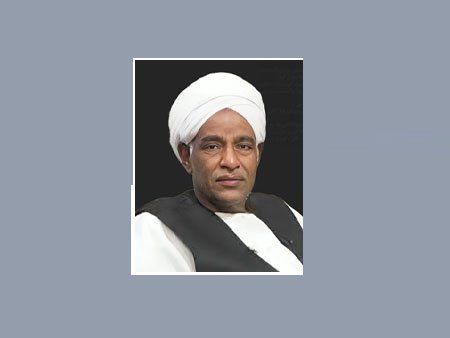
Mahjoub Fadl Badri
Given that the plan of His Excellency Lieutenant General Hemetti Dagalo, chairman of the Economic Committee—which fell with him—had already been revealed in his very first statement: “We are going to wrestle with this dollar like this… either we throw it down, or it throws us down.” Everyone knows the outcome of this alleged struggle. The committee was stillborn; we saw no action from it and heard no sound.
The Bretton Woods Agreement of 1944 also established a global monetary system in which the dollar became the central pillar, assigned a fixed value of approximately 35 dollars per ounce of gold.
Currencies were pegged to the dollar at adjustable rates. Foreign central banks and governments could convert dollars into gold through the US Treasury, so that the dollar would not become a complete substitute for gold. This continued until US President Richard Nixon’s decision on 15 August 1971, which ended the dollar’s convertibility into gold for foreign central banks. The reason was to avoid having to honour conversions of dollars held outside the United States, which had become far greater than American gold reserves. The decision “left the dollar-holding countries holding the bag,” and the Gold Window was closed.
Thus, the Bretton Woods system effectively collapsed. Most major currencies moved to floating exchange rates, and the dollar became a fiat currency, no longer backed by the possibility of being exchanged for gold, following a unilateral American decision.
In 1944, therefore, the United States made the dollar the centre of the global monetary system by linking it to gold.
In 1971, Nixon halted the conversion of dollars into gold. The dollar—whose issuance is the exclusive preserve of the United States—then became the principal reserve asset itself, without gold backing.
In Sudan, the pound was worth more than three dollars—or, in the terminology of Professor Abdullah Al-Tayeb, more than three dalalir. He considered it incorrect to use dollars as the plural of dollar. Those wishing to use foreign terminology should say “dollar–dollars”; those wishing to use classical Arabic should say “dollar–dalalir”.
The dollar subsequently became a commodity in Sudan’s market—“with a price attached to it”—and the phrase “dollar, riyal, cheque, traveller’s cheque” became common in the markets. Currency traders accumulated immense wealth within a very short period.
The national currency’s value gradually eroded, while the dollar’s price rose hysterically until it reached its present level. Without delving into the details and stages, we are facing a fierce enemy and a silent killer coursing lethally through the veins of our economy.
In these circumstances, we must turn towards dialogue with Mr Dollar before he destroys whatever remaining signs of life exist in our national economy, which is lying in a coma in the intensive-care unit.
Our governments’ easiest response has traditionally been to arrest currency traders and put them in prison, or even sentence them to death. Yet these security-based measures have proven ineffective. The Central Bank also issues decrees that define monetary policy from time to time, and the government makes decisions to reduce demand for dollars by banning the importation of certain luxury goods. Taken together, none of these measures has affected the dollar’s continued rise; it simply sticks out its tongue at our economy’s dismal performance and the modesty of our production.
We can change the future, but we cannot change the past. What is gone will not return. Attempts to prevent the pound from sinking into the depths of the dollar’s exchange rate are like trying to hear a spider weaving its web—when, indeed, the frailest of houses is the spider’s house.
Settling for what is merely possible must give way to the boldness of determination to embrace the impossible—and that impossible is production. Through production, we can achieve self-sufficiency and maximise the benefits of our visible and hidden resources in every sense of the word.
This will happen only under the leadership of a bold and decisive government operating according to a carefully considered scientific plan, like the steps of a military march: short and energetic. The country’s resources are sufficient—and more than sufficient. The people, scorched by the flames of high prices after having endured the bitterness of war, are ready to translate the slogan “One people, one army” into practical reality.
Not everyone will carry a rifle and fight alongside the army. Instead, each person will carry a tوريّة or hoe and a sickle for farming, a trowel for construction, a stick for herding, and conviction and faith in pursuing a livelihood. They will carry their children towards education until new horizons open before them, for knowledge lifts the dark veils.
In this way, dialogue with Mr Dollar will take place from strength rather than weakness. We must put our cards on the table and not rely on fantasies that the dollar’s price will collapse without anything being offered in return.
The dollar has become the principal reserve and monetary asset in the global system, while gold remains a reserve asset outside the official system. China is America’s largest creditor, and the relationship between the two countries can be regarded as one of mutual dependence. China needs the dollar market and dollar-denominated assets, while the United States benefits from investors—including China—willing to buy its bonds. Thus, they remain locked in a cycle of shared interests that will not end overnight.
After 1971, America managed to ensure that the world continued using the dollar even though it was no longer convertible into gold. It introduced the “petrodollar system”, through which oil and international trade became dependent on the dollar. Well then—how did that happen?
I certainly do not nominate myself for membership of the Committee to Prepare for Dialogue with Mr Dollar, although I can still recite the twelve-times table! Nor do I understand economics any better than Lieutenant General Kalla, the chairman of the Economic Committee, whose members included the economist and “founding expert” of disappointment and betrayal.
I have neither conditions nor clauses for the dialogue. However, Sudan’s Eve—the mother of scholars and experts in numbers as countless as grains of sand—has produced many such people. Among them, however, are neither the Janjaweed nor the agents whose patriotism remains a silent shadow within them, unable to respond to the nation’s call.
Economic dialogue is better than political dialogue—and both have value.
May God protect the country and its people.
Shortlink: https://sudanhorizon.com/?p=18119