

Sudan’s “Gold Savings Pound”… A Bet on Monetary Stability or Fears of Hoarding?
Sudanhorizon – Hala Hamza
The current exchange-rate problems have prompted banking experts to explore potential solutions that monetary authorities could adopt to help the country emerge from the crisis.
Experts who spoke to Sudanhorizon offered differing views on the feasibility of introducing a gold savings pound. Some oppose the idea, arguing that it would merely serve as a store of value, while supporters see it as the most appropriate sovereign alternative for transforming gold from a commodity used for smuggling and speculation into a secure savings vehicle whose circulation would be confined to the banking system.
Former Assistant Governor of the Central Bank, Abdullah Al-Hassan, told Sudanhorizon that the gold pound would not resolve the exchange-rate crisis because it would merely serve as a safe haven for preserving savings and protecting them against the declining value of the Sudanese pound.
Al-Hassan said the crisis should instead be addressed through specific policies, measures, and regulations, rather than by creating safe havens such as the gold savings pound.
Banking expert Dr. Louay Abdel Moneim, meanwhile, described the gold savings pound as a strategic vision for rescuing the economy from its prolonged structural crises.
He explained that the Sudanese pound has faced increasing pressure since the loss of oil revenues following South Sudan’s secession, as a result of speculation in the dollar market. He stressed that traditional solutions have failed to address the root causes of the monetary crisis.
He noted that this situation has driven citizens, traders, and miners to turn to the dollar as the only means of preserving value, deepening the monetary collapse and undermining public confidence in the banking system.
Dr. Abdel Moneim believes the proposed gold savings pound would constitute a sovereign alternative based on transforming gold from a commodity vulnerable to smuggling and speculation into a secure savings vehicle, with its circulation restricted to the banking system.
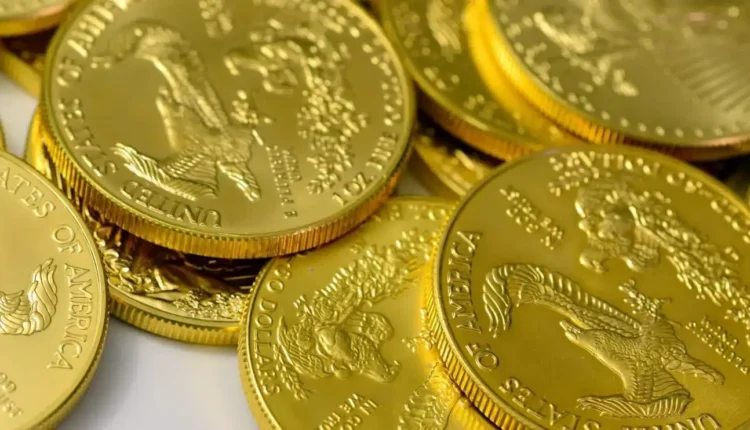
He highlighted its proposed distinguishing feature as a gold unit minted by the Central Bank of Sudan and backed by actual 24-karat gold, with circulation outside banks prohibited except in exceptional circumstances.
He said its pricing would be based on the daily closing price of gold on the global gold exchange and the indicative dollar exchange rate, with smaller denominations, such as 10 and 25 grams, made available to ensure that savings opportunities are accessible to all segments of society.
He explained that expected returns could range between 12% and 17% annually, supported by projections that the price of an ounce of gold could reach around $4,900 by the end of 2026.
Dr. Abdel Moneim stressed that the project could reduce demand for dollars by providing a secure alternative for miners and traders, restore lost liquidity to the banking system, and support national development by allocating a portion of its accounts to financing major agricultural and industrial projects.
It could also provide a large vehicle for collecting zakat on traders’ gold savings, helping reduce poverty and transforming fiscal policy into a tool for achieving social justice.
The expert said the project would go beyond the physical issuance of gold units and move toward creating a gold-backed digital currency using blockchain technology. This, he argued, would ensure full transparency in documenting ownership, a high level of security through tamper-resistant records, and administrative efficiency in liquidation and integration with electronic payment systems.
He stressed that the proposed Sudanese model would be distinguished by its closed system, which would prevent gold from being smuggled out of the country and ensure that reserves remain inside Sudan, unlike some international experiences in which gold was allowed to leave national borders.
Dr. Abdel Moneim pointed to several challenges facing the gold pound and its ability to stabilize the exchange rate, most notably resistance from vested interests, including currency traders and gold smugglers; the lack of firm political will to adopt the proposal since it was first introduced in February 2018; and the need to establish a national gold exchange and a specialized digital-assets unit within the central bank.
He also called for extensive media campaigns to restore public confidence and for the formation of banking alliances capable of confronting forces seeking to undermine the initiative.
He affirmed the project’s importance to banking reform through rebuilding confidence in the banking system and transforming Sudanese gold from an asset subject to depletion into a pillar of monetary stability and comprehensive development. He said its success would depend on a decisive sovereign decision that places the national interest above the influence of speculators and smugglers, giving Sudan a historic opportunity to regain monetary sovereignty through an innovation he described as the first of its kind globally.
For his part, former Chairman of the Capital Markets Regulatory Authority, Dr. Shawqi Azmi, told Sudanhorizon that issuing gold coins, or coins containing a specified amount of gold—ranging from half a gram and one gram to 10 grams—could improve the value of the currency and prevent its value from falling below that of the gold contained in it, thereby protecting it against the effects of inflation through its gold backing.
Dr. Azmi believes, however, that the matter is more complicated in economies suffering from structural imbalances. In such circumstances, gold currency can become a store of value that citizens hoard and withdraw from banking channels, forcing the state to print additional paper currency.
He described circulating gold currency as an imperfect solution to the exchange-rate crisis or other economic crises unless it is accompanied by comprehensive structural economic reform. Such reform, he said, should include increasing production and revenues, preventing smuggling and evasion of the law, curbing unjustified expenditure, and stopping the excessive printing of paper currency in order to improve the value of the national currency.
Dr. Azmi pointed out that a currency’s value improves when other countries demand it in exchange for goods produced using that local currency. This leads to an inflow of foreign currencies, increased revenues, and the coverage of the trade deficit, eventually creating a surplus of revenues over expenditures and automatically leading to a significant improvement in the exchange rate.
The expert believes that the best way to utilize gold is through minting it into coins or using digital currencies backed by gold reserves under the supervision of the central bank.
Shortlink: https://sudanhorizon.com/?p=17808