

From Financing Consumption to Financing Production: How Can Money Become an Engine of Recovery?
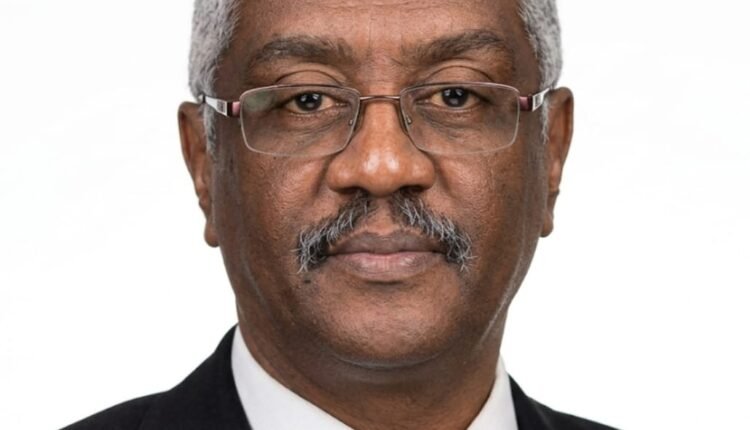
Nu’man Yousif Mohamed
In the previous articles in this series, we began with the household’s struggle with inflation, then moved on to diversifying income, saving and investing in skills, before arriving at a broader question: how do we move from a survival economy to a recovery economy?
But recovery cannot be built on aspiration alone. Production requires resources; a business needs capital; a farmer needs inputs; a craftsman needs equipment; and the owner of a small enterprise needs financing to move beyond mere survival toward growth.
This is where finance comes in.
But the question is not simply: Is money available? The more important question is: Where does the money go, and what does it produce?
Not All Money Finances Development
Money can be directed towards consumption, with its impact ending when the spending is over. Alternatively, it can be invested in productive activity, becoming machinery, raw materials, or working capital, and then returning as sales, income, and employment opportunities.
This is the fundamental difference between money that finances consumption and money that finances production. When a farmer receives financing to buy agricultural inputs, a craftsman buys a machine that increases productive capacity, or a small-business owner uses financing to expand their operation, the money does not simply disappear once spent. Instead, it sets a new economic cycle in motion, generating value and income and potentially creating additional jobs.
By contrast, when financing is directed towards expenditure that does not create new productive capacity, its economic impact is generally temporary, however important that spending may appear at the time. This does not mean that consumer finance is illegitimate or unnecessary in every circumstance. It means, rather, that a recovery economy needs production as the principal destination for investable resources.
Finance Cannot Create a Business Out of Nothing
It is easy to regard a lack of money as the main obstacle facing any business. Yet money alone does not create a successful enterprise.
A business first needs a viable idea, a genuine market, skills, sound management, and the ability to control costs and risks. Finance then gives these elements the capacity to operate and expand.
The best financing, therefore, is not necessarily the largest, but the financing that fits the business. A farmer needs finance linked to the agricultural season; a shopkeeper needs finance suited to the speed at which stock turns over; and a craftsman buying productive machinery needs a repayment period that lets the investment generate returns before instalments begin to put significant pressure on the business.
Matching the amount, duration and cost of finance to the nature of the activity may therefore be more important than simply obtaining a loan.
From Financing the Customer to Financing the Activity
This is where the importance of microfinance becomes particularly clear, especially in an economy with a broad base of small enterprises and individual businesses. Many owners of such activities may not have substantial collateral, but they do have skills, experience, a market, and the ability to generate income.
The challenge for financial institutions is not merely to reach these people, but to understand who needs finance, what it is needed for, on what terms, and how the business can succeed once the financing is provided.
This requires a shift away from the traditional view of the customer as merely a credit file towards a broader perspective that sees behind the file a business, a cash-flow cycle, a market and a value chain.
It also requires developing assessment tools that rely more heavily on cash flows, data, and the business’s financial record, rather than on traditional collateral alone.
Most importantly, microfinance success should be measured not by the number of loans disbursed, but by what those loans have generated in production, income, employment, and business sustainability.
The Bank as a Partner in Recovery
If finance is one of the keys to recovery, banks will be at the heart of this process. Yet a bank’s role should not end with providing finance and collecting instalments.
The most influential bank understands the economy’s different sectors and their needs, designs products suited to the nature of different activities, reduces the cost of accessing financial services, and helps producers reach markets.
A farmer does not need only a loan; they need inputs, market access and information. A craftsman does not need only a machine; they need suppliers and buyers. A small business does not need only capital; it needs an environment that enables it to survive and grow.
This is where a financial institution can become a partner in economic activity, rather than merely its financier.
Saving Starts the Cycle
Finance and saving should not be viewed as two separate tracks. Saving is one of the most important sources of capital formation, and small savings, when pooled within the financial system, can become resources for financing larger investments.
A household that controls its spending and saves part of its income builds a reserve for the future. A business that reinvests part of its profits increases its capacity to grow. Financial institutions that mobilise savings and redirect them towards productive activities help transform scattered resources into economic strength.
Thus, the cycle begins with financial awareness and sound income management, followed by saving, investment and production. Returns from production then come back as new income that can be saved and invested again.
This is the cycle that we need to build on a much larger scale within a recovery economy.
Finance Moves Through the Economy
The impact of productive finance does not stop with the business owner. When a small enterprise expands, it may buy more raw materials from a local supplier, hire additional workers, use transport, storage, and marketing services, and then sell its products to consumers.
The impact of financing therefore moves from a single enterprise to a network of economic activities.
Its impact may be even greater when local production replaces imports, when an enterprise adds value to locally sourced raw materials, or when it opens a market for other producers.
The question about finance should therefore not be only: How much have we financed? It should also be: What has this financing set in motion?
Value Chains Make Finance More Effective
This is why finance needs to be viewed through the lens of value chains.
Financing a farmer alone may not be enough if inputs, storage, transport or market access are unavailable. But when financing is linked to these stages, it becomes better able to stimulate the entire economic activity.
For example, agricultural production finance can be linked to the provision of inputs, followed by collection, storage, processing and marketing. Finance then ceases to be merely a loan to an individual and becomes a tool for activating an integrated economic chain.
This approach could be particularly important for Sudan, where extensive resources and productive potential exist but are often constrained by weak links between production and markets.
Technology Opens the Door to Broader Access to Finance
Digital transformation can help address part of this challenge. Digital transactions reduce time and costs, help businesses build financial records, provide better cash-flow data, and enable financial institutions to reach customers previously beyond the reach of traditional tools.
In microfinance, digital data can improve risk assessment and enable institutions to offer more suitable products.
Technology, however, is not an end in itself. Its true value lies in making finance easier, faster, less costly, and better able to reach genuine producers.
Finance Is a Shared Responsibility
Expanding access to finance does not mean ignoring risk. Poorly assessed financing can lead to customer default, weaken the financial institution and undermine savers’ confidence.
Conversely, providing a business with more financing than it can productively deploy or repay can turn a growth opportunity into a source of distress.
The financier therefore needs a genuine assessment of the business, its cash flows and its risk indicators, while the recipient must use the financing for its intended purpose and manage it responsibly.
Successful finance is ultimately a partnership in responsibility between the financier and the beneficiary.
Sudan Needs Money to Move in the Right Direction
During the recovery phase, Sudan does not simply need more money; it needs better allocation of the resources already available.
We need a culture that sees finance as a means of building income, rather than simply a means of obtaining cash. We need financial institutions to see customers as partners in economic activity, rather than merely numbers in a lending portfolio. And we need policies that encourage finance directed towards production, value addition and employment.
An economy does not recover merely because money is injected into it. It recovers when that money is transformed into genuine economic activity.
From Money to Value
Ultimately, the issue is not money alone, but what we create with it.
Money that becomes productive machinery is not the same as money spent on temporary consumption. Finance that increases a farmer’s output is not the same as finance that adds nothing to productive capacity. And a loan that helps a small business grow and create a new job has an impact extending beyond the business itself to its owner’s family, suppliers, employees and market.
The future of finance must therefore become linked to the future of production.
When finance becomes production, production becomes sales; sales become income; income creates the repayment capacity, saving and investment; and a new cycle of economic activity begins.
This Is Where Money Becomes a Force for Recovery
The first stage was survival. Then came the stage of building financial capacity. We subsequently began discussing production and the creation of value.
The next stage is to bring these elements together in a single system in which finance becomes a means of mobilising resources, skills and ideas towards production.
Economic recovery does not simply require more money. It requires money that knows its way to production, production that knows its way to the market, and income that can once again become saving and investment.
Only then can we make the genuine transition from an economy that consumes what it has to one that invests what it has and uses it to build its future.
Former Banker – Institutional Development Consultant
Shortlink: https://sudanhorizon.com/?p=17593