

Hold Amina Accountable for Her Decisions — Not Her Salary
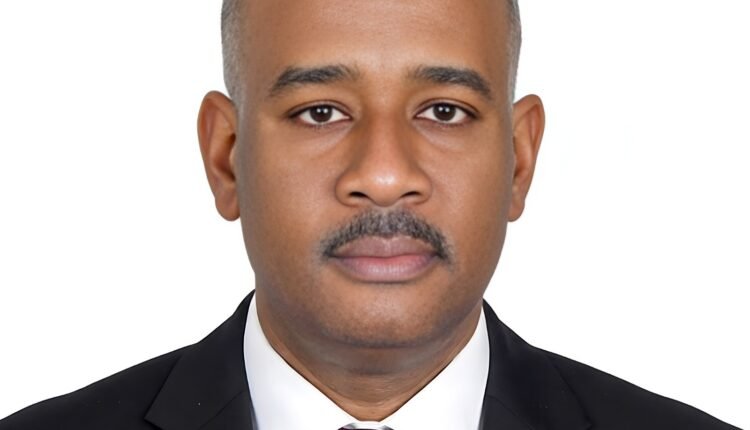
Muhannad Awad Mahmoud
Reports about the salary and allowances of Amina Mirghani, Governor of the Central Bank of Sudan, have sparked widespread controversy. Yet they have also exposed a growing flaw in the way we approach public affairs: shifting from discussing policies to personalising issues, and from holding an official accountable for their decisions to putting the individual on trial.
The press has every right to ask about the Governor’s salary, and citizens have every right to know who determined it, on what legal basis, and whether the figures being circulated regarding her allowances are accurate and officially approved. But it is not acceptable to present the salary as though Amina herself had decided on it, and then use it alone as evidence of corruption or incompetence.
Thus, instead of discussing monetary policy, export earnings, and gold, the Governor’s house rent becomes more important than the bank’s performance, and the price of her dress more intriguing than the exchange rate.
A central bank governor does not draft her own appointment contract or set her own salary. If the figures being circulated are inaccurate, the Central Bank should refute them. If the allowances are unlawful, accountability should begin with the authority that approved them. But if they were legally authorised, what fault lies with the Governor for receiving what the state has determined she should receive? Is she expected to demand a reduction in her own salary simply to satisfy public opinion?
A central bank is not an ordinary government department. It manages the national currency, supervises banks, oversees foreign exchange, gold and payment systems, and its officials handle information and decisions worth billions of dollars. At the same time, regional and international banks and companies can attract its skilled personnel by offering several times what the state pays.
This is why the philosophy behind relatively high salaries at central banks is to attract and retain expertise, protect institutional independence from conflicts of interest and undue inducements, and compensate officials for professional restrictions that prevent them from engaging in other activities. But high remuneration must be matched by rigorous selection, measurable performance, full transparency and complete accountability.
Comparing the Governor’s salary with that of a teacher, doctor, or soldier is emotionally powerful, but it is not an economic solution. The problem is not necessarily that the Governor earns too much; rather, teachers, doctors, and soldiers may earn too little to live with dignity. The solution is not to equalise everyone in poverty, but to reform the wage structure and improve purchasing power.
Amina Mirghani took office in October 2025, amid war, economic contraction and widespread destruction of the banking infrastructure. Despite her short tenure, she has taken several institutional steps that should not be overlooked.
Most notably, the Central Bank of Sudan returned to operating from Khartoum. This represented an important step towards restoring the capital’s role as the country’s financial centre, preparing the banking system for its gradual return to the capital, and moving progressively from managing a wartime economy towards economic recovery.
A significant technical achievement was also realised when Electronic Banking Services (EBS) was accredited as the first authorised service bureau for the SWIFT network in Sudan, and one of only five such bureaux across the Middle East and Africa, with 26 banks connected through its infrastructure. This accreditation’s importance extends beyond its technical dimension. It also strengthens the security of banking messages and transfers, raises compliance, and supports efforts to reconnect Sudanese banks with the international financial system.
The Central Bank also put the National Instant Payment System project out to public tender for qualified companies, aiming to accelerate transfers, reduce reliance on cash, and develop digital banking services.
It further directed banks to update customer information and classify accounts in accordance with regulatory requirements and anti-money-laundering and counter-terrorist-financing rules. These measures are essential to protect depositors’ funds and improve prospects for restoring relationships between Sudanese banks and their counterparts and correspondent banks abroad.
At the international level, the Governor restored Sudan’s representation at major financial meetings. He addressed the International Monetary Fund meeting in Washington, calling for the resumption of Article IV consultations, the revival of the process for Sudan’s debt relief, and technical and financial support for the recovery phase.
These are institutional achievements to which an entire team contributed. Still, they took place during her tenure, and it is only fair that they be recorded, just as any shortcomings or concerns regarding performance should also be recorded.
Defending Amina Mirghani over her salary does not mean granting her immunity from criticism. The Governor of the Central Bank must have her policies and decisions subjected to scrutiny by the press and the public, because they affect the currency, prices, the banking sector and the daily lives of citizens.
But let us hold her accountable for what she has done and for the results of the decisions she has made — not for a salary she did not set for herself.
A debate that examines policies through figures and evidence helps build a state. One that pursues individuals instead produces plenty of noise… and very little truth.
Shortlink: https://sudanhorizon.com/?p=17513