

Netanyahu Swallows His Tongue… Three Scenarios Await the Gaza Agreement
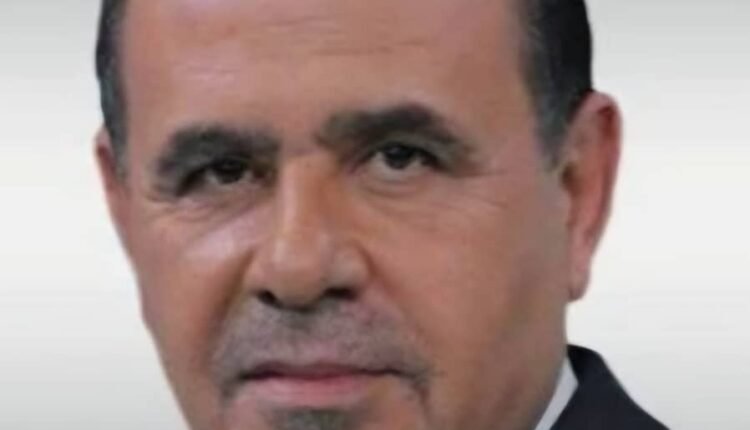
Oraib Al-Rantawi
Adviser and Founder of the Al-Quds Centre for Political Studies
It is, in essence, an “agreement to implement the agreement”. Some describe it as a “road map” for translating Trump’s twenty-point plan into practice—a plan that, shortly after its announcement, is expected to be transformed into UN Security Council Resolution 2803.
The mediators welcomed it, Donald Trump celebrated it as a “historic agreement”, and the resistance factions accepted it, albeit accompanied by their own interpretation—one infused with considerable suspicion regarding Tel Aviv’s intentions and a justified fear of manoeuvring, evasion, backtracking and relapse. These, after all, have been recurring features of the long and bitter Palestinian negotiating experience with an adversary that has often treated agreements and treaties as little more than brief intervals between two wars.
We would call it an “agreement of necessity”. There is much in its provisions and details that we do not celebrate, even if we are compelled to swallow them, for three reasons.
First, the overriding priority is to stop the war of extermination and ethnic cleansing that is approaching its third year.
Second, there is an urgent need to alleviate the daily humanitarian suffering of 2.3 million Palestinians in Gaza, who have long endured terror, starvation, and acute shortages of water and medicine.
Third, if implemented, the agreement would obstruct Israel’s darker objectives of perpetuating occupation, restoring settlements and imposing forced displacement.
As we follow the voices and emotions of Gaza’s bereaved and devastated population, broadcast live on television, we share the intense longing of its men and women, older adults and children for even a brief opening of hope and relief—for the war actually to end on the ground, not merely on paper.
At the same time, we share their caution and apprehension about what the coming days may bring, including the familiar Israeli propensity to escalate attacks, killing and destruction. Their anxiety is both understandable and justified in light of an adversary that has repeatedly manoeuvred around commitments and evaded implementation.
Official Israel still maintains something close to a deathly silence regarding what has been announced in Washington and the capitals of the mediating countries. Its most extreme right-wing factions are loudly expressing rejection, threats and warnings. Its prime minister, unusually, has swallowed his tongue, while its army—among the most degraded rather than the most moral in history—continues to kill, destroy and expand the boundaries of its yellow and orange lines.
The Crux of the Matter
The decisive word determining the direction of the Israeli position will come from one man alone: US President Donald Trump.
He chairs the Peace Council. He is the author of the initiative. And he is the figure who has celebrated it most loudly.
He alone may be capable of striking the rock of Israeli intransigence hard enough to split it in two. This is the crux of the matter: will Trump do so and throw his full weight behind his own initiative? Or will the familiar pressure groups and lobbies have other ideas, restraining him before he reaches the finish line and killing the agreement in its infancy?
Netanyahu understands, as we do—and perhaps more than we do—Trump’s need for an achievement here and a success there to ease the burden of his frustrations over the straits, Iran, energy wars and maritime navigation.
During his latest visit to Washington, Netanyahu observed the rules of hospitality. At the White House, which he entered through a back door, he did not dare present another “plan for winning the war against the leader of the axis of evil”. This time, no one would have listened. They listened before, and the results are there for all to see.
He contented himself with gestures and hints, and was pleased that Trump did not apply greater pressure on him over Gaza, Lebanon and Syria. Yet Netanyahu knows in his heart that he has already been subjected to sufficient pressure to curb his appetite for war against Iran, and that further pressure on additional fronts may exceed his capacity to withstand politically.
Has he begun to realise that he has become a burden on the occupant of the White House? And that Trump may be eagerly awaiting the first available electoral opportunity to rid himself of that burden?
It is true that Netanyahu now understands more clearly than ever that the “American rope extended to him has become shorter”. Yet he has not raised the white flag, nor will he accept the new agreement exactly as written.
He will not give Trump a provocative “no”, thereby deepening the President’s frustration and anger. But nor will he offer an unequivocal “yes”.
Instead, he is likely to draw inspiration from earlier Likud leaders—particularly from the era of Ariel Sharon—by accepting the “road map” while loading it with reservations and conditions, perhaps exceeding even its fourteen clauses, each one potentially sufficient on its own to undermine the agreement altogether.
He will interpret every provision in ways that serve the objectives of the war of cleansing, extermination and displacement. He will place disarmament at the top of the road map and insist that it constitute the starting point for implementation.
He will make life intolerable for those responsible for monitoring and verifying compliance. He will obstruct withdrawal until the final possible moment, even if withdrawal is gradual and based on a “step-for-step” formula.
That is Netanyahu. That is Israel’s fascistic right. And our accumulated experience with this state should be more than sufficient to prevent us from being bitten by the same snake hole again and again.
Between Two Agreements
It took ten months to implement the agreement reached last October—ten months of what might be called a “low-intensity war”, yet one that remained devastating to people, trees and buildings throughout Gaza.
During that period, more than 1,220 Palestinians were killed and 3,380 wounded. The occupation expanded by absorbing an additional 17 per cent of the narrow, densely populated territory.
Israel permitted the entry of only around one-third, or slightly less, of the humanitarian aid that had been agreed upon.
Meanwhile, recovery, shelter and reconstruction efforts remain at virtually zero. Gaza’s hospitals continue to suffer from severe shortages of medicines and equipment. Water is scarce, food is difficult to obtain, and disease is spreading through the territory and killing its people.
What Netanyahu may refrain from saying publicly, for fear of rupturing his relationship with the Trump Administration, he will express through actions on the ground.
As for justifications and pretexts, there will always be plenty available “on demand”, as our Lebanese brothers and sisters say.
Perhaps the people of Gaza’s awareness of this bitter reality—a lesson learnt in the hardest possible way—explains why their relief is accompanied by apprehension and restraint. It may also explain the caution surrounding the positions of Palestinian factions and Hamas’s clarifications and interpretations of the new agreement.
Will this agreement, this time, find a safe and open road towards implementation, and will that implementation work in both directions?
In my view, the Palestinian side appears genuinely committed to the agreement. It would not have swallowed such a poisoned chalice before signing had it not been acutely aware of the immense suffering endured by the society that sustains it.
It would not have accepted something so bitter except to avoid something even more bitter.
The plan to liquidate the Palestinian cause, with objectives that are now openly proclaimed and that hardly anyone in Israel bothers to conceal, makes the search for a “moment to breathe” an existential necessity after an unequal war unparalleled in recent history.
That war has also exposed some of the darkest chapters of abandonment, betrayal and complicity by those who share the Palestinians’ homeland, Arab identity and religion.
But what about the other party to the agreement, which has yet to declare its position?
Israel is approaching the deadline of 27 October. Will Netanyahu, his party, his coalition and his government permit themselves to offer “free gifts” to an opposition camp lying in wait, especially when Netanyahu and his coalition are teetering between electoral defeat and a crushing defeat, with only around two months or slightly more until the election?
After the election, Israel will require several months to form a new government. During that period, Netanyahu and his cabinet would continue in a caretaker capacity, armed with a formidable excuse: a transitional government cannot take major, decisive decisions.
Given the delicate internal balance of power, the opposition bloc may win more seats in the 25th Knesset, yet still fall short of the number required to form a new or stable government.
Israel could therefore again enter the cycle of early elections—a country that has already held a record number of elections within a relatively short span of years.
This means, among other things, that an Israel unwilling to implement such an agreement—whether under the present government or, incidentally, under the current opposition—may also find itself unable to do so.
The absence of both willingness and capacity places a large question mark over the prospects of turning the agreement into reality, even before considering any new developments arising from the region’s multiple open crises, the American war against Iran, and the intensifying struggle over seas, straits and maritime corridors.
This does not mean that the agreement was necessarily stillborn, or that every route towards implementation has already been closed before being opened.
Rather, it is a realistic and rational approach intended to warn against raising expectations too high, promoting illusions, or celebrating a harvest before the fruit has ripened.
Three Scenarios
Reading the agreement alongside the circumstances surrounding it leaves us with three possible scenarios for the near future.
First Scenario: Full Implementation
This is the scenario most favourable to the Palestinians and least compatible with Israeli preferences.
It would involve moving the agreement into genuine implementation, with the Trump Administration placing sufficient political weight behind it, encouraging compliance and working actively to remove obstacles.
Trump has an interest in achieving a tangible success on this front. The question is whether he is prepared to invest sufficient effort and pressure to secure it.
Do the mediators—and behind them the “Group of Eight”, which acted as the legal midwife bringing Resolution 2803 out of the womb of the twenty-point initiative—and beyond them the global Peace Council, which Trump has described as the most important and highest-level body of its kind in history, collectively possess the ability to enforce respect for the agreement and turn it into reality?
I believe this scenario has a chance, but not a particularly strong one.
Second Scenario: Slow Death from Within
Under this scenario, Tel Aviv would work to destroy the agreement from within through a process of “slow death”.
It would hollow out its substance, burden it with reservations and verification procedures, procrastinate over implementing every clause, repeatedly delay, or implement only the absolute minimum.
This would closely resemble what Israel did with the previous agreement ten months ago.
Gaza’s overall situation would therefore remain broadly unchanged, with perhaps limited progress here or a modest opening there, but without altering the essential reality.
I believe this is the most likely scenario.
Third Scenario: Explosion and Return to Full-Scale War
The third possibility is an explosion and a return to large-scale war, driven by the belief that Palestinians have little left to lose beyond their hunger and thirst, while the other side may again seek to satisfy its appetite for killing and destruction.
Such a scenario could also be connected to wider developments and shifts in the region that might encourage attempts to settle several fronts militarily at once.
This would be an extremely bad scenario. Yet if Gaza’s present conditions continue unchanged, it may no longer necessarily be perceived as the worst possible outcome.
In my assessment, however, the likelihood of this scenario remains lower than that of the previous two, for numerous reasons that neither the space nor the scope of this article permits me to explore in detail.
Oraib Al-Rantawi
Adviser and Founder of the Al-Quds Centre for Political Studies
Shortlink: https://sudanhorizon.com/?p=16782