

The 2026 Agricultural Season: Are We Farming for the Harvest or for the Economy?
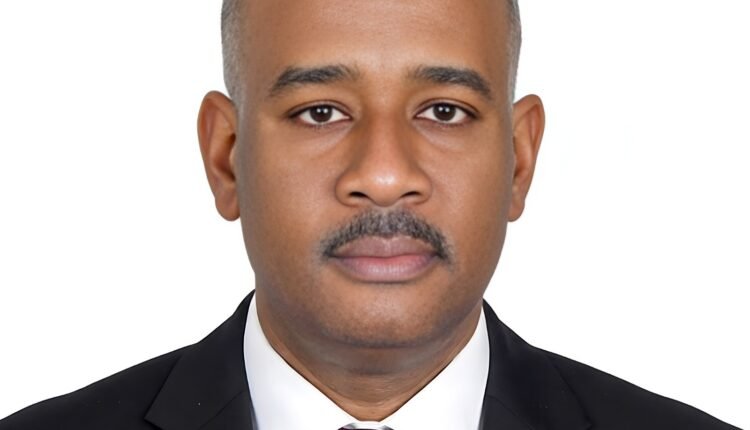
Mohand Awad Mahmoud
The success of an agricultural season does not depend solely on rainfall or the volume of financing. It depends on timely decision-making, efficient planning, and the state’s ability to manage agriculture as an integrated economic enterprise rather than merely a production season.
Every year, as the rainy season begins, attention turns to the targeted cultivated area, the quantities of seed to be distributed, the volume of financing, and rainfall forecasts. Once the season ends, its success is measured by the number of feddans cultivated or the volume of production achieved, before the same cycle is repeated the following year. Yet the real question is this: are we cultivating crops to secure a harvest, or to build a stronger and more resilient economy? That is the question that should shape the 2026 agricultural season.
The efforts being made by the state to ensure a successful agricultural season cannot be denied. On 9 July, a meeting was held at the office of the Minister of Finance, attended by the Governor of the Central Bank of Sudan and several commercial bank managers, led by the Agricultural Bank of Sudan. During the meeting, the establishment of a joint banking portfolio to finance the summer agricultural season was announced. The Central Bank committed to contributing 20 per cent of the portfolio, while the Agricultural Bank of Sudan pledged three trillion Sudanese pounds, alongside contributions from other commercial banks. This is a welcome step, reflecting the government’s recognition of the importance of the agricultural season at this critical stage.
The crucial question, however, is not the size of the financing but its timing. Agriculture differs from most economic activities because time itself forms part of the capital invested. Every day that financing is delayed represents not merely lost time, but lost productivity that can never be recovered. Delayed financing postpones land preparation, the purchase of agricultural inputs, and planting operations. In some regions, it may even result in the loss of part of the growing season altogether. Consequently, the success of any financing facility should not be measured by the amount of money announced, but by how quickly it reaches farmers, how straightforward the procedures are, and whether it enables them to plant at the optimal time.
This highlights a truth that is too often overlooked: the agricultural season does not begin when the rains arrive, but when the right decisions are made at the right time. Before farmers head to their fields, the agricultural plan should already have been finalised, financing secured, inputs delivered, and the responsibilities of the various institutions clearly defined. If decisions come only after the season has begun, they represent an attempt to catch up with time rather than to plan for it.
Even so, financing alone, regardless of its scale, cannot guarantee a successful season. It may enable crops to be planted, but it does not ensure harvest quality, open export markets, add value to agricultural products, or convert production into genuine economic returns. For decades, Sudan has measured the success of its agricultural seasons by the number of cultivated feddans. In contrast, successful agricultural economies measure success by productivity, export value, and the contribution each cultivated feddan makes to the national economy.
This way of thinking must change. Instead of asking only, How much will we cultivate?, we should ask, What will we cultivate? For whom? And what economic return can each crop generate? Global markets do not purchase everything we produce; they buy what they need, to the specifications they require and at the quality standards they demand. Planning for each agricultural season should therefore begin with an assessment of market demand, after which agricultural plans, financing and inputs should be directed towards crops that generate the highest economic value while continuing to safeguard national food security.
The time has also come to move beyond financing production alone towards financing the entire agricultural value chain—from seeds and agricultural inputs through harvesting, storage, transport, processing and export. The true value of agriculture is created not only in the field but also through everything that is added to the crop after it is harvested. A farmer may produce an excellent harvest, only to lose much of its value because of inadequate storage facilities, high transport costs, a lack of processing capacity, or poor marketing.
Sudan possesses fertile land, abundant water resources, climatic diversity and extensive agricultural expertise. More than anything else, however, it requires an economic vision that treats agriculture as a national engine of growth rather than simply another seasonal activity repeated year after year in the same manner. What is needed is not merely an agricultural plan but a comprehensive economic strategy that identifies production priorities, target markets and expected returns, while linking financing to production, production to value addition, and value addition to exports.
If the 2026 agricultural season succeeds, it will not be because rainfall was favourable, but because the right economic decisions were taken at the right time. Conversely, if those decisions are delayed, even the most abundant rains will not compensate for the lost time. Nature may grant us a good growing season, but a strong economy is built not by nature alone, but by sound decisions taken when they matter most.
Shortlink: https://sudanhorizon.com/?p=16661