

Consumers Without Creation: The Ummah at a Standstill
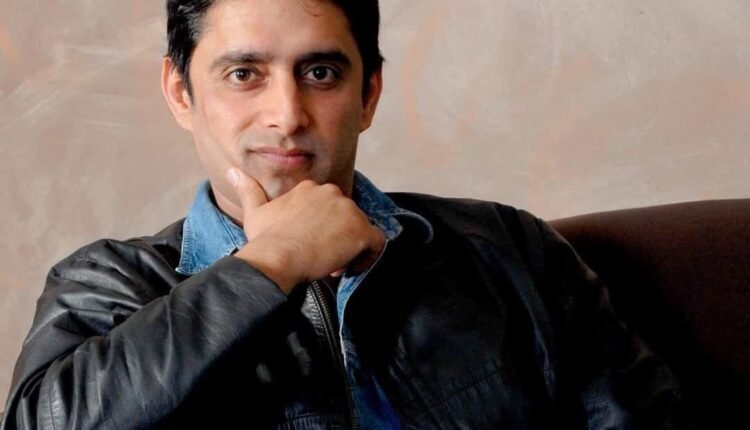
By: Salim Mohamed Badat **
There is an uncomfortable truth we must confront, one that many of us feel but few are willing to articulate plainly. Today, Muslims are among the biggest consumers of the world’s products, technologies, and systems, yet we are the creators of almost none of them.
We consume endlessly, passionately, even obsessively, but we invent little, produce little, and contribute very little to the intellectual and technological direction of the modern world. This is not a judgment meant to humiliate, but a diagnosis meant to heal.
From Builders of Civilisation to Passive Consumers
There was a time when Muslims were pioneers of civilisation. Laboratories flourished in Baghdad, Cordoba, Cairo and Damascus. Muslim minds gave the world algebra, algorithms, optics, medicine, astronomy, architecture and philosophy. We were farmers who mastered irrigation, traders who shaped global commerce, and scholars who preserved and expanded human knowledge.
Today, however, the situation is painfully reversed. As my dear friend and elder once said with piercing clarity:
“We left the laboratories of the world, the fields of the world, and went to the musalla and the tasbeeh.”
That statement captures our crisis perfectly. Somewhere along the way, we lost balance. Worship became detached from responsibility. Spirituality became divorced from productivity.
The musalla remained full, but the laboratories emptied. The prayer rows stayed straight, while our engagement with the real world became crooked and fragmented.
Yet this was never the Quranic vision. Allah reminds humanity: “He has produced you from the earth and settled you in it.” (Quran 11:61)
The Quran presents humanity as builders and cultivators of the earth. Our task is not merely to inhabit the world, but to develop it, improve it and fulfil our trust as Allah’s vicegerents.
The laboratory, the workshop, the farm and the marketplace are not outside the scope of worship; they are among the very places where worship is lived.
The Hypocrisy of Our Relationship with Technology
We often hear Muslims frowning upon “the world”, condemning modernity, technology and innovation as distractions or corruptions. And yet, look into our pockets.
The smartphones we carry were not designed by us. The software we scroll through was not coded by us. The cars we drive, the medical machines that keep us alive, the platforms we use to preach and criticise the world, all of them were built by others.
We rail against technology in our sermons, yet we are among its most loyal customers. We boycott selectively, complain loudly and consume relentlessly.
This contradiction exposes a deeper problem: we want the benefits of the world without accepting the responsibility of shaping it. Consumption without contribution is not neutrality, it is dependence.
How Did We Get Here?
Our stagnation did not happen overnight. It came from a mindset that misunderstood religion itself.
We slowly adopted the idea that piety means withdrawal. That the dunya is inherently evil rather than a trust. That knowledge outside of religious ritual is suspicious. That asking how things work is less important than arguing endlessly about who is right.
In doing so, we reduced Islam from a civilisational force into a ritual identity. We focused on preserving forms while neglecting purpose.
We memorised texts but abandoned inquiry. We spoke about the Golden Age while refusing to replicate the discipline, curiosity and courage that created it.
Allah never commanded Muslims to choose between the musalla and the laboratory. He demanded balance. In fact, Allah commands: “And say, ‘Work, for Allah will see your deeds, and so will His Messenger and the believers.'” (Quran 9:105)
The Quran does not command believers to retreat from the world. It commands them to work. Prayer without action is hollow, and action without ethics is dangerous.
The Prophet (saw) prayed deeply and built a society. His Companions worshipped sincerely and transformed the world through knowledge, justice, commerce, governance and service.
The Consequences of Creative Emptiness
When a people stop creating, they lose power. When they lose power, they lose dignity. When they lose dignity, others define them.
This is why Muslims today are talked about, studied, managed, sanctioned, monitored and “handled”, but rarely listened to. We import not just technology, but narratives, values, economic systems and political frameworks.
We consume culture rather than producing it. We react to events instead of shaping them. And perhaps worst of all, our youth inherit this confusion. They are told to be proud of a past they had no hand in building while being given few tools to build a future of their own.
Returning to Balance
The solution is not abandoning the musalla. Nor is it blindly imitating the world. The solution is reclaiming balance.
We must return to being a people who worship and work, who pray and produce, who bow to Allah while standing firmly in the world.
We must raise children who see science, engineering, agriculture, medicine and technology as acts of worship when pursued with sincerity, excellence and ethical purpose.
But renewal begins with us. Allah declares:
“Indeed, Allah will not change the condition of a people until they change what is within themselves.” (Quran 13:11)
Civilisations are not rebuilt through nostalgia. They are rebuilt through faith that inspires effort, knowledge that produces benefit and communities committed to excellence.
Until Muslims return to creation, not just consumption, we will remain trapped in nostalgia, mistaking remembrance for relevance.
Faith was never meant to make us spectators of history. It was meant to make us its responsible authors.
** Salim Mohamed Badat
Writer exploring the intersection of faith, politics and justice
Shortlink: https://sudanhorizon.com/?p=16298