

Ministry of the Interior: A Smart Media Move in the Post-War Period
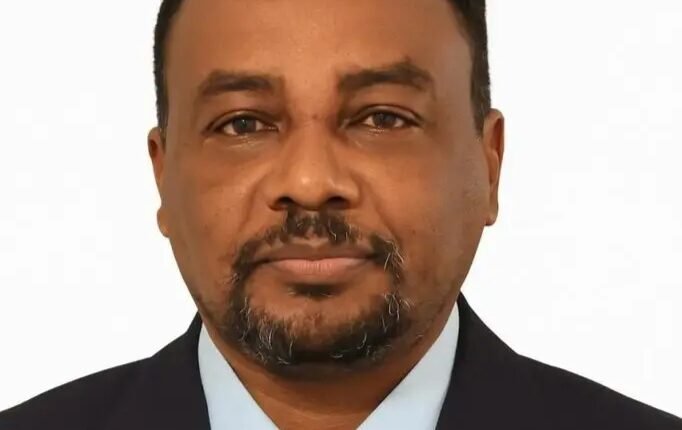
By Police Brigadier (Retired) Omar Mohamed Othman
Towards Security-Focused Media Diplomacy in Support of Recovery and Reconstruction
The Police Press Office published a report on a meeting between the Minister of the Interior, Police Lieutenant General and Legal Adviser Babiker Samra Mustafa, the Director-General of the Police Forces, Police General and Legal Adviser Amir Abdel Moneim Fadl, and a visiting Saudi media delegation, in the presence of a number of senior police officials.
According to the report, the Minister of the Interior briefed the delegation on recent security developments and on the efforts made by the Ministry and the Police Forces to support the Armed Forces during the campaign to restore the state. He also reviewed the subsequent redeployment of police personnel, the reopening of police departments and stations, and the resumption of public services, all of which have helped strengthen security and create conditions conducive to citizens’ return.
The significance of this report lies not only in the meeting itself, but also in its timing and like the delegation. Security officials commonly meet security or diplomatic delegations. Receiving a media delegation, however, particularly one from the Kingdom of Saudi Arabia, sends a clear message that Sudan has begun to recognise that the post-war struggle will not be fought by force of arms alone, but also by winning the confidence of domestic and international public opinion.
The war Sudan has endured was as much an information war as it was a military one. In its early stages, the militia succeeded to a considerable extent in imposing its own narrative across many media platforms, while the official media was slow to present the state’s account.
Today, after regaining the initiative on the ground, it has become necessary to regain the initiative in the media as well. The public image of any country influences politics, the economy and investment just as much as realities on the ground do.
Sudan is now preparing for reconstruction and investment attraction. Neither objective can be achieved without a secure environment and an image of stability in the minds of investors and partners. The messages delivered by the Ministry of the Interior’s leadership to the Saudi media delegation were therefore not directed solely at journalists. They were also intended for the Saudi Government, the private sector and Arab public opinion, affirming that Sudan has begun to restore both its security and its state institutions.
One of the most important elements of the report was the Saudi delegation’s praise for the efforts it had witnessed by state institutions to restore security and stability. The delegation also stated that the purpose of its visit was to prepare a comprehensive media dossier documenting the security and humanitarian situation in Sudan, as well as recovery and reconstruction efforts.
This is where the true importance of the visit lies. Information conveyed by journalists who have seen the situation for themselves will carry greater weight and credibility than any official statement.
The choice of Saudi Arabia is also significant. The Kingdom is an important economic partner for Sudan and possesses a highly influential media landscape. Any balanced account of Sudan presented by the Saudi media will therefore help rebuild confidence, create a more favourable climate for investment and support reconstruction efforts.
Many countries emerging from conflict have recognised the importance of public diplomacy in rebuilding trust and correcting distorted perceptions. In Sudan’s case, this concept could be developed into a form of security-focused media diplomacy, through regular visits by Arab and international media delegations to observe the security situation and the work of state institutions, and to present a balanced picture of Sudan to the wider world.
“A story that is not told by its own people will be told by others.”
The Ministry of the Interior was right to take this step, as it reflects a clear understanding of the nature of the next phase. Sudan today needs not only to consolidate security on the ground, but also to restore its image abroad.
Wars may be decided by force of arms, but the post-war period will, to a large extent, be determined by the ability to win the confidence of the international community. The media will be one of the most important instruments in that struggle.
I can also refine this into a more formal newspaper editorial style or a policy-analysis tone.
Shortlink: https://sudanhorizon.com/?p=16114