

Al-Mana‘i and a Declaration of Love for Sudan!!
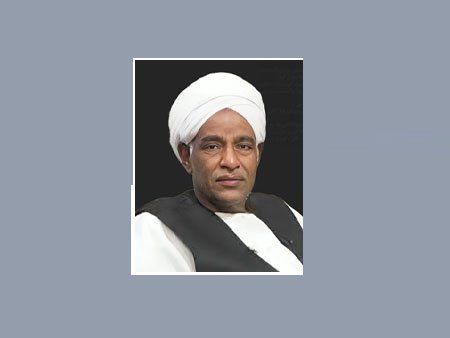
Mahgoub Fadl Badri
“It is never too late for a first experience,” as the Spanish novelist Carlos Ruiz Zafón put it in one of his novels — The Labyrinth of Spirits, The Shadow of the Wind, The Prisoner of Heaven, or The Angel’s Game — all of which feature intertwined characters, places, names and events!!
Likewise, Dr Abd Al-Ati Bakri Al-Mana‘i did not miss his opportunity to write his book, Sudan: War and Ashes, with the subtitle My Testimony of the Time of Collapse, as it appears on the outer cover. On the inner cover, however, the subtitle was changed to My Testimony of the Burning of Khartoum. Whatever the title, the substance of the book is nothing more — and nothing less — than the testimony of a man who saw events with his own eyes. And there is a world of difference between one who has seen and one who has merely heard!!
Writing is a craft one learns, but cannot necessarily teach to another. The pen belongs to no one, because it is a free spirit that accompanies the person who writes with it. In his book, Al-Mana‘i never claims any heroic deeds for himself. A person can only truly be called a hero when he has experienced fear. The author went through moments of fear, which he never denied, but he never surrendered to them. Even the devastating loss of his mother did not prevent him from continuing to write.
At his friends’ urging, he picked up his pen and documented the extraordinary experience he lived through during the war, providing a compelling answer to the question: Who fired the first shot? His is the testimony of a neutral observer, unaffiliated with either side!!
I was immensely pleased to be the first person to read the book and write its foreword. No one had read it before me except the author himself. It was therefore only natural that I should be among those invited to attend its launch at the Ihsan Abdel Quddous Hall at the headquarters of Rose al-Youssef in central Cairo, and that I should share the platform with the author alongside the distinguished gentlemen Magdi Al-Daqqaq, Mustafa Abu Al-Azaim and Alam Al-Din Omar.
I even teased Professor Magdi by pointing out that “Al-Daqqaq” is also the name of a large village and railway station west of Abu Zabad in Kordofan. The stern Port Said native burst out laughing.
The book received its due share of discussion, praise and some criticism, but everyone agreed on its uniqueness. Dr Al-Mana‘i has, as it were, steeped the book in the waters of the Nile and infused it with his love for Sudan. He recounts his experience with unmistakable sincerity and profound emotion, to the point that his tears and those of audience members flowed freely.
Al-Mana‘i described the experience as both exhausting and exhilarating. He brought together the strength of youth and the wisdom of age, steadfastness and compassion, the wisdom of the South and the generosity of the North. In his book, Dr Al-Mana‘i demonstrates that “impossible” is a word that has no place in our vocabulary, and that poverty is not a disgrace but an opportunity to discover capabilities and potential. Giving builds nations, lifting them from dependency to production and transforming fragility into strength and stability.
Dr Al-Mana‘i remained in Khartoum for more than two months after the outbreak of the war, until the stock of medicines and medical supplies at the Trafiker Medical Centre, which he owned, was exhausted. He then began to consider leaving, because a doctor without medicine is like a soldier in battle without a weapon!!
Al-Mana‘i left for Wad Madani, and that became another chapter in his life. He knows Al-Jazira like the palm of his hand and describes Madani as “the countryside free of pretence”. Life there is characterised by simplicity and blessing, functioning with the bare minimum of resources but the maximum of determination.
From Madani he learned that “mending the soul” may perhaps be more important than “mending wounds”, which he had studied at Al-Azhar University’s Faculty of Medicine.
In the opening chapters of the book, Dr Al-Mana‘i recounts his experience working in Sudan as part of the executive team of the Productive Housing Project in Hantoub, Wad Madani, Al-Jazira State — one of the projects of the late philanthropist Saeed Lootah Foundation. May God grant that great benefactor a spacious place in Paradise and send clouds to water his grave. Wad Madani consequently became Al-Mana‘i’s eternal love, as the book makes clear.
If the reflective reader were to apply the experience of the Productive Housing Project to Sudan’s present circumstances, they would find in it an ideal solution for addressing the devastating consequences of the war, which have affected most parts of Sudan!!
The reader will also readily appreciate the importance of the documentation undertaken by Al-Mana‘i through his pen, camera, brush, intellect, sincerity and love for Sudan and its people.
Were it not for Dr Al-Mana‘i’s Upper Egyptian origins, I would have called him “Abd Al-Ati Wad Salma”. But the Sa‘idis are, as everyone knows, very protective of their lineage!! Salma, his mother, died yearning to see her son, the doctor, who had asked her permission to leave after performing surgery on her and departing while she was barely recovering.
This is what caused Al-Mana‘i to burst into tears whenever he recalled her, and whenever he remembered his late journalist friend Ashraf Al-Gedawy, who had urged him to write but did not live to see the book published. May God have mercy on them all.
In the end, Al-Mana‘i’s declaration of a state of love for Sudan, in contrast to the declaration of war against Sudan by the forces of evil that have converged upon it, is confirmed by what appears in Sudan: War and Ashes. The book fills a substantial gap in both Sudanese and Arab libraries—a gap that is difficult to fill at a time when online writings have proliferated while the tradition of reliable memoirs and testimonies has declined, compounded by the general indifference of many of our people towards documentation.
Therefore, no substitute exists for this documentary work for any researcher, reader, or anyone interested in Sudan. It is a book that deserves to be read!!
Long live Dr “Abd Al-Ati Wad Salma”, despite the Sa‘idis!! We Sudanese do not shy away from tracing our lineage through our mothers, without in any way abandoning our lineage through our fathers.
Shortlink: https://sudanhorizon.com/?p=17547