

International Expert Warns Current Nile Recession Caused by GERD Filling, Says Flooding Could Be Even More Destructive
Cairo – Sudanhorizon | By Sabah Mousa
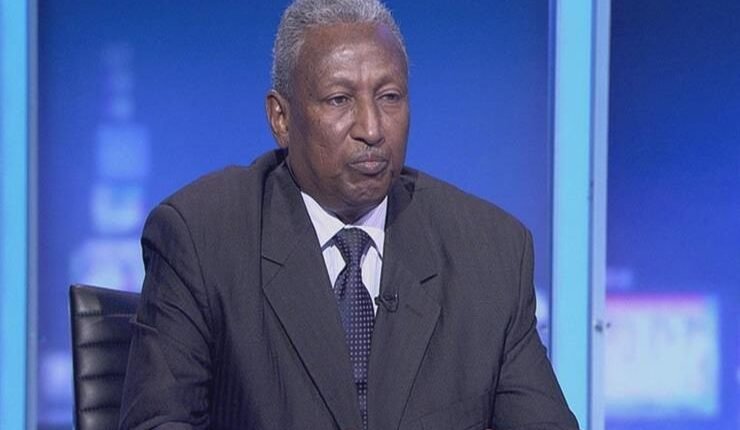
Dr Ahmed El Mufti, an international water expert and former adviser to Sudan’s Ministry of Irrigation, has said that the current recession in Nile water levels observed in Sudan during the filling of the Grand Ethiopian Renaissance Dam (GERD) is unprecedented, explaining that the dam prevents the river from flowing as it did previously.
Speaking exclusively to the Sudanhorizon news website, Dr El Mufti said that once the reservoir is fully filled, any rainfall in Ethiopia that exceeds Ethiopia’s water requirements will flow downstream to Sudan and Egypt, potentially leading to flooding.
He explained that the operation of the GERD and its electricity generation also influence the volume of water reaching Sudan, particularly if the dam is operated without coordination with Khartoum. Before the construction of the GERD, Sudan managed its dams by closely monitoring the natural flood cycle of the Blue Nile and its predictable flow patterns, allowing water resources to be managed accordingly.
Dr El Mufti noted that when seasonal flooding was above average, it generally resulted in limited, manageable flooding, while below-average flows produced modest water shortages that were likewise manageable. However, he argued that filling and operating a reservoir with a storage capacity exceeding 60 billion cubic metres—greater than the Blue Nile’s average annual flow—without prior coordination with the downstream countries would naturally lead to serious consequences, whether in the form of reduced river flows or flooding.
He said that both Sudan and Egypt continue to call for a legally binding agreement governing the filling and operation of the GERD, stressing that this remains a fundamental demand. He added that Sudan has repeatedly raised several other concerns, although discussing them in detail would require more time. Among the most important, he said, are dam safety and water security. He noted that the principle of water security is recognised in the Entebbe Agreement, which Ethiopia has ratified, but that Ethiopia opposed including the same principle in the 2015 Declaration of Principles on the GERD—a position to which Sudan did not object.
Dr El Mufti further argued that the central issue is Ethiopia’s unilateral operation of the dam. He said he does not believe Ethiopia provides Sudan with advance notification of its operational decisions, adding that this explains Sudan’s continued insistence on concluding a legally binding agreement covering both the filling and operation of the dam.
He concluded by saying that although Nile water levels will eventually return to their natural range, they could subsequently rise above normal levels, resulting in floods that may prove more destructive than the current low-water conditions. He added that he does not believe effective operational coordination currently exists between Ethiopia and Sudan; otherwise, Sudan would not continue to demand a legally binding agreement on the filling and operation of the GERD.
Shortlink: https://sudanhorizon.com/?p=16057