

Debt Relief for Sudan from the Organization of African, Caribbean and Pacific States: A Symbolic Gesture
Report By Nazik Shamam
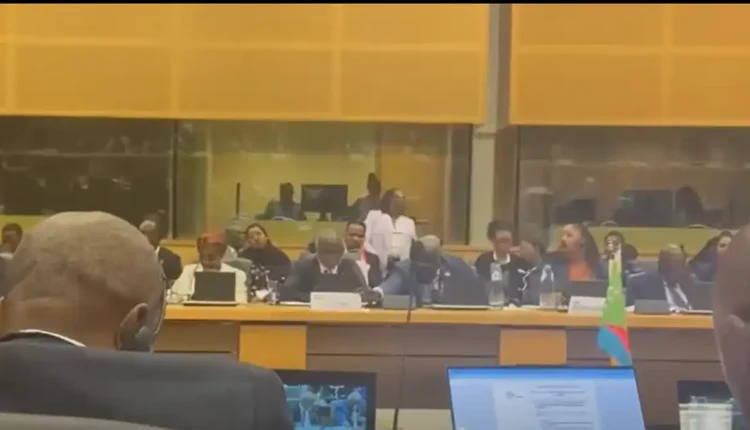
Last Thursday, Sudanese Finance Minister Dr. Jibril Ibrahim concluded his participation in the 121st Ministerial Council meeting of the Organization of African, Caribbean and Pacific States (OAPS), held in Brussels, Belgium, from July 15-16, 2026. The meeting was attended by ministers and representatives from member states.
According to a press release issued by the Ministry of Finance Dr. Ibrahim achieved a significant economic milestone: the Council adopted a ministerial resolution to relieving Sudan’s entire debt, amounting to one million dollars, to the organization.
The African, Caribbean and Pacific States is a group of countries in Africa, the Caribbean, and the Pacific Ocean, established under the Georgetown Agreement of 1975. Its main objectives are sustainable development, poverty reduction within its member states, and greater integration into the global economy. All member states, with the exception of Cuba, are signatories to the Cotonou Agreement with the European Union.
According to the ministry’s statement, the meetings witnessewd extensive discussions on a number of strategic issues, primarily the institutional and administrative reform of the organization, and a review of policies and programs aimed at supporting economic transformation and enhancing the economic resilience of member states.
Participants also discussed ways to expedite the ratification of the Samoa Partnership Agreement with the European Union, emphasizing the importance of completing the procedures for its entry into force to capitalize on the opportunities available under the Partnership Agreement.
The rationale for the debt relief granted to Sudan was explained as being due to the exceptional circumstances facing the Sudanese economy since the militia Rapid Support Forces’ rebellion. The Sudanese Minister of Finance expressed Sudan government’s gratitude to all member states of the organization, affirming his country’s commitment to supporting the organization and strengthening its role in achieving its objectives. He emphasized Sudan’s conviction in the importance of supporting collective action to address shared challenges, noting that this decision reflects the spirit of solidarity and cooperation among the organization’s member states.
On the sidelines of the meetings, the Sudanese Minister held a meeting with the Secretary-General of the organization, where they discussed ways to develop cooperation, enhance technical and institutional support, and explore employment opportunities for Sudanese nationals within the organization’s General Secretariat. In addition to holding side meetings with the Minister of Finance and Economic Planning of the Republic of The Gambia, the State Minister of Finance of Ethiopia, and the State Minister of Foreign Affairs of Somalia.
The move to forgive Sudan’s $1 million debt to the organization sparked controversy on social media due to the small size of the debt.
In this context, economist Dr. Haitham Mohamed Fathi believes that such initiatives cannot be beneficial in the absence of political, economic, and security stability in the country. In a statement to Sudanhorizon, he revealed that Sudan’s external debt currently exceeds $66 billion, of which $17 billion represents the principal and approximately $49 billion represents interest. He stated that “the process of debt forgiveness has faced significant complications due to political crises and armed conflicts.” Fathi added: “The IMF, in its December 2017 report, acknowledged that Sudan is eligible for debt relief under the Heavily Indebted Poor Countries (HIPC) initiative, a joint IMF and World Bank initiative launched in 1996 to assist poor countries struggling to repay their external debts.”
Regarding the organization’s influence in the international community, he explained that the Organization (OACPS) is one of the largest transcontinental blocs in the Global South, comprising 79 countries. It focuses on strengthening political and economic cooperation, advocating for development and international justice, and working to improve the socio-economic conditions of its member states by implementing a comprehensive approach to addressing poverty and its root causes. Poverty remains the greatest challenge for member states and a key element of the organization’s action plan until 2030. He emphasized that the organization seeks to achieve a strategic transformation that strengthens its global role by turning structural challenges into opportunities for greater influence and impact on the international stage. Fathi downplayed the amount of the debt relief, noting that it doesn’t address the severe economic contraction caused by the war, and doesn’t restore the flow of international financing that ceased as the conflict in Sudan escalated. However, he emphasized, the value of the move lies in its timing and context. It comes at a time when debt restructuring efforts are faltering, Sudan’s access to international financial institutions is declining, and pressure on public finances is mounting due to the ongoing war and deteriorating economic activity.
Economic analyst Walid Dalil agrees with Fathi’s assessment, arguing that the forgiven amount is very modest compared to the scale of Sudan’s external debt crisis, which is in tens of billions. He pointed out that what happened cannot be considered a significant financial relief for the general budget or external debt indicators, but it’s symbolic and diplomatic impact is more important than the figure itself.
Dalil explained that the action taken by the Organization of African, Caribbean and Pacific States (OAPES) comes within a series of simultaneous debt relief measures, with China recently forgiving approximately $50 million. He said that Sudan’s continued engagement in multilateral frameworks despite the war provides the Ministry of Finance with a “narrative of achievement” that it can use in official discourse regarding international solidarity with Sudan during its exceptional circumstances.
He added that the bilateral meetings held with Ethiopia, Somalia, and The Gambia on the sidelines of the meeting indicate that the delegation used the event for broader diplomatic coordination purposes beyond just the debt issue.
As for the regional weight of the organization itself, the organization (which includes some 79 countries) is not a donor agency or development finance institution in the sense of institutions like the Paris Club or the World Bank, according to Dalil. It is a political and economic coordination framework primarily linked to the partnership relationship with the European Union through the former Cotonou Agreement and the current Samoa Agreement. He pointed out that its significance lies in its role as a collective negotiating platform that gives member states a unified voice before Brussels on issues of trade, development, and migration, not in its ability to directly influence the monetary or fiscal policies of any member state. He clarified that debt relief here is a symbolic step within an existing membership relationship and not an indication of effective institutional intervention in managing the Sudanese debt crisis.
Shortlink: https://sudanhorizon.com/?p=16049