

Sudanese Journalist Tells How He Spent Months Behind RSF Militia Lines
Sudanhorizon – Exclusive
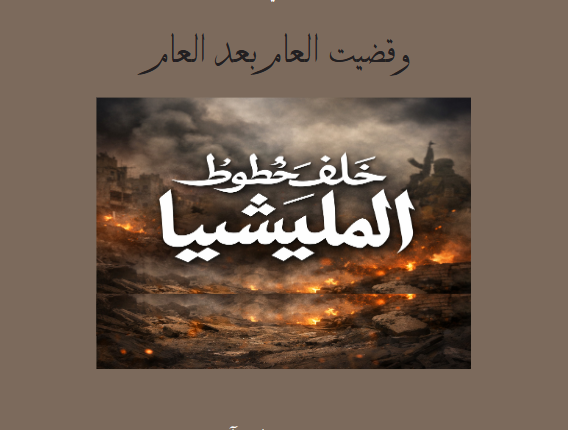
A Sudanese veteran journalist and editor for the news websites “Al-Muhaqqiq” and “Sudan Horizon,” Mohamed Osman Adam, has published a book in English, which has been translated into Arabic in which he recounts his experience living behind the lines of the Rapid Support Forces (RSF) militia in Khartoum State. He titled his book:
“ A Full Year Behind Militia Lines : A witness Account”
The author states that he originally wrote the book in English “in an attempt to fill a void that has long been occupied by non-Sudanese voices. Perhaps English speakers will find in it a serious attempt to make heard a non-Western voice, a Sudanese perspective expressed by one of its own people. This gap has been a gateway to many errors made by the world when addressing Sudanese political issues, especially in exceptional circumstances like the current one, where words and images play a crucial role, if not a more significant one, that reinforces the role on the ground.”
Mohamed Osman Adam adds that he is recounting the personal experience of a journalist who lived for nearly two years behind the lines, in areas controlled and under the grip of the Rapid Support Forces (RSF) militia. Therefore, he is reflecting the journalist’s perspective and experience. However, this personal experience represents a microcosm of what millions of Sudanese have endured.
The author, a former correspondent for the Associated Press(AP), has emphasizes that this is “not a historical record of events, but rather the feelings and first hand experience of the events, experiencing and living through them. It is the daily life of the events, a record of what the civilian victims feel as they live in constant fear and terror.” He adds, “It is not a record of what people say about the RSF or the militia, nor the reflection, nor of what others say about the militias and the Janjaweed, if you will, but a living record of what the writer saw, lived, and experienced firsthand.”
The writer also recounts how he met RSF commander Hemedti directly and how attempts began to recruit him to the militia’s media outlets before the movement transformed into a full-scale, heavily armed rebellion, supported by external parties to wage a proxy war. The book also recounts the militia’s practices and behavior in markets and neighborhoods, and their treatment of civilians, despite their attempts to improve their image in a hostile environment. As the saying goes, old habits die hard. In short, the book documents the author’s own experiences in the neighborhoods and areas controlled by the militias since the outbreak of fighting.
The book documents practices that occurred and which the author witnessed firsthand, or whose effects he personally experienced. These are but a few examples of what has happened and continues to happen to civilians in many places, even if the militias deny it. The book’s strength lies in the fact that, while many write about the militias from a general perspective, the author offers a close day to day viewpoint: the perspective of daily life, small events, social and cultural interactions, and mingling with people—what the militias do and say, far removed from media jargon and polished public relations rhetoric.
A more comprehensive summary of the book will be published in the “Files” section of this website.
Shortlink: https://sudanhorizon.com/?p=16763