

Separating Darfur Will Not Save Sudan: The Crisis Is the State, Not the Map
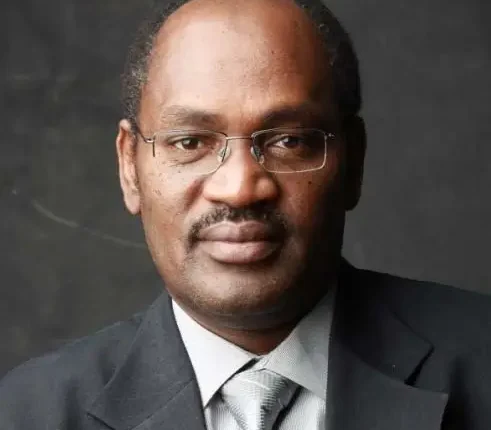
By Ramadan Ahmed
Amid Sudan’s deepening political crisis, voices have emerged calling for Darfur to be separated from the rest of the country. Their argument is straightforward: Darfur has become a persistent source of armed conflict, tribal violence and instability, and the rest of Sudan cannot recover unless it frees itself from the burden of the region.
But would separating Darfur genuinely bring peace and prosperity to the rest of Sudan? Would Darfur itself become safer and more stable? And has the experience of South Sudan taught us nothing?
These questions should not be answered through anger generated by the current war. They require an examination of the deeper crisis that has shaped Sudan since independence: the failure to build a state governed by strong institutions, equal citizenship, peaceful transfers of power and the rule of law.
Treating the Symptoms, Ignoring the Disease
Sudanese politics has repeatedly focused on the symptoms of national crises rather than their underlying causes.
Separating Darfur because it suffers from armed conflict would be like amputating a wounded limb before diagnosing the disease. Darfur’s crisis is not separate from the crisis of the Sudanese state. It is one of its most violent manifestations.
The same diagnostic failure contributed to the separation of South Sudan.
Many southern political leaders believed that independence would solve the fundamental problem of marginalisation. They argued that southerners could never enjoy equal citizenship within a state dominated by the political centre and that creating an independent country would finally allow them to determine their own future.
Yet independence did not eliminate the struggle for power, weak institutions or political exclusion.
Within a few years, South Sudan descended into civil war. Tens of thousands were killed, millions were displaced, and the new country entered prolonged political, economic and humanitarian crises.
The South separated from Sudan, but the crisis of the state travelled across the new border.
The lesson is clear: changing borders does not automatically change political culture, strengthen institutions or establish the peaceful transfer of power.
Darfur’s Crisis Was Shaped by the Sudanese State
Darfur’s wars did not emerge independently of policies pursued by successive governments in Khartoum.
The region historically experienced conflicts over land, water and pastoral routes. But local communities also possessed traditional mechanisms for managing disputes through native administrations, tribal reconciliation and negotiated settlements.
The central state transformed the nature of these conflicts.
Governments armed local groups, exploited tribal divisions and incorporated militias into military strategies designed to confront rebellions.
Disputes that could once have been negotiated between community leaders were militarised and fought with modern weapons.
The most dangerous consequence of this policy was the creation and empowerment of armed formations based on particular social and tribal constituencies.
This process eventually contributed to the emergence of the Rapid Support Forces as a powerful military organisation with its own leadership, economic resources, political influence and external relationships.
Sudan had effectively created an armed institution parallel to the state.
The consequences became catastrophic when the RSF entered into war with the Sudanese Armed Forces in April 2023.
This is not simply a Darfur problem. It is the result of Sudan’s failure to build a national state in which legitimate institutions exclusively control the use of military force.
Darfur Is Not the RSF
Perhaps the most dangerous argument advanced by supporters of separation is the attempt to associate Darfur collectively with the crimes committed by the Rapid Support Forces.
The RSF does not represent the people of Darfur.
Darfur is one of Sudan’s most socially, ethnically and culturally diverse regions. Reducing millions of people to the identity of one armed organisation is both historically inaccurate and politically dangerous.
Indeed, the people of Darfur were among the earliest victims of the militias from which the RSF later emerged.
For years, villages were burned, civilians were killed, communities were displaced and millions of people were driven from their land.
Many survivors have spent decades in displacement camps such as Kalma, Zamzam and Abu Shouk.
They were Sudanese victims long before the war reached Khartoum and Gezira.
The crimes that shocked central Sudan after April 2023 had already devastated communities in Darfur for years.
It is therefore deeply unjust to hold an entire region responsible for the actions of an armed organisation whose victims include the people of that region itself.
A functioning state holds individuals, commanders and organisations accountable for crimes. It does not punish entire populations because of their geography or ethnic identity.
Partition Will Not End Sudan’s Crisis
No region of Sudan can simply be removed from the country in the expectation that the remainder will become peaceful.
If Darfur separates today, another crisis may emerge tomorrow in Kordofan, eastern Sudan or elsewhere.
If every political, developmental or security crisis becomes an argument for partition, Sudan will continue to fragment into smaller and increasingly vulnerable states.
The fundamental problem is not the size of Sudan or the diversity of its population.
The problem is the failure to build institutions capable of governing that diversity.
Since independence, Sudanese politics has revolved around one question: Who rules?
The more important questions have rarely received sustained attention:
How should Sudan be governed?
How should power and national wealth be distributed?
How can equality before the law be guaranteed?
How can political authority be transferred peacefully?
How can state institutions become stronger than governments, political parties, military leaders and armed movements?
Without answering these questions, changing borders will achieve little.
Every new state created through partition risks inheriting the same political culture: competition for power, weak institutions, militarised politics and the concentration of national resources in the hands of narrow elites.
South Sudan should be warning enough.
Sudan Needs a New State, Not New Borders
Sudan’s survival depends not on reducing its territory but on rebuilding the state.
The country must move from politics centred on the struggle for power to politics based on competition between programmes, ideas and national projects.
Political parties should compete over who can offer the best policies for economic growth, education, healthcare, agriculture, industrialisation, foreign relations, justice and balanced development.
Political authority should be a means of implementing programmes and serving citizens, not a prize over which political elites and armed groups fight.
Sudan needs a state in which citizenship, rather than tribe or region, determines rights and responsibilities.
It needs one national army, with the possession of arms exclusively controlled by the state.
It needs institutions stronger than political leaders, laws stronger than governments, and a political system in which authority is acquired through the will of citizens.
National resources must be managed for the benefit of society as a whole, and communities across Sudan must have meaningful participation in political decision-making and economic development.
If such a state can be built, Sudan will not need to separate Darfur, and Darfur will have no reason to separate from Sudan.
The country will instead need all its people to participate in reconstruction, development and national renewal.
Sudan’s diversity is not the source of its crisis.
The crisis lies in the failure of the state to manage diversity, guarantee equal citizenship and create institutions capable of resolving political conflicts peacefully.
Partition will not solve that failure. It will merely reproduce it within smaller territories, behind new borders and under new flags.
Sudan has already experienced separation once.
It did not cure the disease that produced it.
The question facing Sudan today is therefore not:
Should Darfur be separated?
The real question is:
How can Sudan build a state from which no citizen feels the need to separate?
That is the challenge on which the future of the country depends.
Nations are not saved by amputating their territories. They are saved by building just and effective states in which all citizens are partners in power, wealth, responsibility and the future.
Shortlink: https://sudanhorizon.com/?p=15907