

Social Justice… The Absent Imperative: The Path to Peace and Reconstruction (3/3)
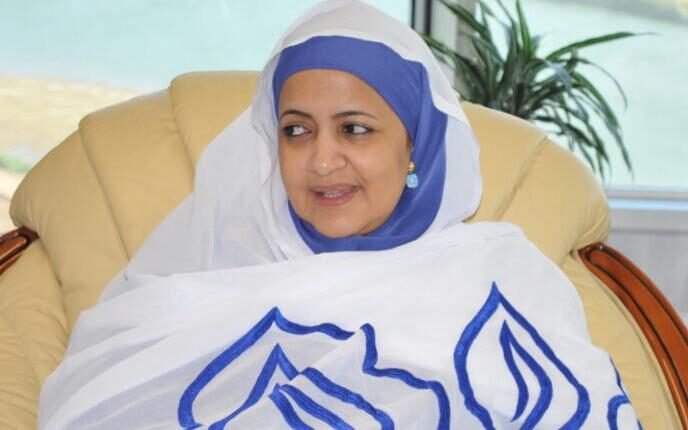
Hiba Mahmoud Sadiq Farid **
Summary of the Previous Parts
Through its three parts, this series has sought to approach the question of social justice in Sudan from a fundamental premise: that Sudan’s crisis is not merely a crisis of war or a transient political conflict, but rather a deep structural crisis tied to the very nature of the state itself and the foundations upon which power, wealth, development, and social relations have been managed since the emergence of the modern Sudanese state.
The first part sought to establish the concept of social justice as a necessary gateway to rebuilding the state and achieving peace. In contrast, the second part addressed the practical mechanisms by which justice could be translated into public policies, plans, institutions, and implementation. The issue is directly linked to the nature of the public policies adopted by the state and to the extent to which it can fairly redistribute opportunities and resources.
Policies supportive of social justice include, for example, adopting progressive tax systems that reduce economic disparities, expanding expenditure on education, healthcare, and social protection, ensuring equitable distribution of services and infrastructure between regions, and advancing policies of financial inclusion, employment, financing, and the empowerment of youth, women, and economically and socially marginalised groups.
Likewise, decentralised governance policies, strengthening transparency and accountability, and supporting community participation in decision-making acquire particular importance in building a more inclusive and equitable development model. The more public policies are connected to citizens’ actual needs and directed at reducing social and geographical disparities, the more capable the state becomes of achieving stability and reinforcing national cohesion.
Within this framework, the article presents social justice as a comprehensive and multidimensional concept that extends beyond mere redistribution of resources or narrow economic remedies to encompass political, developmental, cultural, and spatial justice, alongside justice in access to knowledge, opportunities, and essential services.
However, the transition from “justice as an idea” to “justice as practice” remains tied to understanding the structural challenges that have historically obstructed reform efforts and reproduced the same imbalances even during periods marked by reformist slogans or serious attempts at change. The fundamental dilemma does not always lie in the absence of visions or the weakness of theoretical discourse, but rather in the existence of a political, institutional, and cultural structure that obstructs the transformation of these visions into lived reality.
From this perspective, this final part examines the most significant structural obstacles to the construction of a more just and inclusive model, to provide a critical reading that deepens understanding of the crisis’s roots and opens the way towards more realistic and sustainable reform trajectories.
The Challenges of the Gap Between Planning and Implementation
The absence of plans or visions has not always caused Sudan’s planning crisis. More often, it has stemmed from the nature of the planning methodology itself and its suitability for the complexities of the Sudanese state, society, and economy.
Some experiences adopted planning approaches originally designed to maximise profitability and improve institutional performance within the private sector, with only partial modifications introduced here and there. As a result, such approaches lacked the capacity to address the challenges of comprehensive national development.
While planning within private-sector institutions focuses on operational efficiency and the achievement of defined objectives within relatively stable and homogeneous environments, the Sudanese context — with all its political, social, and economic complexities — required the adoption of a comprehensive, long-term national development planning model capable of managing diversity, achieving developmental balance, addressing social and geographical disparities, and linking economic policy to political and social stability.
Another major problem emerged in the state’s weakness in translating broad visions into clear, implementable public policies, and then converting those policies into strategic plans and phased programmes linked to performance indicators and defined timelines. In many instances, general visions remained trapped within slogans or theoretical documents, without passing through an integrated institutional chain that begins with policy formulation, proceeds to their translation into realistic implementation strategies, and culminates in monitoring, evaluation, and impact assessment.
This imbalance directly affected the performance of state institutions, which continued to suffer from a wide gap between planning and implementation due to unsuitable planning methodologies, fragile institutional structures, weak coordination, the absence of institutional continuity, and the influence of political conflicts and fluctuations on executive decision-making. Frequently, plans were introduced without providing the resources, institutional capacities, and technical expertise necessary for effective implementation.
Weak monitoring, evaluation, and accountability systems also transformed many strategies into theoretical documents with limited practical impact. This weakened public confidence in government policies and contributed to the waste of resources and the obstruction of development opportunities. The crisis was further aggravated by the highly centralised nature of planning processes and the absence of meaningful community participation, leaving many plans detached from local communities’ actual needs.
The Challenges of Political and Social Culture and the Reproduction of Exclusion
Sudan’s crisis of social justice cannot be understood separately from the cultural, social, and political context that has continually reproduced narrow loyalties and primary affiliations at the expense of equal citizenship.
Accumulated political and social practices helped entrench cultures of favouritism, mediation, and patronage, such that networks of influence and affiliation often became more decisive than competence and merit.
Over time, these patterns evolved into informal mechanisms for redistributing opportunities, resources, and positions, thereby weakening the principle of equal opportunity and institutionalising both institutional and social exclusion. The effects extended beyond administrative or employment spheres to encompass political representation, access to services, opportunities for education and employment, and even participation in decision-making.
Certain political and cultural discourses also deepened social divisions and reproduced stereotypes and symbolic exclusion against particular groups, thereby weakening the sense of shared citizenship and national belonging.
Within such an environment, justice sometimes came to be understood merely as the distribution of privileges among groups, rather than the construction of a rights-based institutional order founded upon fairness and equality.
The danger of this culture lies in its obstruction of reform and its continuous resistance to any change that might threaten traditional privileges or redistribute power and resources more equitably.
The Challenges of Weak Institutional Efficiency and Effectiveness
State institutions suffer from a dual imbalance consisting of weak operational efficiency and limited strategic effectiveness. Efficiency concerns the rational use of resources, while effectiveness concerns the institution’s ability to achieve developmental and social objectives.
In Sudan, administrative bloating, inadequate training, overlapping mandates, and bureaucratic complexity weakened the quality and efficiency of public services.
Weak reliance on data, objective analysis, and institutional evaluation also contributed to the production of low-impact policies and plans in which failures repeatedly occurred without genuine critical review. This crisis worsened due to the politicisation of institutions and weak professional independence, undermining efforts to build a professional, sustainable state apparatus capable of implementing public policies efficiently and fairly.
The absence of institutional continuity further weakened institutional capacity, as repeated administrative and political changes and unstable organisational structures led to the loss of expertise and institutional memory. Consequently, many institutions repeatedly found themselves starting from near zero, without adequately benefiting from prior experience or developing cumulative systems capable of supporting learning, development, and long-term performance improvement.
The Challenges of Corruption and the Undermining of Justice
The impact of corruption extends far beyond the waste of public funds or damage to economic growth. More profoundly, it undermines the very principle of justice itself by redistributing opportunities, resources, and privileges through networks of influence and vested interests rather than on the basis of merit or developmental need.
When access to services, employment, finance, or influence becomes tied to personal loyalties and relationships, public trust in institutions erodes, along with the sense of equality before the state and the law.
Corruption also distorts public policy priorities, diverting resources to areas serving narrow interests rather than to sectors most urgently needed by citizens. Its danger intensifies in contexts where oversight, accountability, and transparency are weak and oversight institutions lack independence, creating an environment that allows corruption to persist and reproduce itself structurally.
The spread of corruption further weakens economic efficiency, obstructs investment and production, and squanders resources that should otherwise be directed towards development and essential services.
Accordingly, combating corruption cannot be reduced to limited administrative or legal campaigns. It requires comprehensive institutional reform that strengthens transparency, entrenches the rule of law, separates power from private interests, and rebuilds trust between the state and society.
The Challenges of Centralisation and Developmental Imbalance
Centralisation has remained one of the most prominent structural problems in the formation of the Sudanese state. Historically, state-building was associated with the concentration of power, resources, and services within the central government, while many regions and states experienced weak development, infrastructure, and basic services.
Over time, this imbalance became embedded in the state’s structure, deepening developmental and social disparities and reinforcing feelings of marginalisation and injustice in the distribution of power, wealth, and opportunities.
Centralisation was not limited to the administrative and political sphere. It extended to the concentration of economic, educational, healthcare, and cultural institutions, thereby weakening the ability of states and regions to participate effectively in setting developmental priorities and managing their own resources, especially given the limited powers and weak financial and administrative autonomy of local government.
This reality directly affected national stability, as many political tensions and conflicts became associated with perceptions of developmental imbalance and distorted relations between the centre and the regions.
Addressing these imbalances, therefore, requires adopting a balanced federal model that goes beyond the mere transfer of administrative powers to include both administrative and fiscal federalism, ensuring genuine regional autonomy in resource management and developmental planning.
The success of any federal model, however, remains dependent upon gradual institutional development, strengthening local governance capacities, and building fairer and more transparent systems for distributing resources and authority while preserving national unity and stability.
The Challenges of a Fragile Social Contract and Eroding Public Trust
Sustainable social justice cannot be achieved within a troubled relationship between citizen and state.
The accumulation of exclusion, weak services, developmental inequality, and repeated institutional failures has steadily eroded public confidence in state institutions and their ability to fairly represent citizens’ interests.
Over time, many citizens came to view the state as distant from them or biased towards particular groups and regions, rather than as an inclusive framework that guarantees rights and distributes opportunities equitably.
This perception weakened national cohesion, reinforced narrow loyalties, and widened the gap between society and governing institutions.
The fragility of the social contract also became evident in declining public participation, diminishing feelings of shared responsibility towards the state, and the spread of scepticism regarding the value of institutional work or gradual reform.
In the absence of trust, even serious reform policies become vulnerable to public suspicion and rejection, complicating prospects for transition towards a more just and stable model.
Rebuilding public trust, therefore, represents a fundamental condition for any serious national project. This requires constructing more transparent and equitable institutions, strengthening community participation, and ensuring fair access to rights, services, and opportunities.
Conclusion: Social Justice and the Re-definition of the Sudanese State
Taken as a whole, this article demonstrates that the question of social justice in Sudan is not simply about improving living conditions or expanding public services. At its core, it concerns the nature of the state itself and the foundations upon which relations of power, wealth, knowledge, and development have been built since the emergence of the modern Sudanese state.
The recurring crises Sudan has experienced were not separate from distortions in justice; rather, they often emerged as direct consequences of the unbalanced management of diversity and prolonged inequalities in the distribution of resources, opportunities, political representation, and development among different regions and social groups.
The Sudanese experience also demonstrates that peace and stability cannot be achieved through temporary political settlements or limited administrative arrangements unless accompanied by a re-founding of the relationship between state and society upon the basis of equal citizenship, equal rights, and equitable development.
Sustainable peace is not merely the absence of war, but the presence of a capable and just state with effective institutions, grounded in a social contract that guarantees participation, fairness, and a balanced distribution of power, wealth, and opportunities.
Within this context, as previously noted, social justice should not be viewed as a later outcome of reconstruction; rather, it is the framework upon which reconstruction itself must be built.
No stable state can emerge through reproducing the same historical imbalances, nor can sustainable development be achieved amid fragile institutions, excessive centralisation, or persistent disparities between regions and social groups.
Sudan’s future, therefore, remains tied to its ability to transition from crisis management towards the construction of a new national project founded upon justice as the governing principle of planning, public policy, institution-building, and diversity management.
States do not achieve stability through force alone, nor endure through abstract political rhetoric, but through their ability to create a collective sense of fairness, belonging, and confidence that the state represents all citizens equally.
And this, in essence, is the true question posed by social justice in Sudan.
** Public Policy and Strategic Planning Expert
Master’s Degree in Public Policy – University of Malaya
Shortlink: https://sudanhorizon.com/?p=13857