

Al-Jakoumi to Sudanhorizon: We Will Not Sit with Somoud and Will Stop Dealing with the Quintet Mechanism if It Meets with Ta’sis
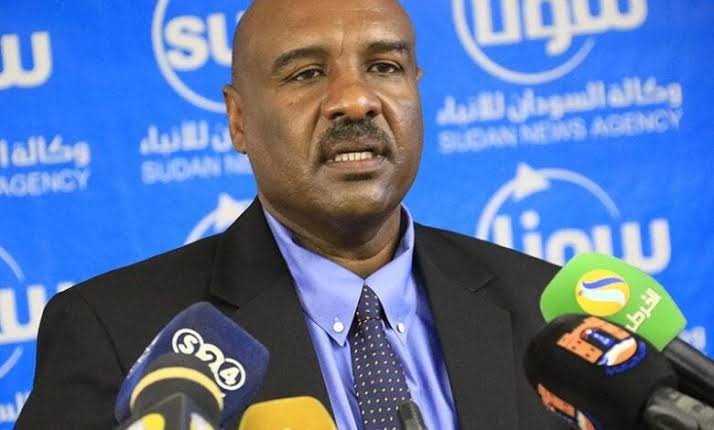
Cairo – Sudanhorizon – Sabah Mousa
The head of the National Forces Coordination, Mohamed Sayed Ahmed Al-Jakoumi, said that the coordination body will meet with the international Quintet Mechanism in Addis Ababa on Friday. He noted that the coordination body will participate in the meetings with 16 members, while both the Democratic Bloc and the Somoud Alliance will each be represented by 14 members.
In an exclusive statement to Sudanhorizon, Al-Jakoumi said he held a virtual meeting on Tuesday with the leadership of the Quintet Mechanism, which includes the African Union, League of Arab States, Intergovernmental Authority on Development (IGAD), European Union, and the United Nations, under the chairmanship of Mohamed Ibn Chambas.
He stated that during the meeting they reaffirmed their opposition to any engagement between the Quintet Mechanism and the Ta’sis coalition. He stressed that any organization wishing to communicate with Ta’sis should do so individually rather than under the umbrella of the Quintet Mechanism.
Al-Jakoumi added that the coordination body informed the Quintet that it would cease dealing with the mechanism if it officially met with Ta’sis. He also said they would seek clarification from organizations that had already held meetings with Ta’sis regarding whether their representatives had adhered to official positions rejecting recognition of the group.
He noted that the representative of the League of Arab States remains opposed to engaging with Ta’sis, while accusing the European Union of dominating the Quintet’s decisions because it finances many of its activities.
According to Al-Jakoumi, Ta’sis has no place in a Sudanese-Sudanese civilian political dialogue process and should instead participate through the Jeddah platform as part of military negotiations between the Sudanese Armed Forces and the Rapid Support Forces (RSF).
Refusal to Meet Somoud
Regarding relations with the Somoud Alliance, Al-Jakoumi said his delegation would not meet with it, accusing the alliance of promoting what he described as a policy of “political flooding,” which he claimed contributed to the Framework Agreement and further complicated the country’s situation.
He criticized Somoud for repeatedly calling for the exclusion of the former National Congress Party and its alleged affiliates, challenging the alliance to clearly identify which groups it considers affiliated with the party.
Al-Jakoumi described Somoud as a front for foreign interests and accused it of betraying the Sudanese people. He further alleged that the alliance represents “another face” of the RSF and has consistently pushed for the inclusion of Ta’sis in Sudanese dialogue meetings.
He also claimed that members of Somoud are unable to return to Sudan despite the general amnesty announced by the Chairman of the Transitional Sovereignty Council.
Purpose of Participation
Al-Jakoumi explained that the National Forces Coordination is participating in the Addis Ababa meetings to hear the Quintet Mechanism’s proposals and present its own vision for the political process.
He said the Quintet seeks to establish a preparatory committee from among the participants that would be tasked with selecting the parties to a Sudanese dialogue, determining its agenda, venue, and timing, and defining the role of the international community in the process.
According to Al-Jakoumi, no final communiqué will be issued from the current meetings. Instead, the outcome is expected to be a proposal for a small committee responsible for organizing and structuring the Quintet Mechanism’s work during the next phase.
Democratic Bloc Disputes
Addressing disputes within the Democratic Bloc over participation in the Addis Ababa meetings, Al-Jakoumi said one of the bloc’s main problems is that since its formation in 2021 it had operated without a formal political declaration or constitution.
He argued that the bloc was initially built around practical necessities and shared interests and only adopted a formal constitution about a month ago.
Al-Jakoumi also referred to what he described as continued internal maneuvering within the bloc and expressed support for the faction participating in the Addis Ababa meetings under the leadership of Minni Arko Minnawi.
He stressed that this group was among the founding components of the Democratic Bloc rather than a recent addition and pointed to ongoing consultation and strong coordination between the Democratic Bloc and the National Forces Coordination.
Military Solution
Responding to criticism that regional and international mediation efforts have failed to produce tangible results, Al-Jakoumi argued that the solution lies in resolving the conflict militarily through popular support for the Sudanese Armed Forces.
He expressed the expectation that the coming period would witness significant military advances by the Sudanese army.
Shortlink: https://sudanhorizon.com/?p=14456