

When Will the Genie Emerge from Its Bottle and Rise?
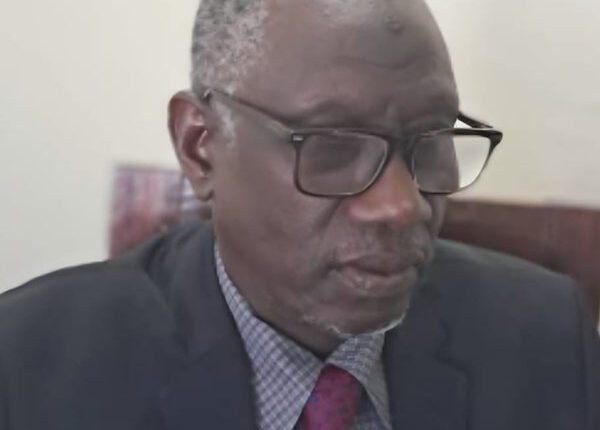
Dr Mohamed Yousif Hassan
For seventy years, we have gone round in the same circle, much like the Israelites wandering in the wilderness.
For seventy years, we have failed to agree on a national project capable of strengthening the foundations of our national identity. We have never united around a shared vision for a national renaissance. Instead, our disputes have persisted as though we had specialised in a manufacturing division, while the rest of the world races ahead, making wise use of its resources, building partnerships and driving its own development.
It is as though the curses of politics, tribalism and regionalism have become our daily sustenance amid the immense challenges surrounding us.
Our problem has never been a shortage of resources, employment opportunities or government ministries. Rather, it has been our talent for turning each of them into arenas of conflict and competition for exclusive control.
We possess fertile land, abundant fresh water, rare mineral wealth and a strategic geographical location. Yet we have also demonstrated an extraordinary ability to transform every opportunity into a crisis, until our blessings themselves have become a curse.
Every major national project has become trapped in disputes among political actors and vested interests, leaving dreams unfinished. Where are the Kenana and Rahad irrigation canals? Where is Kajbar Dam? Where is the third expansion of the Rahad Agricultural Scheme? What became of Sudan’s satellite project? Where is the heritage and tourism initiative to revive Suakin? Where is the national water-harvesting programme intended to expand agricultural land and settle pastoral communities?
The list goes on. Countless projects have died due to conflict, neglect, or simple abandonment.
Have we lost both the ability and the desire to recover and rise again?
Recent history offers us two African lessons that cannot be ignored.
Ethiopia emerged from the famines of the 1970s and the wars of the 1990s by placing the state’s long-term vision above political fluctuations. The Grand Ethiopian Renaissance Dam remained a national project regardless of changes in government. The country accepted short-term economic hardship in exchange for long-term stability. It did not wait for consensus; it created consensus around the project.
The even more powerful lesson comes from Rwanda.
A country that lost one million people in just one hundred days might reasonably have disappeared from the map. Instead, determined leadership, armed with vision and political will, chose to halt the cycle of revenge and build a state founded upon the rule of law.
Tribal politics was outlawed because it had fuelled genocide. A compulsory monthly national community service programme was introduced to clean streets and maintain schools. Hate speech became punishable by imprisonment, while taxpayers were rewarded with improved public services.
The result was extraordinary: from the ashes of genocide emerged Africa’s cleanest capital city and one of its fastest-growing economies.
The secret was not abundant natural resources—Rwanda has very few—but clarity of vision, political determination and effective governance.
Rwanda made one defining choice:
The nation comes before vengeance.
What unites both experiences is the existence of a clear social contract: a state with a consistent vision, and a society willing to bear the costs of national reconstruction.
That is precisely what Sudan lacks.
We need a truce with ourselves before seeking one with our opponents.
We need ten years during which we stop manufacturing crises and instead commit ourselves to just three national projects that no government is permitted to abandon:
making Sudan a global breadbasket;
transforming our ports into Africa’s logistical gateway; and
electrifying rural Sudan through modern energy systems.
We need transitional justice that leads to integration rather than vengeance, and legislation that criminalises tribal and regional hate speech just as Rwanda criminalised ethnic division.
In Asia, Lee Kuan Yew—the founding father of modern Singapore—transformed an impoverished island with no natural resources, plagued by unemployment and ethnic conflict during the 1960s, into one of the world’s wealthiest and most advanced nations.
His success rested upon several fundamental pillars.
He waged a relentless war against corruption until it became virtually non-existent. He enacted strict laws, paid public officials generous salaries and established an anti-corruption agency endowed with sweeping powers.
He invested heavily in technical education and universities, attracted the brightest minds and cultivated a highly skilled workforce.
He also instilled a culture of discipline, public order and respect for the law through rigorous enforcement of standards governing cleanliness, public safety and civic responsibility, imposing substantial penalties even for relatively minor offences.
Above all, he placed national identity above ethnicity.
English became the common national language, while public housing policies deliberately prevented ethnic segregation.
At the same time, he opened Singapore’s economy to foreign investment, transforming the country into a global financial and logistics hub.
Lee Kuan Yew famously declared:
“Those who govern must be prepared to do what is necessary, not merely what is popular.”
He inherited a poor and fragile state, yet chose the path of national purpose.
He also said:
“Singapore will survive only if its people remain disciplined.”
History remembers those who triumph in the battles of nation-building rather than exclusion. It remembers Lee Kuan Yew, Mahathir Mohamad, Nelson Mandela and Deng Xiaoping—the architect of modern China’s transformation.
We already possess the resources.
We already possess the talent.
The examples stand within easy reach.
The question is no longer whether we are capable.
The question is whether we truly desire to succeed.
Is it not time for the people of Sudan to learn from these experiences and climb out of the pit into which they have fallen?
When we compare Singapore and China with Sudan, we are not advocating blind imitation.
The laws governing national development are universal.
The disease is the same.
The remedy is the same.
Both countries began from conditions as difficult as those we face today, yet they deliberately chose a path entirely different from ours.
Lee Kuan Yew inherited Singapore at a time when it was an ethnic tinderbox. Chinese, Malays and Indians were divided by violence. The country had neither fresh water, nor an army, nor strategic depth.
The choice was stark:
Either enforce the rule of law decisively, or perish.
He chose the law.
Ethnic incitement was prohibited. Integrated housing became compulsory. Public appointments were based on merit rather than ethnicity.
The result was a unified Singaporean identity born out of fragmentation.
He transformed what appeared to be a curse into a blessing.
In Sudan, however, every political elite wishes to restart history from its own beginning.
Our political conflict has continued uninterrupted since 1956.
While we continue asking, “Who should rule?”, others have long since moved on to asking, “How should the country be governed?”
We possess everything, yet produce almost nothing.
We have gold, yet our currency continues to collapse.
We have talented young people, yet our brightest minds continue to emigrate.
We have transformed our resources into a curse because they have become causes of conflict rather than engines of development.
Every tribe seeks control over its own oilfield.
Every region demands its own port.
The result is that everyone stands still.
Lee Kuan Yew understood that corruption is not merely an individual failing but a systemic issue.
He confronted it without compromise.
He imprisoned ministers and personal friends alike.
At the same time, he substantially increased public-sector salaries so that civil servants had no excuse to seek bribes.
Public service became an honour rather than an opportunity for personal enrichment.
Today, Singapore consistently ranks among the world’s least corrupt countries.
Singapore also established a clear social contract:
Citizens obey the law, work hard and maintain public order; in return, the state provides education, housing and security.
No one stands above the law.
Spit in the street, and you pay a fine.
Throw away a cigarette, and you face severe punishment.
That strictness helped create one of Asia’s finest cities.
In Sudan, however, the social contract has been reversed.
The state provides very little while demanding everything.
Citizens no longer trust the state, forcing many to rely upon bribery to survive.
Nobody complies because nobody believes there is any reward for doing so.
The streets remain dirty because nobody feels responsible for them.
Markets overflow with rubbish, while local authorities appear to collect taxes only.
People refuse to pay taxes because they see no corresponding public services.
Everyone simply seeks to avoid punishment—through influence, connections or eloquence.
The lessons Sudan must learn are therefore clear.
We must first criminalise the politics of division.
Just as Lee Kuan Yew outlawed racial incitement, Sudan needs legislation imposing severe penalties upon tribal and regional hate speech.
Secondly, we need a permanent national development strategy.
For the next twenty years, only three strategic projects should define our national agenda:
transforming Sudan into a global breadbasket;
making our ports Africa’s principal gateway; and
electrifying rural Sudan through solar energy.
Every government must remain committed to these priorities. Any attempt to abandon them should be regarded as a betrayal of the national interest.
Thirdly, corruption must become unacceptable.
Teachers, police officers and judges should receive salaries sufficient for a dignified life.
In return, any act of bribery should result in immediate dismissal and imprisonment.
An independent anti-corruption authority—equipped with its own prosecutors and investigators, as in Singapore—must lead this effort.
No nation can develop while corruption flourishes.
For seven decades, we have wandered without direction or foundation.
Singapore and China were not born great.
They chose greatness—and paid the price required to achieve it.
Today, Sudan stands at the bottom.
For those who have reached the bottom, only one direction remains: upwards.
The question is simple.
Will we finally choose to rise?
Or shall we continue digging ever deeper?
Shortlink: https://sudanhorizon.com/?p=15281