

How Can Sudan Restore Economic Stability?
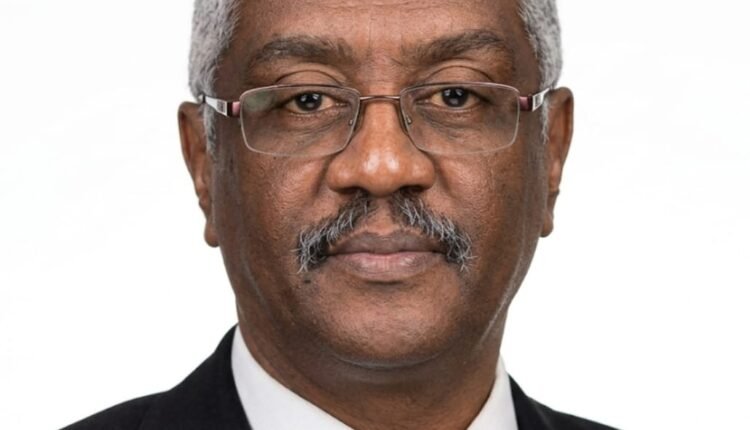
Nu’man Yousif Mohamed
Between the Ministry of Finance’s Commitments and the Challenges of Reality: A Long Road to Economic Recovery
Amid the extraordinary circumstances Sudan is currently facing, the most pressing question remains: how can the country restore its economic health and rebuild confidence in its institutions and markets?
The Ministry of Finance has affirmed its efforts to restore economic stability, a goal on which there is broad consensus. However, the scale of the challenge requires far more than conventional measures. The current crisis is not merely one of budget deficits or exchange rates; it is a crisis of production, institutions, confidence, and the entire economic environment, all of which have been subjected to immense strain.
The restoration of economic stability in Sudan must begin with consolidating political and security stability. An economy in which neither investors nor ordinary citizens feel secure cannot recover or grow. Peace is not only a national necessity; it is the first successful economic policy.
The next challenge is rebuilding the economic foundations of the state through the unification of financial institutions, strengthening the role of the Central Bank of Sudan, improving revenue collection, and directing public expenditure towards productive sectors and essential services.
Yet the greatest challenge lies in bringing the real economy back to the forefront. Sudan does not suffer from a shortage of resources; rather, it suffers from an inability to convert those resources into economic value. Agriculture, livestock, mining and industry all require policies that can revitalise production, link these sectors to value-added processing industries, and strengthen export capacity.
On the monetary front, the stability of the national currency can only be achieved through increased production and exports, reduced fiscal and external imbalances, and the restoration of confidence in the banking sector. The strength of a currency ultimately depends on the strength of the economy that stands behind it.
Reforming the banking sector and expanding microfinance will also be central to the recovery process. This can be achieved by financing small and medium-sized enterprises and stimulating economic activity across productive sectors.
No discussion of economic revival can ignore Sudan’s most valuable resource: its people. The skills, expertise and professional capabilities of Sudanese citizens, both at home and abroad, constitute a genuine national asset. Consequently, migration and diaspora policies should move beyond relying on remittances for consumption and instead focus on building a development partnership by attracting diaspora investment, leveraging expatriate expertise, and connecting Sudanese professionals abroad to reconstruction and development initiatives.
Similarly, investment in training, skills development and youth empowerment, together with stronger links between education and labour market needs, will be essential for building a modern economy driven by knowledge as well as resources.
Institutional reform remains an indispensable requirement. Transparency, the fight against corruption and the sound management of national resources are the foundations upon which the confidence of both citizens and investors can be rebuilt.
Sudan now has an opportunity to reconstruct its economy on a different footing—not merely to restore what existed before the crisis, but to establish a more productive, resilient and sustainable economic model. The post-war period should not be confined to rebuilding infrastructure and physical assets; it must also focus on rebuilding the economy, strengthening human capital and renewing the institutions of the state.
The question that will determine the success of the next phase is whether the announced initiatives will be translated into a comprehensive economic programme that citizens can feel in their daily lives. The true measure of success is not found solely in economic indicators, but in the return of production, the stabilisation of markets and the reopening of pathways to hope.
Former Banker and Institutional Development Consultant
Shortlink: https://sudanhorizon.com/?p=14626