

Senegal Between Two Men: The Collapse of an Alliance or the Beginning of a Crisis?
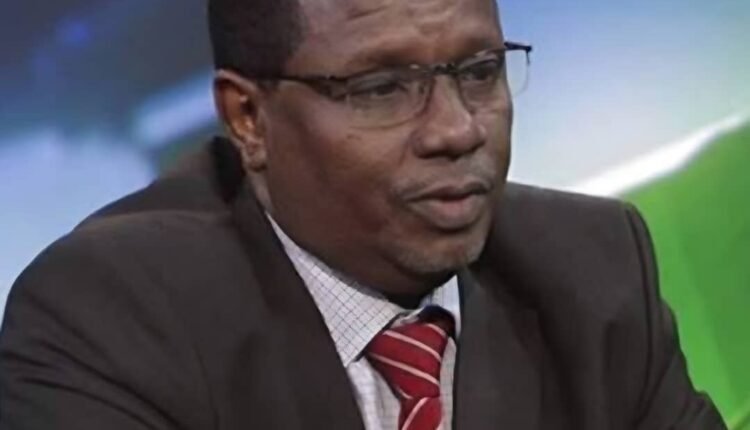
Ambassador Atta Al-Mannan Bakhit
On 23 May, Senegalese President Bassirou Diomaye Faye dismissed his young Prime Minister Ousmane Sonko and dissolved the government. At first glance, such news might appear routine in any country. In Senegal, however, it came as a profound shock to public opinion, particularly among the youth who form the backbone of support for the ruling PASTEF party.
It is true that relations between the two men had been deteriorating since the beginning of the year, to the point where the machinery of government was almost paralysed. Nevertheless, many Senegalese believed that the long-standing friendship between them would prevent their differences from escalating into a complete rupture. After all, Ousmane Sonko was not merely the Prime Minister; he had also been President Faye’s mentor and close friend.
To understand the scale of the upheaval caused by Sonko’s dismissal, it is necessary to look back and ask how Bassirou Diomaye Faye came to power in the 2024 elections.
Ousmane Sonko is the founder and leader of the party officially known as the African Patriots of Senegal for Work, Ethics and Fraternity (PASTEF). Since the party’s establishment in 2014, Sonko has emerged as one of the strongest opposition voices against President Macky Sall’s administration, attracting widespread support from Senegal’s youth, who were eager for change and reform.
Naturally, Sonko was expected to be PASTEF’s presidential candidate in the 2024 elections. However, the electoral authorities disqualified his candidacy on legal grounds. As a result, the party nominated its Secretary-General, Bassirou Diomaye Faye, to stand in his place. The PASTEF candidate went on to achieve a resounding victory in the first round of voting. Senegal, it should be noted, remains one of the few African countries where elections are generally regarded as being conducted with a high degree of transparency.
Immediately after his victory, President Faye appointed his friend Ousmane Sonko as Prime Minister, both in recognition of their personal relationship and in fulfilment of the party programme presented to voters during the election campaign. Up to that point, everything appeared perfectly normal.
The tensions began when Sonko’s government set about implementing the ambitious programme it had promised. At the heart of the dispute lay the differing temperaments and political philosophies of the two men.
Sonko is energetic, outspoken, highly critical of previous administrations, and deeply hostile to Senegal’s established political order. He believes that attaining power should mean dismantling the old system entirely, regardless of the cost.
President Faye, by contrast, is measured, patient, and cautious. He believes that reforming the system requires gradual change rather than a sweeping revolution. In his view, confronting the entrenched structures of the so-called “deep state” demands perseverance and restraint, particularly in a country that has remained closely linked to various external influences since its independence in 1960.
The second—and perhaps more important—source of conflict concerns Senegal’s system of government.
Senegal operates under a strongly presidential system, with executive authority concentrated largely in the hands of the President. This constitutional arrangement was established by the country’s founding president, Léopold Sédar Senghor, and has been maintained by successive administrations. It was originally intended to prevent power struggles within the executive branch, such as those experienced during the early years of independence.
This constitutional reality intensified the disagreement between the two men. President Faye viewed himself as the holder of ultimate executive authority, expecting the Prime Minister to govern in accordance with presidential direction. Sonko, however, saw himself as the party’s founder and its true political leader. In effect, he sought to exercise the authority of a President while occupying the office of Prime Minister.
As a result, tensions continued to escalate despite mediation efforts by numerous individuals concerned about Senegal’s political future. In its final stages, the dispute effectively paralysed government operations, prompting President Faye to make what may prove to be the most difficult decision of his presidency: dismissing his mentor and friend, Ousmane Sonko.
Yet the dismissal opened the door to a new phase of confrontation within Senegal’s ruling establishment.
PASTEF controls the majority of seats in parliament. Demonstrating its support for the dismissed Prime Minister, the Speaker of Parliament resigned, and parliament subsequently convened a special session to elect Ousmane Sonko as its new Speaker.
This development elevated Sonko from the third-most-powerful office in the state to arguably the second-most-influential. As Speaker, he now holds significant authority over legislative approval of government policies and ministerial appointments, raising the prospect of a deeper political crisis.
The matter did not end there.
PASTEF decided not to participate in the new government and instead shifted its considerable political weight into opposition—a role in which Sonko has always excelled.
Thus, what began as a personal disagreement between two allies has evolved into a potentially destructive political confrontation, one that threatens to create a turbulent political season for President Faye’s government.
This is how the story of two men united by struggle and separated by power has unfolded at one of the first major crossroads in their political journey.
What has happened to PASTEF is particularly unfortunate. This is a conflict from which neither side is likely to benefit. It represents a significant loss not only for Senegal but for Africa as a whole.
The party is led by a generation born after Senegal’s independence—young men and women who believe in African unity, national sovereignty, combating corruption in all its forms, and dismantling an old political class that many view as still tied to the interests of the former colonial power.
For this reason, Senegalese citizens—and many African nationalists beyond Senegal—looked upon this movement with admiration. It was seen as an authentic national project emerging from the people themselves, carrying the hopes of a new Africa free from external dependency.
Regrettably, the party that was expected to challenge the entrenched political establishment has instead turned its energies inward. In doing so, it risks achieving precisely what the deep state had hoped for.
Despite everything, there remains room for optimism.
One hopes that the wise voices within PASTEF, together with those genuinely concerned for Senegal’s future, will intervene to halt this destructive struggle between former allies. Such efforts are essential if Senegal is to avoid handing victory to the deep state and allowing one of Africa’s most promising democratic and nationally rooted political experiments to destroy itself.
The stakes are high. What is at risk is not merely the future of a political party, but the future of a generation seeking reform and striving to present a new African model of governance—one capable of rising above the stagnant and troubled patterns that have too often characterised politics across the continent.
Shortlink: https://sudanhorizon.com/?p=14504