

Fair-Minded Americans Refute Serious Allegations Raised by Sudanese Against Their Own Country
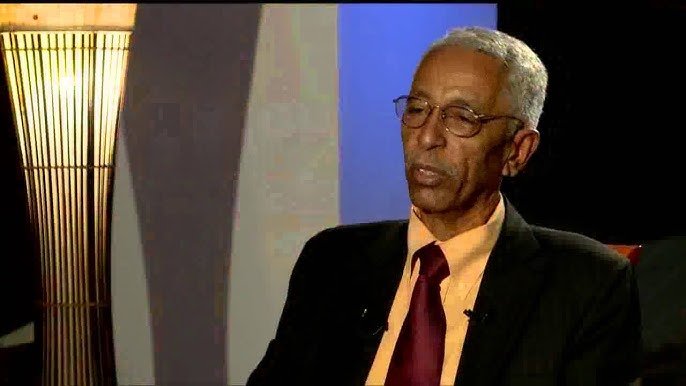
Dr Al-Khidr Haroun
The title alone is enough to provoke surprise, disbelief, and even indignation. Although Sudanese people, like all others, include both the virtuous and the flawed, they are generally known for their good reputation and honourable standing. A title such as this is therefore regrettable and reflects poorly on those concerned. It is perfectly natural for people to disagree with their governments, and every regime that comes to power acquires its critics, its victims, and those who believe they have been wronged—particularly in our region and across much of the developing world. Yet responsible people recognise the damage they could inflict upon their homeland by seeking the assistance of foreign powers that are only too eager to exploit such opportunities. History shows that outside interventions have repeatedly brought humiliation, suffering, and hardship to those they claimed to assist.
Regrettably, several Sudanese have recently sought to exploit the present turmoil in the region to advance their own objectives. They have gathered a series of old accusations that had already been challenged and rejected when they first appeared, presenting them once again as though combining them into a single package would somehow make them more persuasive. According to these allegations, the Sudanese Armed Forces have used chemical weapons, Sudan financed ISIS, al-Qaeda, and the international organisation of the Muslim Brotherhood, and therefore the country should be targeted amid the current disorder. The implication is that Sudan should once again be subjected to foreign intervention—if not through outright invasion, as occurred during the campaigns of Muhammad Ali Pasha, the Defterdar, Hicks, and Kitchener, then by seizing its gold, mineral wealth, and fertile land for a century as compensation for alleged victims, perhaps even displacing its population into the desert.
The allegation concerning chemical weapons echoes precisely the claims made during the period when Osama bin Laden and al-Qaeda were associated with Sudan. It was the same accusation used to justify the destruction of the Al-Shifa Pharmaceutical Factory in August 1998. According to the author, these allegations were later acknowledged to have lacked evidence. He cites remarks made by Dr Bob Arnot, a correspondent for the American television network NBC, who stated during a live broadcast:
“I visited that factory before it was bombed and destroyed. It was nothing more than a factory producing anti-malarial medicines and aspirin for millions of people—and I say this as a physician.”
Dr Arnot, the author notes, is still alive today.
The article further argues that sections of the American media itself portrayed the strike as an attempt to divert attention from the scandal then engulfing the White House, invoking the expression “wag the dog”—literally, the tail wagging the dog—to describe efforts to distract public attention from an embarrassing political controversy. The author remarks that the phrase also became the title of a well-known film about political manipulation and manufactured distractions, though he does not elaborate further.
As for the remaining accusations, the author argues that they overlook the fact that Sudanese state institutions and international intelligence agencies possess extensive records that contradict such claims. During that period, intelligence services monitored developments with extraordinary intensity, using satellites, large intelligence networks, and continuous surveillance, yet, according to the author, failed to uncover evidence supporting these allegations.
He cites two American figures in particular:
Timothy Carney, former United States Ambassador to Sudan.
Mansoor Ijaz, an American financier of Pakistani origin and a prominent supporter of former President Bill Clinton.
The two co-authored an article published in The Washington Post on 29 June 2002, entitled:
“Intelligence Failure? Let’s Go Back to Sudan!”
The article argued that failures within the American intelligence community had prevented effective cooperation with Sudan, thereby missing opportunities that might have helped avert subsequent terrorist attacks.
According to the article, in early 1996 CIA Director John Deutch persuaded Secretary of State Warren Christopher to withdraw American diplomats from Sudan because intelligence reports allegedly implicated the Sudanese Government in threats against US personnel. Although the embassy was not formally closed, it was evacuated, and relations with Khartoum deteriorated sharply.
The author highlights what he regards as a particularly significant admission contained in that article: shortly afterwards, the CIA reportedly concluded that its intelligence assessment had been flawed. A principal intelligence source had either exaggerated or entirely fabricated the information, leading the Agency to withdraw more than one hundred intelligence reports relating to Sudan during 1996.
Among those reports, the article claims, was one alleging that Sudan had plotted to assassinate then US National Security Adviser Anthony Lake, prompting him to remain under heightened security for several months before the intelligence was discredited.
The author also refers to the later case of Samuel “Sandy” Berger, Anthony Lake’s successor as National Security Adviser, who pleaded guilty to removing classified terrorism-related documents from the National Archives and received a sentence involving a fine and community service. According to the article, some observers privately speculated that certain of the destroyed documents may have related to the remaining disputed Sudan intelligence files.
The Washington Post authors wrote:
“We write from experience.”
One of them, Timothy Carney, had been the last American Ambassador to Khartoum, while the other, Mansoor Ijaz, had served informally as an intermediary carrying messages between Washington and Khartoum after the embassy’s evacuation.
The author further recalls Carney stating in an interview with journalist David Rose:
“We might at least have avoided the bombings of the two East African embassies had we accepted Sudan’s offer to cooperate.”
He also recounts that former US Secretary of State Colin Powell was once asked whether the attacks of 11 September 2001 might have been prevented had the United States cooperated more closely with Sudan. According to the author, Powell replied:
“Perhaps.”
The article also refers to Donald Petterson, who served as US Ambassador to Sudan between 1993 and 1996. In his book Inside Sudan, Petterson argued, according to the author, that intelligence circulated by certain Arab agencies and amplified by sections of the Western media regarding Iranian military and intelligence activity and terrorist operations inside Sudan was often exaggerated or inaccurate.
Finally, the author cites the American writer Richard Miniter, whose book:
Losing Bin Laden: How Bill Clinton’s Failures Unleashed Global Terror
criticises the Clinton Administration for rejecting Sudan’s offers to cooperate in disproving what the author describes as false intelligence reports and fabricated allegations.
The author concludes that these examples represent only a fraction of the available evidence, presented in the words of Americans themselves. He argues that every Sudanese has both a duty and a moral obligation to contribute whatever knowledge they possess in defence of Sudan against what he characterises as repeated campaigns targeting the country. According to the author, the principal victims of such campaigns have been ordinary Sudanese citizens, who have endured decades of underdevelopment, shortages of medicines, unreliable electricity supplies, and inadequate access to clean water.
He expresses confidence that Sudan’s official institutions possess compelling documentary evidence capable of refuting these allegations and exposing what he describes as an organised campaign directed against the country’s security, stability, and even its continued existence. He concludes by paying tribute to those who risk their lives in carrying out what he regards as this national duty, and offers prayers for eternal peace and paradise for those who have lost their lives.
Shortlink: https://sudanhorizon.com/?p=16736