

Sudan’s 15 April War in Its 4th Year: Facts and Figures (2/2)
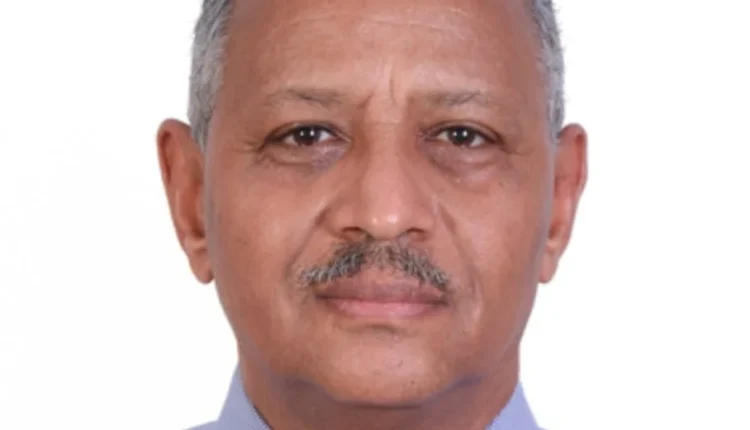
Obaid Ahmed Murawih
In the first part of this article, we outlined the key facts of the war that began on 15 April 2023, focusing on the actions attributed to the Rapid Support Forces over the past three years. We concluded that virtually every category of war crime or crime against humanity recognised in Sudanese, international, and humanitarian law has been committed, with victims spread across the country—particularly in Khartoum, Al-Jazira, Sennar, White Nile, and the regions of Kordofan and Darfur. Forced displacement, enforced disappearance, looting, killing, rape, sexual slavery, starvation, torture, and ethnic cleansing—all have occurred in these areas.
In this second part, we turn to the “narratives” employed by those who planned and ignited the war, and how events were framed and marketed to both domestic and international audiences. Before doing so, however, it is necessary to recall certain preceding facts. According to accounts relayed by Sudanese diplomats, during the height of the internal crisis over the “framework agreement”, the RSF leader, Mohamed Hamdan Dagalo, told visiting UN and European envoys that the agreement would be implemented—and that if Abdel Fattah al-Burhan opposed it, he would face arrest, trial, or even death.
This connects directly to the first pre-prepared narrative: that a “lightning strike” intended to seize power within three hours on the morning the war began was aimed at “restoring civilian rule” following the October 2021 coup. The RSF leadership had publicly expressed regret over that earlier move and pledged to “correct the mistake”. During this period, the then head of the UN mission in Sudan, Volker Perthes of the United Nations Integrated Transition Assistance Mission in Sudan, held private meetings with Dagalo in El Geneina, reportedly without Sudanese institutional representation.
When the “three-hour operation” failed and the conflict began to drag on, alternative narratives were activated. One such narrative framed the army as being under the influence of Islamists, suggesting that elements of the former regime had thwarted the attempt to “restore civilian rule”. This was reinforced through coerced confessions allegedly extracted under threat from political figures, linking the war to Islamist actors and merging that claim with the original narrative.
By the end of the first week, it had become clear that the quick takeover had failed and the war would be prolonged. At this point, then US Secretary of State Antony Blinken contacted both sides to facilitate the evacuation of diplomatic missions from Khartoum. He subsequently characterised the conflict as a struggle for power between “two generals”, adding a third narrative layer. The United States then engaged in mediation efforts alongside Saudi Arabia through the Jeddah platform, later joined by envoy Tom Perriello.
The Jeddah talks focused primarily on two urgent issues: temporary ceasefires (“humanitarian truces”) and the delivery of humanitarian aid. Disputes arose over the mechanisms for aid delivery—particularly the US insistence on transit arrangements that bypass Sudanese state oversight. When this was rejected, a fourth narrative emerged, accusing the armed forces of “obstructing humanitarian assistance”, thereby increasing international pressure.
Meanwhile, other developments—such as logistical arrangements in Chad’s Um Jaras region and allegations concerning external support networks—fed into broader competing narratives surrounding the conflict.
Over the course of three years, additional narratives were layered onto the conflict, while earlier ones—such as “restoring civilian rule”—were used more selectively. Greater emphasis was placed on narratives portraying Islamist influence, alleged use of prohibited weapons, and targeting of civilians. The cumulative effect was to present both sides as equivalent actors, thereby framing the conflict internationally as one between two parties of equal standing.
Domestically, mobilisation narratives focused on themes of marginalisation, historical grievances, and opposition to the legacy of the post-1956 state, aiming to attract recruits and sustain support.
The key takeaway is not merely the chronology of events, but the parallel “war of narratives” that accompanied the military conflict. Just as weapons and fighters flowed into the battlefield, narratives were deployed across international media and diplomatic arenas to shape perceptions and legitimise positions.
Despite extensive reporting by major international outlets and documentation by research institutions—including work by Yale University’s forensic research labs—allegations and counter-allegations have continued to dominate discourse. Various countries have issued statements denying involvement in arms transfers, while accusations of external support remain contested.
In conclusion, while the military campaign has been described as coherent and sustained, the performance on the fronts of media engagement and international advocacy has, in the author’s view, been comparatively limited—particularly given the scale of the crisis. With estimates from bodies such as the United Nations suggesting up to 150,000 fatalities and 14 million displaced, the conflict represents not only a humanitarian catastrophe but also an immense body of untold stories.
The question that remains is how these narratives—both factual and constructed—will be documented, communicated, and understood, as the war moves towards what many hope will be its eventual conclusion.
Shortlink: https://sudanhorizon.com/?p=13022