

Addis Ababa: Disagreements Plague Political and Civil Forces, No Joint Document In Sight
Addis Ababa – Sudanhorizon
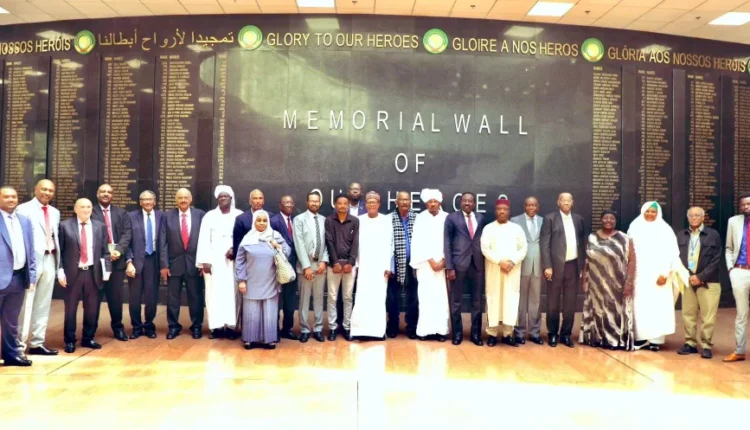
Consultations overseen by the international quintet in Addis Ababa on June 3rd and 4th have failed to produce an agreed-upon formula among the participating parties. The consultations are aimed to unify the positions of these forces regarding the nature and modalities of the Sudanese-Sudanese dialogue. Instead of agreeing on a joint statement, the process resulted in at least two separate statements, issued last night and early this morning, Friday.
Sources close to the consultations told Sudanhorizon that the series of meetings organized by the international quintet with several political actors, under the title “Preliminary Meetings” for the Sudanese-Sudanese dialogue, concluded last night without a unified vision among the participants.
According to the sources, representatives of the Democratic Bloc, the National Movement, the Popular Congress (both factions), the National Forces Coordination, and the Civil Democratic Alliance of Revolutionary Forces (Sumud), as well as various personalities representative of the civil society, participated in the consultations with the quintet. The consultative meetings with the five-party group resulted in two separate statements, each presenting a different vision regarding the requirements and mechanisms for managing the Sudanese-Sudanese dialogue, after an agreement on a joint statement proved impossible.
Representatives of the Democratic Bloc (the Sudan Liberation Army Movement “Minawi,” the Democratic Alliance for Social Justice “Ardoul,” and the United Popular Front for Liberation and Justice “Al-Amin Daoud”), the Civil Democratic Alliance of Revolutionary Forces (Sumoud), the Popular Congress (General Secretariat), the Ba’ath Party – Original, the Umma Party “Mubarak Al-Fadil,” and some figures classified as part of the civil forces, signed a separate statement from the one signed by representatives of the National Movement “Tijani Sisi,” the Popular Congress (Shura Council), and some figures classified as part of the civil forces.
Key components of the Forces of Freedom and Change’s democratic bloc, most notably the Democratic Unionist Party (DUP), the Justice and Equality Movement (JEM), and the Supreme Council of Beja Nazirs and Independent Chieftains, boycotted the consultations in protest against the approach proposed by the international quintet. Meanwhile, the National Forces Coordination, led by Mohamed Sayed Ahmed Al-Jakoumi, agreed to participate, though its position on the events and the nature of the consultations it held in the Ethiopian capital remains unclear.
The international quintet comprises the United Nations, the African Union, the European Union, the Intergovernmental Authority on Development (IGAD), and the League of Arab States. It has been working for two years to find a political settlement to the war in Sudan, but many Sudanese national forces view it as biased and selective in its choices, attempting to impose an external agenda on the Sudanese people rather than facilitating dialogue between the various Sudanese parties with divergent positions.
Shortlink: https://sudanhorizon.com/?p=14517