

“Emergency” and “National” Committees: Experts Comment on the Approach to Resolving Sudan’s Economic Crises
Sudanhorizon – Nazik Shamam
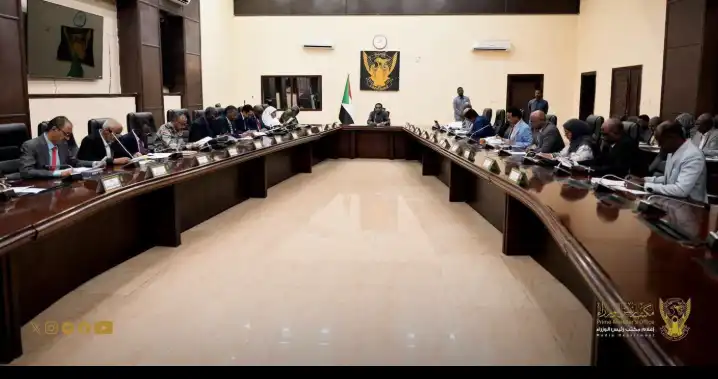
The launching of the National Committee for Economic Management by Sudanese Prime Minister Dr. Kamil Idris on Tuesday has sparked widespread reactions, coinciding with the significant challenges the national economy is currently facing.
The Sudanese economy suffers from chronic problems, most notably the sharp decline in the value of the Sudanese pound against foreign currencies, the recurring rise in inflation rates, and the decline in exports and rise in imports.
According to a statement from the Cabinet, the committee aims to maintain macroeconomic stability, including curbing inflation and stabilizing the exchange rate, accelerating sustainable economic growth and increasing national productivity, strengthening productive sectors and increasing local production, in addition to increasing exports and foreign currency reserves, enhancing investor confidence and the competitiveness of the private sector, supporting food security, and achieving balanced and sustainable development.
The National Economic Management Committee, chaired by Dr. Kamil Idris, was formed following the outbreak of war. The committee included Prime Minister’s Advisor Nizar Abdullah Mohammed, the Governor of the Central Bank of Sudan, the Secretary-General of the Tax Authority, the Directors of Customs, Standards and Metrology, the Central Auditing Organization, the Capital Markets Authority, and representatives from several other relevant bodies.
The statement emphasized that the committee is an executive body responsible for decision-making and implementation. Its scope of work encompasses fiscal and monetary policies, production, trade, the external sector, investment, employment, food security, energy, digital transformation, and related structural reforms. It is tasked with addressing economic challenges without compromising the work of the economic sector within the framework of the Cabinet’s executive bodies.
This was not the first committee with economic objectives on its agenda. An Economic Emergency Committee, chaired by Dr. Kamil Idris himself, was established approximately a year prior and issued a series of significant decisions aimed at regulating economic performance and stabilizing the national currency’s exchange rate.
The statement also noted that the committee’s work does not conflict with the work of the economic sector within the Cabinet’s executive bodies.
The Emergency Committee’s decisions included several fundamental reform measures, among them: prohibiting the import of goods unless all banking and commercial controls and procedures are fully met; banning the entry of any goods that do not meet approved conditions and specifications; activating the role of anti-smuggling forces and equipping them with the necessary resources and support to perform their duties efficiently; and enforcing anti-smuggling laws and regulations, such that possessing or storing gold without official documentation is considered a smuggling crime, regardless of location.
The work of the two committees appears remarkably similar, which has raised concerns among the public and those familiar with the intricacies of the economy, prompting legitimate questions: Can economic problems be solved through committees?
Economic expert Ahmed bin Omar launched a scathing attack on the government’s approach to managing the Sudanese economy through the proliferation of committees.
In an interview with Sudanhorizon, he warned against this approach becoming a “bureaucracy of committees” that hinders institutional work and weakens accountability. He pointed out that forming the new committee with the same old faces and methods will not make a tangible difference in performance.
Ben Omar pointed out that the members of these committees are often the same individuals across most economic bodies, with only the titles changing. This limits the opportunities for developing innovative visions and mechanisms to pull the country out of its economic crisis.
– Overlapping Jurisdictions and Multiple Decision-Making Centers:
Ben Omar emphasized the clear and significant overlap between the mandates of the recently announced “National Committee for Economic Management” and the previous “Economic Emergency Committee,” particularly in vital areas such as exchange rate management, fiscal and monetary policies, public revenue collection, support for production, trade, the external sector, and food security and energy.
He stressed the need to clarify the relationship between the two committees and to precisely identify the entity leading economic decision-making to prevent conflicting agendas and reduce the phenomenon of multiple decision-making centers.
He called for a transparent and thorough evaluation of the Economic Emergency Committee’s performance for public review. This evaluation should include achievements in stabilizing the currency, revenues, salaries, and rehabilitating essential services before any new structure is implemented. This is crucial to ensure that decisions are based on a performance review, not merely a change of titles.
– Weakening Ministries and the Independence of the Bank of Sudan:
Ibn Omar questioned the remaining role of ministries and relevant executive institutions given the presence of committees controlling major economic files. He emphasized that continuing this approach strips ministries of their powers and transforms them into mere instruments for implementing decisions made outside their official structures, which violates the principles of good governance.
He warned of the danger of involving executive and political committees in purely technical matters, such as curbing inflation and managing the exchange rate. He stressed that these tasks fall exclusively within the purview of the Central Bank of Sudan and its mechanisms for managing liquidity and foreign currency.
He emphasized the importance of limiting the encroachment on the independence of the Central Bank and ministries, asserting that the solution lies in consolidating the role of permanent institutions. The role of higher committees should be limited to coordinating fiscal and monetary policies and resolving conflicts between them, rather than becoming a substitute for these institutions or diminishing their technical and executive powers.
For his part, the economist, Dr. Haitham Mohamed Fathi stated that economic decision-making centers have failed to present or implement an effective action plan to support the national economy, citing the continued rise in foreign currency exchange rates against the Sudanese pound and the unprecedented increase in poverty rates.
He pointed out that the most prominent manifestation of this failure is the increase in imports that compete with domestic products, such as imported bottled water and soft drinks.
As a result of rising local production costs in safe areas, a large number of factories and workshops have ceased operations, leading to a general decline in industrial activity.
In his interview with Sudanhorizon, Fathi called for an urgent shift from traditional management styles to a comprehensive economic crisis management approach based on two main pillars: fiscal discipline and sustainability, and digital transformation and combating corruption through the activation of electronic systems for financial management, taxes, customs, and zakat (Islamic alms) to reduce waste and boost revenues in the mining sector, particularly gold.
He emphasized the administrative challenges facing the established committees, pointing to weak coordination among institutions, overlapping jurisdictions, and bureaucratic complexities that hinder reform.
Fathi noted that relying on temporary solutions is no longer effective in addressing recurring crises, especially since the current stage requires moving from reacting after a crisis occurs to building an institutional system capable of anticipating and containing risks early on to ensure economic stability and sustainable development.
Shortlink: https://sudanhorizon.com/?p=16668