

Success and Failure
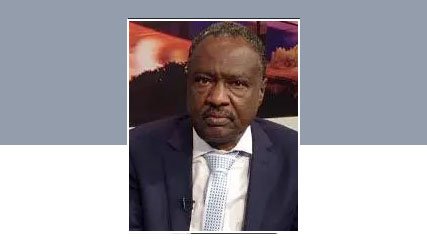
Rashid Abdul Rahim
The discussion at the United Nations Security Council on sanctions against Sudan clearly shows the difference between Sudan’s approach and what the United States seeks.
Sudan has succeeded in expanding the sphere of security and peace and in ending the war across vast areas stretching from southern Sennar to the far north of the country. At present, the war is confined to parts of Kordofan and Darfur.
The United States, however, wants to punish those spreading peace in the country while overlooking the real aggressor.
The situation on the ground and the expansion of peace provided the government with the means to confront the American project at the Security Council.
Major and influential countries stood with Sudan and thwarted the American initiative.
Sudanese foreign policy succeeded in this major effort, led by the country’s leadership, the Ministry of Foreign Affairs and Sudan’s mission in New York.
External pressure and manoeuvring by the United States and others will not cease. These actions against us will continue, and we must remain steadfast and support Sudan’s external efforts.
The hostile activity at the Security Council sought, in its immediate objectives, to prevent the Sudanese army’s continued success in defeating the rebellion and driving it out of Kordofan and Darfur.
The army needs continued government support and sustained effort to ensure that its requirements for weapons and military equipment are met. The Security Council’s failure to add drones to the arms embargo imposed on the government obliges us to redouble efforts to provide the budget required for the military campaign. This is the government’s primary responsibility. If the Ministry of Foreign Affairs has succeeded, the remaining ministries must succeed as well.
The government is operating as though on isolated islands, with each minister working independently. We cannot measure the effort and success of the Ministry of Communications, for example, against what is happening at the Ministry of Animal Resources.
Kamil Idris’s government was appointed in June 2025, meaning that it has now been in office for more than a year. Yet the Prime Minister is currently spending his fifth holiday in Switzerland.
How can such a fragmented government confront the summer agricultural season, which involves the country’s most important crops? This season also faces major challenges, including insufficient rainfall, declining Nile water levels, and rising costs of land preparation, energy, seeds, and other agricultural inputs.
These challenges could be addressed by adjusting the agricultural mix, suspending certain crops, and replacing them with others better suited to reduced water availability.
Military budgets are substantial and cannot tolerate delay. Our currency, which is collapsing at an alarming rate, is already insufficient—even when the necessary funds can be secured—to meet our requirements.
We are living through a period when government and military work should take precedence over dialogue sessions that do nothing but distract people from what is more important and urgent.
Shortlink: https://sudanhorizon.com/?p=17380