

Sudan’s Army Prevails on the Battlefield—and Shapes the Nation’s Spirit
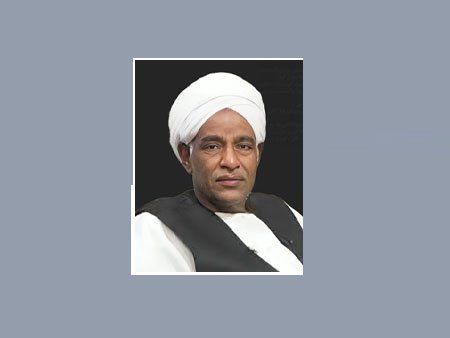
Mahjoub Fadl Badri
General Abdel Fattah al-Burhan was not the first commander of the Sudanese Army, nor, God willing, will he be its last.
We refer to him simply as Al-Burhan, without his well-deserved titles, not to diminish his status or deny him his due—as some of his political opponents do—but because everyone knows who the Commander-in-Chief of our Army is. It is an office governed by a strict hierarchy that recognises neither favouritism nor patronage.
Many members of the younger generation may not know why the Sudanese Army celebrates its anniversary on 14 August each year. They hear only that the Army is more than a century old, without realising that it became the country’s first regular military institution with the establishment of the Sudan Defence Force in January 1925, although Sudanese soldiers had served in military formations long before then.
The Sudan Defence Force comprised the Camel Corps, the Eastern, Western and Equatorial Corps, together with artillery, engineers, signals and transport units. These formations fought in Benghazi, Kufra and Keren—battles that became part of Sudanese popular memory and inspired songs celebrating their exploits. Sudan’s independence itself was, in part, a well-earned consequence of the Army’s participation alongside the Allied forces during the Second World War, while fully acknowledging the contribution of civilian political activism. Even the choice of the Army’s anthem as Sudan’s national ceremonial anthem reflected recognition of the military’s role in liberating the country from colonial rule.Few are also aware that the Sudanisation of the Army was completed before that of any other Sudanese institution. The committee overseeing this process was chaired in 1954 by Brigadier Ibrahim Abboud, who had first been commissioned as an officer in 1918.
In August 1954, Major General Ahmed Mohamed al-Ja’ali, then the most senior Sudanese officer, formally assumed command of the Army from the British commander. This occasion gave rise to the annual celebration of Army Day.
A Long and Honourable History
The Army has written a long and distinguished history with the blood of its sons, defending both the land and the nation’s honour. It did not seek political power or material gain. Rather, whenever political parties proved unable to govern effectively, they turned to the Army and urged it to assume responsibility for safeguarding the country from what they regarded as existential threats. They did so under the Armed Forces Act, which entrusts the military with responsibility for protecting the state.
The Army, the author argues, has never failed to answer what it regarded as the nation’s call. During such periods, patriotic songs once again celebrated the military and its leaders. Whenever crises deepened, political parties sought military intervention. According to the author, this occurred in May 1969, April 1985, June 1989, and April 2019, with political actors across the spectrum relying upon the Army to restore order or avert perceived dangers facing the country.
When the current conflict erupted, the people, in the author’s view, found no refuge except the Army. Officers and soldiers of every rank rushed to the battlefield, and the steadfast defence mounted by the Presidential Guard is presented as evidence that, without their sacrifice in protecting the Commander-in-Chief, Sudan’s fate might have been dramatically different. Senior officers also lost their lives during the conflict, although the author refrains from mentioning their names.
According to the article, had it not been for the Army, Sudan would now have fallen under the control of what the author describes as foreign-backed forces and mercenaries, leaving civilians with no sanctuary other than the national military. Whenever the Army liberated an area, its displaced inhabitants returned, praising God, thanking the Army, and repeating the slogan: “One Army, One People.”
Beyond the Battlefield
Despite its reputation for discipline and rigour, the Army also produced distinguished figures in literature, poetry, music, sport and the arts. Military officers earned recognition for their eloquence and cultural contributions as much as for their professional service.
The author further argues that many of Sudan’s major development projects—including sporting facilities, theatres, television broadcasting, paved roads and electricity generation—were established during periods of military government, beginning under General Ibrahim Abboud. Likewise, factories across different parts of Sudan were built and operated during subsequent military administrations under Presidents Jaafar Nimeiri and Omar al-Bashir.
A Story of Discipline
One oft-repeated anecdote illustrates the Army’s commitment to discipline and the careful management of public property.
Lieutenant Colonel Mohamed Osman Ahmed, father of Lieutenant General Abdel Rahman Mohamed Osman, Commander of the Camel Corps, translated military orders from English into Arabic and later served as Sudan’s ambassador to Uganda during the May regime.
While serving as a graduate of the Military Academy and stationed at the Western Command, he led his unit eastwards on a long march and established camp near Al-Da’ein. Upon learning of the Army’s arrival, the local tribal chief, Nazir Ibrahim Musa Madibbo, came to welcome the troops and presented them with a large bull as a gesture of hospitality before departing.
Lieutenant Colonel Mohamed Osman immediately assembled his senior non-commissioned officers and called for a conference.
Once the roll had been taken, he addressed his men:
“Pay attention. Instructions regarding the bull.”
“The bull will be slaughtered—slaughtered.” (Repeating key points was standard practice in military orders.)
“The hide will be removed.”
“The meat will be cut into strips to make sharmout (sun-dried meat), and thoroughly dried.”
Turning to the quartermaster, he continued:
“Make sure the meat is completely dry before entering it into inventory, because its weight decreases as it dries. Otherwise, when the auditors arrive, you’ll be in trouble—and you’re a good man, so don’t give us cause to discipline you.”
“The hide will become a drum for the company.”
“The head and offal will go to the soldiers to prepare haloula.”
“Any questions?”
According to the author, this story illustrates the Army’s meticulous attention to detail and its concern for safeguarding public property, even when the property had been received as a gift.
Shortlink: https://sudanhorizon.com/?p=16687