

Why Omar El-Digair Misdiagnoses Sudan’s Crisis (Part 2 of 2): Why Reform Should Not Begin with Outcomes
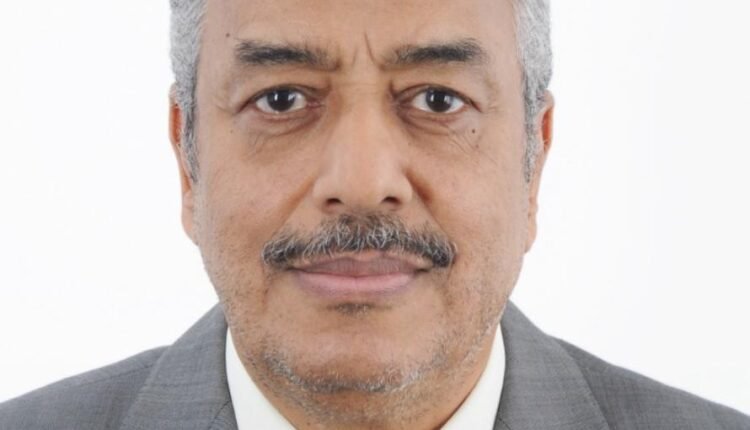
Dr Ismail Sati
Systems thinking is founded on a basic methodological principle: systems do not change by treating their outcomes, but by influencing the structures that generate those outcomes.
For this reason, countries that have successfully emerged from wars did not do so simply because they first brought the fighting to an end. They succeeded because they reshaped the political, security and institutional environment in ways that made the continuation of war either impossible or no longer worthwhile.
The error, therefore, does not lie in calling for a political solution, but in the order in which priorities are arranged.
When a state faces a threat to its existence or to the unity of its institutions, the first question is not: How should power be distributed? It is: How can the state itself be preserved as the framework within which politics can take place?
Politics does not operate in a vacuum. It takes place within a state capable of maintaining a minimum level of public order, protecting institutions and enforcing the law. If the state loses that capacity, any political arrangements become vulnerable to collapse because they are built on unstable foundations.
This is where a fundamental distinction emerges between linear and systems thinking. Linear thinking views war and politics as mutually exclusive choices: if one is present, the other must be absent. Systems thinking, by contrast, recognises that the two may overlap at certain stages, depending on the nature and objectives of the crisis.
This is not unique to Sudan. Many countries confronting insurgencies or internal wars have continued military operations alongside political negotiations. The purpose was not necessarily to prolong the conflict, but to prevent the balance of power from shifting in a way that would make any settlement impossible or inherently unstable.
The central issue is not simply whether military operations continue or cease, but the role they perform within the state’s broader strategy.
If war becomes an end in itself, it turns into an open-ended process of attrition. If, however, it forms part of a wider strategy intended to create the conditions for a sustainable settlement, it must be assessed very differently.
Portraying military action and political settlement as being in absolute contradiction does not always reflect the realities of managing complex conflicts.
Ignoring the Regional and International Environment
Another methodological weakness lies in reducing the crisis to the relationship between the Army and political forces, while overlooking the external dimension, which has become one of the most important components of the system producing the war.
Sudan’s conflict is no longer a purely internal dispute. It now involves regional interests, cross-border financing networks, a war economy based on natural resources, and geopolitical calculations extending far beyond Sudan itself.
This means that the war is no longer managed solely from within the country. It is also sustained by forces operating beyond its borders.
Systems thinking teaches us that a system cannot be understood solely through its internal components. It must also be examined through the environment with which it interacts.
Any peace project that fails to take these external factors into account will remain incapable of fully explaining why the war continues and will be equally limited in its ability to offer durable solutions.
Between Dialogue and the Reproduction of Crisis
Not every dialogue produces peace. Sudan’s own experience demonstrates this clearly.
The country has witnessed dozens of conferences, initiatives, agreements, mediation committees and round-table discussions. Yet many of them ended merely by redistributing power among political elites without addressing the structures that continued to generate crisis.
The real question, therefore, is not: Will we sit at the negotiating table? It is: What will we change once we are there?
If dialogue merely reproduces the same institutions, the same political culture and the same mechanisms of power-sharing, the logical outcome will be the reproduction of the same crisis.
A system that produces war cannot produce peace through the same instruments.
This is not exclusively a Sudanese problem. It is one of the principal conclusions reached in the study of complex systems and strategic management: different outcomes cannot reasonably be expected while preserving the same structures that produced the previous results.
Where Should Reform Begin?
From a systems-thinking perspective, reform does not begin with a political declaration, the signing of an agreement or even the formation of a transitional government.
It begins by redesigning the system that continually produces crises.
This requires simultaneous work across several interconnected areas, including:
restoring the state’s legitimate monopoly on the use of force, so that weapons no longer serve as instruments of political competition;
reforming the military and security institutions according to a unified national vision;
dismantling the insurgency’s war economy and cutting off its sources of finance;
building independent judicial institutions capable of restoring confidence in the rule of law;
launching an inclusive political process based not on quota-sharing, but on rebuilding the social contract;
restructuring the economy to address the roots of marginalisation and reduce conflict over resources; and
protecting national decision-making from external interference that has become part of the dynamics of the conflict.
These are not necessarily sequential steps. They are interconnected components of a single reform system. In complex systems, there are no magical solutions and no single starting point suitable for every crisis.
My disagreement with Omar El-Digair does not concern the value of peace, the importance of dialogue or the need to reach a political settlement that ends the suffering of the Sudanese people.
Peace must remain the ultimate objective towards which all national efforts are directed.
However, the path towards that objective begins with an accurate diagnosis.
In my view, the principal weakness in El-Digair’s article lies not in the outcomes he advocates, but in the assumption from which he begins. He treats war as the origin of the crisis, whereas it is, in fact, one of the outputs of a political, security, economic and social system whose dysfunctions have accumulated over decades.
Ending the war is an indisputable humanitarian and political necessity, but it is not sufficient to build peace.
Peace is not a temporary truce, the signing of an agreement or a new distribution of government posts. It is a characteristic of a political system capable of managing diversity, containing disputes, enforcing the rule of law and preventing the reproduction of violence.
The question that should occupy Sudanese people today is therefore not only:
How do we stop this war?
It is also:
How do we build a state that will not produce another war?
That is the question posed by systems thinking, and it will remain more important than any temporary answer imposed by the immediate circumstances of politics.
Shortlink: https://sudanhorizon.com/?p=16691