

To Those Who Rejoiced in the Dismissal of Brigadier Dr Tareq Al-Hadi
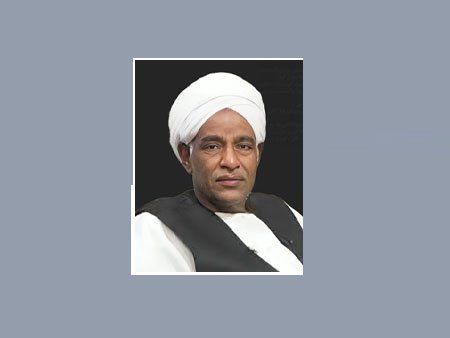
Mahjoub Fadel Badri
Leadership has its own assessments, through which it issues signals that must be respected and implemented without delay; otherwise, the entire system risks unravelling. This is something the detractors fail to understand—those who neither wish for our army’s victory nor even its survival, but rather seek its dismantlement, even if they cloak their intentions in the language of “restructuring”.
These same detractors were overjoyed when the Commander-in-Chief approved the recommendation to retire Brigadier (Dr) Tareq Al-Hadi Al-Siddiq. The decision indicated that the terms of settlement would be determined later—suggesting that he may be promoted to the rank of Major General for pension purposes, though God knows best.
Military service, like life itself, is temporary. Yet it differs from the civil service in that it is not bound by strict age limits. This distinction grants retired officers opportunities in other fields of life, unlike those in certain rigid structures where retirement leaves little room beyond the chair.
Tareq Al-Hadi is a distinguished surgeon, a skilled orator, and a man deeply versed in both his faith and worldly affairs. He will not need to seek a livelihood anxiously, for he did not join the army for personal gain or for the prestige of rank, but to fulfil what he regarded as a sacred duty among its ranks. He swore to obey his superior officer—even at the risk of his life—and we bear witness that he exerted himself fully in executing orders, often going beyond them out of personal conviction. For what is necessary to fulfil a duty becomes itself a duty.
We shall not speculate on the reasons the leadership retired him. We hold our leadership in too high regard to assume it sacrificed a distinguished officer to appease detractors or yielded to rumours. Rather, one might consider—without adopting a conspiracy theory—that he was among the first Sudanese casualties of the Trump–Netanyahu war.
Tareq himself has stated that his remarks were analytical rather than inciting. In any case, Iran requires no incitement to target American interests in the region, having already declared such assets legitimate targets prior to the outbreak of war.
Tareq’s live broadcasts resemble the political commentaries of “Lieutenant Younes” during the early years of the Salvation Revolution. At the time, such discourse caused considerable discomfort for both the Minister of Foreign Affairs and the Minister of Information. Dr Hussein Suleiman Abu Salih and Mr Mohamed Khogali Salih frequently complained about him. Yet Younes spoke from conviction and faith in the cause to which he had dedicated himself—seeking permission from no one.
Similarly, the programme Fi Sahat Al-Fida did not enjoy the army’s approval, nor did the programme Jayshuna, presented by Mr Al-Fateh Mahmoud Awad, who lost one of his eyes while accompanying military operations. He was also the first journalist to interview Brigadier Omar Hassan following the liberation of Mayom—yet his programme was ultimately suspended.
Such are the calculations of leadership.
There is no consolation for the enemies of success, nor should there be any lasting joy among the detractors over Tareq Al-Hadi’s departure. His true testimony lies in the words of those who followed him during the most difficult days of the siege—when he spoke with calm assurance, even under visible strain, reassuring the public that matters were under control, that the leadership was intact, and that the commander was safe. At a time when people were shaken to their core and feared they were surrounded, his words instilled hope and resilience.
While satellite channels broadcast demoralising narratives from figures such as Youssef Ezzat, Al-Basha Tabeeg, Imran, Sajman, Arman, and Ramadan, Tareq Al-Hadi’s voice instilled confidence and dignity in people. May God accept his efforts and reward him abundantly.
A company director—known for his gentleness and refinement—once sought to inform an employee of his retirement. He summoned him and said:
“My dear colleague, I personally cannot imagine how this company will function without you. But the board of directors has decided… to try operating without you, starting today.”
Shortlink: https://sudanhorizon.com/?p=12379