

When the State Is Equated with Those Who Rebel Against It: A Critical Reading of the UN Fact-Finding Mission’s Report on Sudan
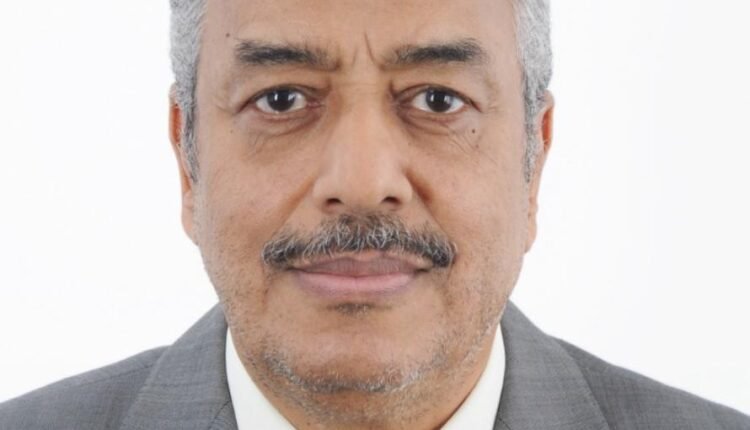
Dr Ismail Sati
On 1 September 2026, the International Independent Fact-Finding Mission for the Sudan issued its new report, A/HRC/63/23, before the Human Rights Council, under the title: “Fanning the Flames of Conflict in Sudan: Weapons, Fighters and External Support Networks.”
The report contains important, carefully documented information. At the same time, however, its structure and wording reinforce a problematic approach: treating the Sudanese Armed Forces and the Rapid Support Forces as two equivalent “parties to a conflict”, despite the fact that the difference between them is not merely a matter of the degree of violence involved, but a difference in their very legal and political nature.
One is a constitutional institution belonging to a state that is a member of the United Nations; the other is a rebel militia that emerged from within the ranks of the Armed Forces before becoming a parallel armed force receiving organised external support from neighbouring and regional states.
Linguistic Equivalence Concealing a Reality of Unequal Proportions
The report opens its summary with language that places the two sides on the same level of responsibility, stating that both have “fuelled military operations” with external support, and that both have committed violations that “may amount to war crimes”.
Stylistically, such wording may appear balanced and professional, irrespective of its legal implications.
The problem begins, however, when this linguistic balance enters the public domain and international media discourse. It creates a misleading impression that Sudan is experiencing a “civil war between two equals”, rather than an externally backed armed rebellion against an existing state.
More importantly, when the report itself is examined in detail rather than through its broad headlines, the disparity becomes strikingly clear.
The Rapid Support Forces’ Support Network: States, Individuals, Companies and Sanctions
The section on external support to the Rapid Support Forces is the most detailed and comprehensive part of the report.
The Mission does not merely refer to vaguely sourced “external support”. It explicitly names the United Arab Emirates, Chad, south-eastern Libya — including Benghazi, Kufra and Jufra — Puntland in Somalia, and Colombia.
The Mission goes so far as to name a specific military battalion affiliated with what is described as the “Libyan National Army”: the Sabah Al-Salam Battalion. It also names two individuals in full who have been subjected to documented UN sanctions for their role in recruiting Colombian mercenaries and deploying them in Sudan.
Nor does the matter end with naming states and individuals. The report identifies specific weapons systems, including Chinese-model howitzers, FK-2000 air-defence systems, and CH-95 drones. It links these to specific air, land, and maritime supply routes and also confirms that some of this equipment corresponds to systems previously exported specifically to the UAE.
This level of documentation comes closer to an “indictment” than to a general monitoring report.
That is an important point in any critical reading of the report: where the Mission considered the evidence sufficient, it did not hesitate to name names explicitly.
Support for the Army: Merely an “Initial Stage” — But Why?
By contrast, the section dealing with external support for the Sudanese Armed Forces is considerably shorter and less specific.
The Mission explicitly acknowledges that its investigation into this matter “remains at an initial stage”, and that it has not yet determined “the origin of these systems, the methods of their transfer, or the entities and states involved”.
The report does document the Sudanese Armed Forces’ use of Turkish-made drones, including the Bayraktar Akıncı, alongside loitering munitions. But it stops there and does not identify the supplier, in contrast to the detailed treatment it gives to the Rapid Support Forces’ support network.
The Mission justifies this disparity by stating that its findings on external support to the Sudanese Armed Forces remain preliminary, and that its current focus emerged from its deeper investigations into violations specifically linked to control of El Fasher.
Methodologically, this explanation may appear reasonable.
But it raises a legitimate question:
Why publish an official report before the Human Rights Council while one of its principal chapters is still “under investigation”?
The practical consequence, regardless of intent, is that the public is presented with an apparently complete external-support network on behalf of the Rapid Support Forces, while there is near-total uncertainty about the actors supporting the Sudanese Armed Forces.
This disparity in “readiness for publication” has political implications, even if that was not the intention.
A reader might interpret this as a warning directed at those supporting the institution of the Sudanese Armed Forces, before the matter proceeds into the corridors of the Security Council, potentially paving the way for a resolution prohibiting those states from supplying weapons to the internationally recognised Sudanese government — a government defending the existence of the state against an external aggression with regional and international dimensions.
Whose Conduct Was Described as Showing “Indicators of Genocide”?
The most serious point in the report — and one that should not be lost amid the language of superficial balance — is that the Mission repeatedly states, including in its conclusions and final section, that the conduct of the Rapid Support Forces and their allies in El Fasher and Darfur “bears indicators of the commission of genocide”, and that they committed “crimes against humanity” in addition to war crimes.
No equivalent description appears anywhere in the report regarding the Sudanese Armed Forces.
This is a qualitative, rather than merely quantitative, difference in the level and gravity of the allegations.
Yet this distinction remains buried within the report’s broader formulation describing “both parties” as having committed “serious violations”.
What Does the Report Say in Its Own Defence?
Nevertheless, the report contains elements that may be regarded as strengths, particularly in its documentation of violations attributed to the Sudanese Armed Forces.
It documents specific incidents using detailed evidence, including satellite imagery, direct testimony and analysis of weapons debris, and attributes them to the Sudanese Armed Forces. These include the alleged targeting of El Daein Teaching Hospital, Abu Zaeima Market and Yabous Market, with the number of casualties specified.
On this basis, its concluding recommendations call on the Security Council to extend the existing arms embargo on Darfur to cover the whole of Sudan.
Thus, the report does not seek to restrict arms supplies to the Rapid Support Forces alone. It calls for curtailing the flow of weapons to both sides.
This strengthens the argument that the report is, “behind the scenes”, seeking either to divide Sudan or to empower the Rapid Support Forces politically, on the premise that its objective is to protect civilians and enforce international humanitarian law irrespective of the identity or status of the perpetrating party.
Superficial Balance Is Not Equality in Reality
The fundamental problem with such UN reports is not the absence of evidence.
The report is rich in evidence, particularly concerning the Rapid Support Forces’ support networks.
Rather, the problem lies in the framework through which that evidence is presented — a framework that, at the level of language and structure, equates a regular army belonging to a UN member state and fighting to preserve the existence of the state with a rebel militia that the report itself says “bears indicators of the commission of genocide”, while documenting the organised external support it receives from several regional states through networks for recruiting fighters, smuggling weapons and transporting mercenaries.
Read carefully, rather than through its broad headlines, this disparity becomes unmistakable in the details.
And this is precisely where any serious discussion of the report should be centred:
Balance in language does not necessarily mean equality in reality.
Equating the two as “parties to the conflict” should not obscure the legal, political and historical differences between the state and those who rebel against it.
Shortlink: https://sudanhorizon.com/?p=17709