

Training from Formation to Promotion: Towards a Unified System for Qualifying the Judiciary, Prosecution and Legal Advisers
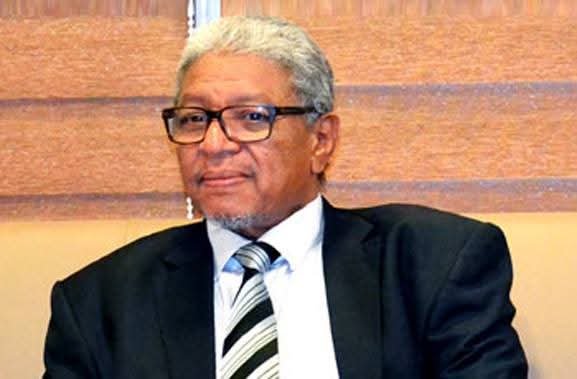
Dr Awad Al-Hassan Al-Noor
In my previous article, I promised readers I would devote a separate article to judicial and legal training. Following the publication in October 2025 of the final report of the Judicial Committee established under the Post-War Reconstruction Committee, which contains seven research papers and eighty recommendations, I have come to believe the issue goes deeper than mere “training”. It is a matter of “formation”, in the sense in which the term is used by leading judicial schools: formation that begins before appointment or at the point of taking up office, upon which specialised training is built, and upon which both formation and training, in turn, underpin promotion, with all three governed by continuous monitoring.
This article examines how judicial officers, prosecutors, and legal advisers are formed in advanced legal systems worldwide; what the Judicial Committee and its research papers propose on formation, specialisation, promotion, and monitoring; and where Sudan stands after the war.
Introduction: “Understand, understand” — What is legal training at its core?
Before discussing institutions and models, it is worth returning to the oldest and most concise definition in our legal heritage of the qualities required of anyone who undertakes judicial office: the letter of the Commander of the Faithful, Umar ibn al-Khattab, may Allah be pleased with him, to his judge in Basra, Abdullah ibn Qays Abu Musa al-Ash’ari. Jurists have described it as “a sound constitution for the system of justice and litigation.”
Umar says to his judge:
“Judging is an established obligation and an established Sunnah, so understand when a matter is brought before you; for there is no benefit in speaking the truth if it has no force of execution.”
The essence of the letter then appears in its most famous phrase, repeatedly cited by jurists:
“Understand, understand, concerning that which causes uncertainty in your heart and which has not reached you in the Qur’an and Sunnah.”
In other words, the judge must establish his understanding of a matter about which he is uncertain before issuing his judgement, rather than rushing to pronounce a truth that he does not know how properly to implement.
This early definition of “understanding” is, in essence, perhaps the closest definition we have to what we call “legal training” today. Training is not merely memorising legal texts or passing an examination. It is about equipping the legal practitioner with five faculties that the letter identifies with remarkable precision:
Good listening (Hearing): The “understanding” Umar demands cannot be achieved without attentive listening to each litigant until they have fully presented their case, without interruption or impatience. This is precisely what modern judicial schools call “active listening skills”, which new judges are trained in today through programmes such as those offered by the US Federal Judicial Center.
Effective questioning and examination: Understanding cannot be complete without asking the right questions of parties and witnesses to establish the truth. This is exactly what is practised today through moot courts, advocacy, and investigative programmes across the various models we have examined.
Equality between litigants and respect for the rights of the parties: “Treat people equally in your countenance, your justice and your sitting with them, so that no noble person may hope for injustice from you, and no weak person may despair of your justice.” This is precisely the principle underlying today’s concepts of fair trial and equality of arms between litigants in international human-rights instruments, to which entire modules are devoted in comparative judicial-formation curricula.
Allocation of the burden of proof and procedural discipline: “The burden of proof lies upon the claimant, and the oath upon the one who denies.” This is the foundation of the law of evidence in virtually all contemporary legal systems and remains among the first principles taught to any legal trainee, regardless of the legal system to which they belong.
Openness to review and rejection of rigidity: “Do not let a judgement you have delivered today prevent you from reviewing it when you reconsider your opinion and are guided to what is right; for truth is ancient and nothing can invalidate it, and reviewing the truth is better than persisting in falsehood.” This is the essence of Continuing Legal Education, upon which all continuing-training programmes in advanced legal systems are based.
If this is the standard of “understanding” that Umar demanded of his judge fourteen centuries ago, then any modern legal-training system—however technologically and institutionally sophisticated—amounts to little more than an institutional elaboration of this comprehensive principle: to produce a legal practitioner who listens well, asks the right questions, understands the rights of the parties in their entirety, and applies the principles of a fair trial instinctively rather than mechanically.
This is precisely the standard against which all the models and recommendations that follow should be measured.
First: How are these professionals formed in advanced legal systems around the world?
Countries differ fundamentally on one question: is a judge, prosecutor or legal adviser “made” through a unified formation institution before appointment, or selected from among experienced lawyers after years of professional practice?
Four major models emerge from this distinction, each offering lessons for Sudan as it develops its own model.
1. The American model: selection after practice and intensive formation after appointment
The United States has no “judicial school” that law graduates attend before becoming judges. The President nominates federal judges, and the Senate confirms them, from among lawyers who have practised for many years. Similarly, most state judges are either elected or appointed from the same professional pool.
However, formation does not end at appointment; it begins there.
A newly appointed federal judge undergoes two intensive five-day programmes at the Federal Judicial Centre in Washington. These cover case management, judicial ethics, rules of evidence, judgement and opinion writing, and the management of jury trials. The judge is then assigned a more senior judge as a mentor for several months and subsequently undertakes periodic continuing education as required for judicial service.
Prosecutors have an entirely separate training system. The Department of Justice’s Office of Legal Education operates the National Advocacy Center in South Carolina. At this comprehensive facility, thousands of federal and state prosecutors are trained every year through programmes such as the six-week Criminal Trial Advocacy course, with direct supervision and mentoring by senior prosecutors.
2. The French model: unified formation of judges and prosecutors before appointment
France, by contrast, along with most Francophone and Arab countries, follows the principle of the “trained judge”.
No one becomes a judge or prosecutor in France—both falling under the single term magistrat, with individuals able to move between the two roles during their professional careers—without first passing a rigorous national competitive examination. Today, approximately one candidate in eighteen is admitted.
Successful candidates then undertake a full 31 months of training at the National School for the Judiciary in Bordeaux. Approximately 30 per cent of this period is devoted to theoretical study and 70 per cent to extensive practical training in courts, law firms, investigative bodies, and prisons, while candidates receive a full salary throughout the period.
After graduation and taking the judicial oath, the new magistrate begins pre-first-post training, tailored specifically to the position the graduate has chosen. Meanwhile, the Paris branch of the school provides continuing education for serving magistrates through more than 600 training activities each year.
3. The German model: one legal-formation pathway for the judiciary, prosecution and legal profession
Germany goes further than France in unifying the pathway. There is no separate “judicial training” system distinct from general legal formation.
Every law graduate—whatever their eventual destination, whether judge, prosecutor, lawyer or government legal adviser—follows the same compulsory route: four years of university study, followed by the First State Examination, then a compulsory two-year period of practical training known as the Referendariat.
During this period, trainees rotate through a civil court, criminal court, public prosecution office, law firm and administrative authority, under the supervision of judges and practising lawyers. They then sit the Second State Examination, whose qualification opens the way to all these professions.
The decision of who ultimately becomes a judge is made based on performance rankings in the two examinations and the availability of vacancies. In other words, professional paths are separated after unified formation, not before.
4. The Japanese model: unified formation under the direct supervision of the Supreme Court
Japan offers another model of unified formation. Anyone who passes the national legal examination—whether intending to become a judge, prosecutor or lawyer—is required to attend the Legal Training and Research Institute.
The Institute reports directly to the Supreme Court of Japan rather than to the Ministry of Justice. It provides a unified curriculum lasting between 12 and 16 months, combining practical training in the offices of practising judges, prosecutors and lawyers with collective training in judgement writing and advocacy.
The programme concludes with a final national examination that determines who becomes an assistant judge, prosecutor, or lawyer.
The significance of this model lies in placing the formation of the entire justice profession under the umbrella of the highest judicial authority rather than the executive. This is precisely where the Japanese experience converges with one of the Judicial Committee’s papers concerning Sudan, as discussed below.
Second: What these experiences have in common, and what the Judicial Committee’s papers propose
Despite their different starting points, these experiences converge around four successive stages. Sudanese reform cannot afford to bypass any one of them.
The Judicial Committee’s papers—particularly the “Discussion Paper on the Draft Higher Judicial Council” by Dr Awad Al-Hassan Al-Noor and the “Legal Training Paper” by Legal Adviser Tariq Mubarak Majzoub—lay the foundations for each of these stages in the Sudanese context.
1. Basic formation
This is the stage preceding actual service or accompanying its commencement: unified theoretical and practical preparation before a judge or prosecutor assumes responsibility for determining disputes involving members of the public.
The Committee recommends establishing a unified Judicial and Legal Academy responsible for this formation for all legal professionals in the state according to common standards, instead of leaving each justice-sector institution to train its own personnel in isolation, as is currently the case.
More importantly, the Higher Judicial Council paper clearly identifies where this formation should sit institutionally. It should not be under the Presidency of the Republic, as is the case with the existing institute—which the paper describes as “an unusual arrangement whereby a sovereign authority is granted executive powers over matters outside its administration”—but under the proposed Higher Judicial Council, following the Japanese model in which the training institute reports directly to the highest judicial authority.
2. Specialised training
After unified basic formation, the professional paths branch out: a judge specialising in personal-status law, commercial law or cybercrime; a prosecutor specialising in financial crimes or war crimes; a legal adviser specialising in international arbitration or legislative drafting.
Here, the American model—with more than 100 specialised programmes annually at the National Judicial College and specialised “clinics” at the National Advocacy Center—offers perhaps the most appropriate example in terms of diversity.
The Committee, meanwhile, recommends that:
“The institute should undertake basic and specialised training, while the justice-sector bodies should provide only limited institutional training.”
In other words, deep specialisation should remain centralised to ensure consistency and professional standards. Internal “institutional courses” within individual bodies should not become an uncontrolled substitute for centralised formation, as is currently happening in Sudan.
3. Promotion
The Committee’s recommendation here is explicit and decisive:
“It should be mandatory for those subject to training to take it seriously, and training should be linked to their promotions.”
Training would therefore cease to be an optional or ceremonial activity and become an objective condition for advancement within the judicial and prosecutorial hierarchy. This is comparable to the American requirement for periodic continuing education as part of continued judicial service, and to the German and Japanese systems, where performance rankings in formation examinations determine professional pathways from the outset.
The Judicial Authority paper also calls for:
“A clear standard and defined criteria for appointments and promotions,”
rather than individual discretion or loyalty.
This would make formation and training objective criteria for advancement and help limit the political interference repeatedly warned against in the papers.
4. Monitoring
No system of formation and promotion can have value without continuous monitoring and evaluation.
The Committee recommends:
“Periodic evaluations of the effectiveness of training programmes and their impact on the performance of justice-sector institutions.”
The Higher Judicial Council paper, meanwhile, specifically proposes:
“Separating the Inspection Department and establishing an independent department under the Higher Judicial Council in a manner that ensures the independence of inspection, the receipt of complaints and the full-time commitment of inspectors without interference.”
In other words, monitoring and inspection should also fall under the same umbrella as formation, training and promotion.
This would create a single chain of responsibility—from the first day of formation to the final performance assessment—instead of leaving these functions scattered among multiple bodies, as is currently the case.
Third: The values that judges, prosecutors and legal advisers must embody
No institutional system of formation and training, however carefully designed, can be complete without an ethical foundation governing it.
The “understanding” that Umar demanded of his judge, discussed at the beginning of this article, cannot be separated from the values of the person who is required to exercise that understanding.
The Bangalore Principles of Judicial Conduct—a document endorsed by the United Nations in 2002 and subsequently becoming a global reference point for judicial codes of conduct—identify six fundamental values that should be embedded equally throughout every stage of formation, specialisation, promotion and monitoring. They are no less important than any technical skill:
Independence: A judge, prosecutor or legal adviser must not be subject to external influence—political, personal or institutional—in reaching a decision. This corresponds directly to the need, discussed above, for a unified institutional framework insulated from executive interference.
Impartiality: A dispute must be determined without prior inclination towards either party. This is a direct embodiment of Umar’s instruction: “Treat people equally in your countenance, your justice and your sitting with them, so that no noble person may hope for injustice from you, and no weak person may despair of your justice.”
Integrity: Personal and professional conduct must remain above suspicion, both within and outside the courtroom. The judge’s private conduct should be a genuine reflection of what the office represents, rather than something detached from it.
Propriety: Respect for the standards and traditions that preserve the dignity of judicial office, avoiding anything that might undermine public confidence in the integrity of the judiciary, even if it does not amount to an explicit legal violation.
Equality: Everyone appearing before the courts must be treated on an equal footing, without discrimination based on sex, race, religion, social status or any other consideration.
Competence and diligence: Continuous professional mastery, with no procrastination or negligence in the performance of duty. This value connects directly with the system of formation and continuing training discussed in the preceding section.
If the Judicial Committee and its research papers have rightly focused on the institutional and procedural aspects of training, no genuine formation curriculum can be complete unless these values are explicitly taught—not as slogans recited at graduation ceremonies, but as criteria for assessment and monitoring against which the performance of every graduate of the proposed Academy is measured, and as promotion criteria no less important than purely technical competence.
Fourth: Unifying the umbrella — Why can the Higher Judicial Council overcome the isolation of the justice-sector bodies?
The central idea bringing everything discussed above together, and where the Japanese experience converges with the Judicial Committee’s own papers, is this:
The formation of judges, prosecutors and legal advisers should be removed from the fragmented sphere of executive dependence—Presidency of the Republic, Ministry of Justice, Justice Council, National Judicial Service Commission, and other bodies whose jurisdictions overlap, as demonstrated by the discussion paper on the draft Higher Judicial Council—and placed under a single judicial umbrella: the Higher Judicial Council.
The Council should encompass the judiciary at its various levels—the Constitutional Court, Supreme Court and trial judges—and the Public Prosecution as a quasi-judicial institution.
Government legal advisers and lawyers, because of the different nature of their work, should remain linked to the same formation system without necessarily being subject to the same administrative chain of command, as will be elaborated in due course.
This would also prevent a repetition of the fate of the institute that was dissolved in 2006 and whose library was subsequently divided up, before the National Assembly effectively curtailed its legal framework in 2015.
A personal testimony: The barrier that keeps returning
I have a personal testimony to add here—not as a digression, but as further clarification.
I was the first Director of the Legal Training and Reform Institute in Sudan. From the very first day, I encountered a reality in which the justice-sector bodies were, in the very words later used by the Judicial Committee’s papers to describe the same disease, “isolated islands” that rejected the institute and resisted its very concept.
Nevertheless, the institute graduated one outstanding cohort of judges, prosecutors, and legal advisers who spent a full year inside the institute undergoing comprehensive theoretical and practical training comparable to any of the models discussed above.
On the very day that cohort graduated, opponents of the institute—from within the very justice system that should have been its first beneficiary—succeeded in obstructing its work.
I later became Minister of Justice, believing this position would finally enable me to remove those barriers. Yet I couldn’t do so there either.
The obstacle was never legislative or technical, something that could be solved through a better institute or a more modern curriculum. It was—and remains—the influence of individuals and political considerations over judicial and prosecutorial appointments and promotions.
However precise the recommendations and however well drafted the laws, this barrier—the intervention of individuals and loyalties in the paths of formation and promotion—remains the greatest obstacle to the development of the justice system and legal training in Sudan.
It cannot be overcome merely through the good intentions of those running the system. It requires institutional independence protected by law and accountability, not promises alone.
Fifth: A view from within the judiciary — Qualification and performance
For the sake of balance, it is also useful to hear a voice from within the judiciary itself, expressed by our esteemed colleague Judge Abu Qusaissa, former Deputy Chief Justice and former Constitutional Court judge. It is a view shared by many senior judges:
“Judging is a craft that generations learn from one another.”
It is not merely a curriculum taught in a classroom.
This view reduces training to two fundamental matters: qualification and performance.
As for where attention should be prioritised, a fundamental question arises: do we need a stronger court of first instance, or stronger correction at the higher levels, such as the appellate courts?
While acknowledging the view of those who favour strengthening the higher stages, Judge Abu Qusaissa considers the court of first instance to be the first priority in the judicial structure as a whole. Its strength reduces the number of appeals, directly addressing one of the principal causes of delay and public frustration with the speed and efficiency of justice.
This argument aligns with what the Judicial Committee’s papers identified: the accumulation of cases and widespread dissatisfaction with delays in litigation.
So what ensures the strength of a court of first instance?
Here we return to qualification.
Judge Abu Qusaissa takes us back to the very starting point: the university. He recalls a time when there was a single university system and when the highest admission grades were required only for the faculties of medicine and law.
In other words, strict selection at the door of the law faculty is the first building block in the qualification of a judge, before any subsequent training. This point intersects with the French model of a national competitive examination that admits approximately one candidate in eighteen.
Performance can be illustrated by a simple but highly significant practical example: ensuring that the “Book of Law”—thirteen hardbound volumes containing all Sudanese laws, comprehensively and systematically indexed by subject and keyword—is available in every court of first instance.
The judge should be able, at the moment of need, to reach out and immediately find the relevant provision before them, without postponement.
This seemingly simple form of procedural empowerment—having the right tool at hand—can affect the speed and efficiency of justice as much as the most sophisticated theoretical training programmes.
It reminds us that performance is measured not only by the depth of legal understanding, but also by the availability of the everyday tools of the profession that shorten litigation time and prevent case backlogs.
Although this view comes from a different perspective from that of the Judicial Committee’s papers, it does not contradict them; rather, it complements them.
If the Committee speaks of comprehensive institutional formation under a unified academy, Judge Abu Qusaissa reminds us that this formation does not begin at the door of the institute, but at the door of university admission itself. Nor is it complete with a theoretical curriculum alone; it also requires daily procedural readiness that enables a judge to issue a judgement without delay while a crowded courtroom full of litigants waits.
Sixth: Another view — Institutional independence through a Board of Trustees rather than dependence on a single body
In a contribution published by Dr Siddiq Hussein, he puts forward a view worthy of inclusion in this discussion. It begins with a historical warning and leads to an institutional model that differs, in part, from the conclusion reached above.
Regarding the theoretically ideal arrangement, Dr Hussein first stresses the urgent need to maintain an institute for legal training. He points out that Sudan is among the few countries where a law student can work in the judiciary, prosecution or legal profession after only one year following completion of a written examination taken from home.
By contrast, a law graduate in Britain cannot enter the profession of Barrister or become a judge without completing a period of compulsory training through one of the professional Inns of Court. At the same time, a person cannot qualify as a Solicitor without completing two years of training through the Law Society for England and Wales.
In the United States, he adds, there is no equivalent training period after studying law. But law itself is not normally available as an undergraduate degree to secondary-school leavers; it is pursued only after obtaining a prior university degree in another field of the humanities or sciences.
More generally, most countries require post-graduate training before entry into the legal professions. In contrast, others stipulate that judicial work should not be open to someone holding a university qualification in another field without additional training and successful completion of a professional Bar Examination.
More important, however, is Dr Hussein’s view on the institute’s institutional affiliation.
He argues that the Legal Training Institute “should not be owned by the Ministry of Justice or the judiciary”, but should instead be independent, governed by a Board of Trustees comprising representatives of the judiciary, the Bar Association, the Public Prosecution and the Ministry of Justice, together with three members representing all law faculties.
Among them should be the Dean of the Faculty of Law at the University of Khartoum and the dean of another law faculty.
I would add retired judges, senior lawyers and university professors to the Council and its academic board.
This proposal differs fundamentally from the position reached in the third section above, where I favoured placing the institute exclusively under the Higher Judicial Council.
Whereas this article argues that independence can be achieved by removing formation from executive dependence and placing it under a single supreme judicial umbrella, Dr Hussein argues that any single institutional affiliation—even to a judicial body—contains the seeds of repeating the very problem we have witnessed before.
He therefore proposes broad representational pluralism that would prevent any single party, whether judicial or executive, from dominating the institution.
In truth, the two approaches converge on the same objective: protecting the institute from the personal and political influence discussed in my personal testimony above, even though they differ over the means of achieving it.
This is precisely the issue that should be resolved through broad public debate before either proposal is transformed into a final legal text, so that the fate of previous experiments is not repeated.
Seventh: What all of this demands in post-war Sudan
Legislation, not regulations: Transform the draft Higher Judicial Council into a firmly entrenched constitutional law and expressly attach the institute to it, rather than repeating the experience of unstable subordinate regulations that have disrupted the institute four times since 1994.
Direct administration, not nominal supervision: The Higher Judicial Council law should expressly provide that the Council assumes direct administration—not merely nominal institutional affiliation—of both the unified Judicial and Legal Academy and the Inspection Department. The Academy would be its arm for formation and specialisation. At the same time, the Inspection Department would be its arm for monitoring and accountability, within a single administrative and financial chain beginning with the first lesson in formation and ending with the final performance assessment. No executive body, such as the Ministry of Justice or any other institution, should intervene between them. The institute’s experience shows that intermediary intervention is the very loophole through which personal and political influence repeatedly enters.
An urgent compensatory formation programme: This should not wait until the Academy is fully established. It should urgently retrain those removed from service or deprived of professional development because of displacement and refuge during the years of war, while also providing formation for new entrants.
Integrating the Public Prosecution and legal advisers: Their professional paths should be incorporated into the same system of formation and monitoring rather than being kept separate, as is currently the case, thereby addressing the acute shortage of training and qualification among prosecutors and the inadequate funding identified in the Public Prosecution paper.
Genuine financial independence for inspection and monitoring: The Inspection Department should operate under the Higher Judicial Council with genuine financial independence rather than remaining an instrument that could potentially be used politically, as the papers have repeatedly warned.
International and regional partnerships: Sudan should cooperate with models such as those of Japan, France, Germany and the United States, as well as with sister Arab judicial institutes, to finance the reconstruction phase and exchange expertise, rather than relying solely on a strained post-war government budget.
Investing specifically in courts of first instance—qualification and performance: This should begin with raising admission standards for law faculties and culminate in providing every court with a complete, properly indexed legal reference enabling judges to issue judgements without unnecessary postponement. This follows the view of senior judges that strengthening courts of first instance is the most effective remedy for the accumulation of appeals and delays in litigation.
The opportunity presented by reconstruction is one that rarely comes twice.
Either Sudan builds a unified system of judicial and legal formation—from the first theoretical lesson to the final monitoring assessment—that is worthy of what generations of Sudanese legal professionals have built since the dawn of independence, or these recommendations will be added to a long record of reports that diagnosed the problems correctly but failed in implementation.
Until the next article, which will address how to reform the judiciary.
Shortlink: https://sudanhorizon.com/?p=17681