

The Central Bank of Sudan Has Regained the Initiative… But Are the Banks Ready for the Battle to Rebuild the Economy?
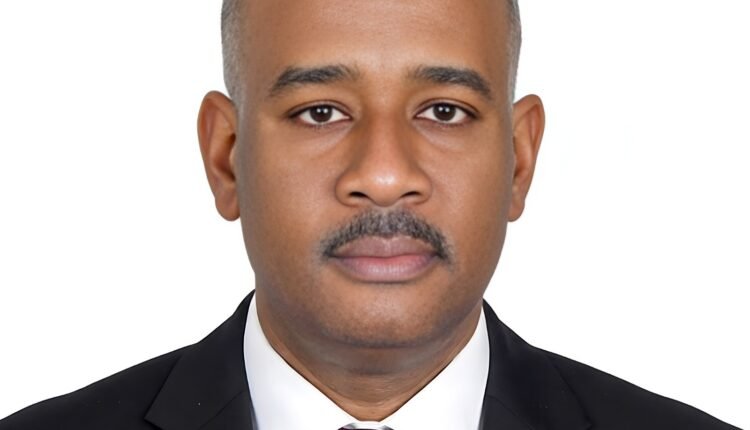
Muhannad Awad Mahmoud
African Peoples and the Peoples of the Diaspora
Over the past period, we have written extensively about the challenges facing the Sudanese economy and the need to move away from an economy dependent on imports and consumption towards one based on production, exports and value addition.
We have discussed the impact of fees and levies on the competitiveness of Sudanese products, the importance of removing distortions that limit Sudan’s ability to attract foreign currency, and the broader reforms required to restore economic activity.
Recent developments, however, open another avenue for discussion—one that may receive less attention but is no less important: does Sudan possess a banking system capable of leading the economic recovery?
The recent decisions by the Central Bank of Sudan indicate a clear shift in monetary policy management. The Bank is no longer content merely to observe the market from a distance. It has begun using its policy instruments to regain the initiative: injecting foreign currency through the banking system, regulating the gold market, reviewing the electronic payments system, and reorganising the circulation of money within the economy.
These measures have achieved an important result: they have broken the wave of speculation and restored a degree of confidence in the banking system.
Economic experience, however, teaches us that the success of a central bank is measured not only by its ability to intervene during a crisis but also by its capacity to rebuild a banking system that functions effectively once that intervention ends.
An economy cannot be managed indefinitely through central bank decisions alone.
The central bank formulates policies and establishes regulations, but commercial banks are responsible for translating those policies into genuine economic activity.
This brings us to the most important question: where do Sudanese banks stand today in relation to the requirements of this new phase?
In any modern economy, a commercial bank is not merely a building in which money is stored, a counter for receiving transfers, or an institution for buying and selling foreign currencies.
It is the heart that pumps blood through the body of the economy.
Banks collect small savings and transform them into large projects. They assess risks and finance productive sectors. They move money from vaults to factories, from dormant accounts to agricultural fields, and from figures recorded in ledgers to employment opportunities and genuine economic growth.
Yet over many years, under the pressures of inflation, currency depreciation, war and instability, many banks have retreated from their natural role.
Managing daily liquidity has become more important than financing development, while avoiding risk has sometimes taken precedence over creating opportunities.
This may be understandable under exceptional circumstances, but it is not a viable approach for the reconstruction of the state.
Currencies and Exchange Rates
At the same time, calls for commercial banks to resume their natural role in financing the economy must take into account the scale of the challenges the banking sector has faced over the years of war.
Banks have not been insulated from the consequences of the crisis.
They have experienced severe pressures, including the loss of assets, the closure or disruption of branches, the deterioration of customers’ financial positions, defaults within financing portfolios, and the declining value of collateral.
Rebuilding the role of the banking sector, therefore, does not simply mean demanding that banks increase lending and financing. It also requires strengthening their financial positions and improving their risk-management capabilities.
A weak bank cannot finance a strong economy.
Today, as the Central Bank of Sudan begins taking steps to return financial flows and transactions to official channels, the greatest challenge is not simply whether liquidity enters the banking system, but what the banks will do with that money.
Liquidity held within banks will remain nothing more than figures on balance sheets unless it is transformed into financing for productive activity.
Deposits will not change economic reality unless they become factories that operate, farms that produce and exports that reach international markets.
From this perspective, the Central Bank’s measures to manage the money supply and regulate the denominations of currency in circulation should be viewed within a broader framework.
The issue is not simply one of banknotes entering or leaving the market.
Rather, it is an attempt to regain control over the actual volume of liquidity in circulation, reduce the influence of the informal economy, remove counterfeit or suspicious banknotes from circulation, and strengthen the connection between financial transactions and the formal banking system.
The success of these measures, however, will not be complete merely through regulating the circulation of money.
Success will come when funds entering the banking system are transformed into genuine financing for production.
The real test is not the volume of deposits held by banks, but their ability to convert those deposits into economic activity.
This is where a new discussion must begin between the Central Bank of Sudan and commercial banks about redefining the role of banking institutions in the next phase.
The coming period requires banks that do not simply wait for customers to approach them, but actively seek out economic opportunities and develop risk-management departments capable of financing productive activity rather than retreating from it.
A Sudan emerging from war will need more than money.
It will need institutions that know how to use money effectively.
There is a fundamental difference between liquidity availability and financing availability.
Liquidity is money that exists.
Financing is an economic decision that transforms that money into value.
This is why digital transformation in the banking sector is so important—not merely as a matter of mobile applications, but as the foundation of a new relationship of trust between citizens and the financial system.
Citizens will not return to the banks simply because new regulations have been issued. They will return when they find services that are accessible, secure and efficient, and a financial system that protects their money and meets their needs.
Traders will not abandon cash transactions unless they find a more efficient payment system.
Investors will not commit their money unless they find a banking system upon which they can rely.
Reforming the banking sector today, therefore, is not merely a banking issue. It is an essential component of rebuilding the national economy.
In recent days, the Central Bank of Sudan has demonstrated that organised intervention can influence markets and that confidence can begin to return when markets perceive clear and effective management.
The next phase, however, will be more difficult.
African Peoples and the Peoples of the Diaspora
The value of the dollar may be reduced through intervention, but currency stability can only be achieved when the banking system becomes an engine of production.
The next battle will not be fought solely in the foreign-exchange market.
It will be fought inside the banks—in financing decisions, risk management, and the ability to transform savings into investment.
The Central Bank of Sudan has begun to regain the initiative.
Now the responsibility passes to the commercial banks.
They can either remain institutions that merely safeguard money, or become institutions that help build the future.
Ultimately, the strength of a currency does not come from the amount of money held in bank vaults, but from the economy’s ability to convert that money into production and wealth.
Shortlink: https://sudanhorizon.com/?p=15695