

Security Warning from U.S. Research Institute: New RSF Buildup Inside Ethiopia Could Target Regional Capital
New Haven – Sudanhorizon
The Humanitarian Research Lab (HRL) at the Yale School of Public Health issued a humanitarian security alert two days ago, on August 28, warning that satellite imagery shows the buildup of a brigade-sized force in the Ethiopian town of Asosa, at an Ethiopian National Defense Force base. The lab said the buildup is linked to activity by Sudan’s Rapid Support Forces (RSF).
The Yale School of Public Health laboratory is the same institution that issued warnings about the 2025 El Fasher massacre, in which thousands of civilians were reportedly killed. Its latest report warns of a potential catastrophe should an attack be launched from the Asosa area, saying that thousands of civilians in Kurmuk and surrounding areas of Sudan’s Blue Nile State could be among the victims. It also warned that such an attack could trigger significant refugee flows into Ethiopia.
The study team was led by Dr. Danielle N. Paal, Faculty Director at the Humanitarian Research Lab at the Yale School of Public Health. The report’s analysis and preparation were overseen by Nathaniel Raymond, Executive Director of the Humanitarian Research Lab, and Caitlin Haworth. The lab’s Conflict Analysis Team conducted the underlying analysis and prepared the report.
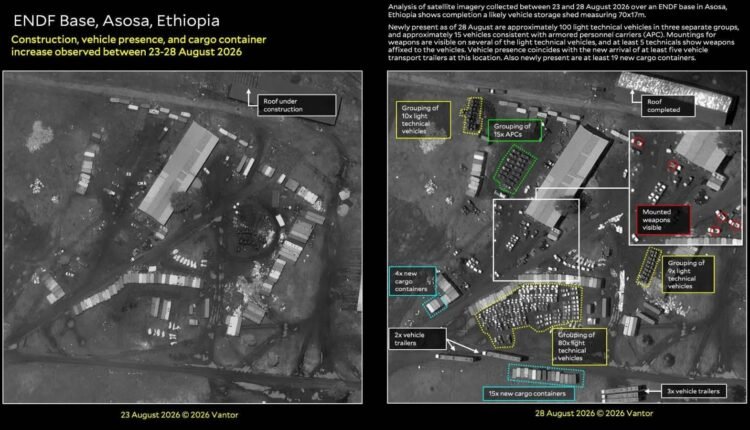
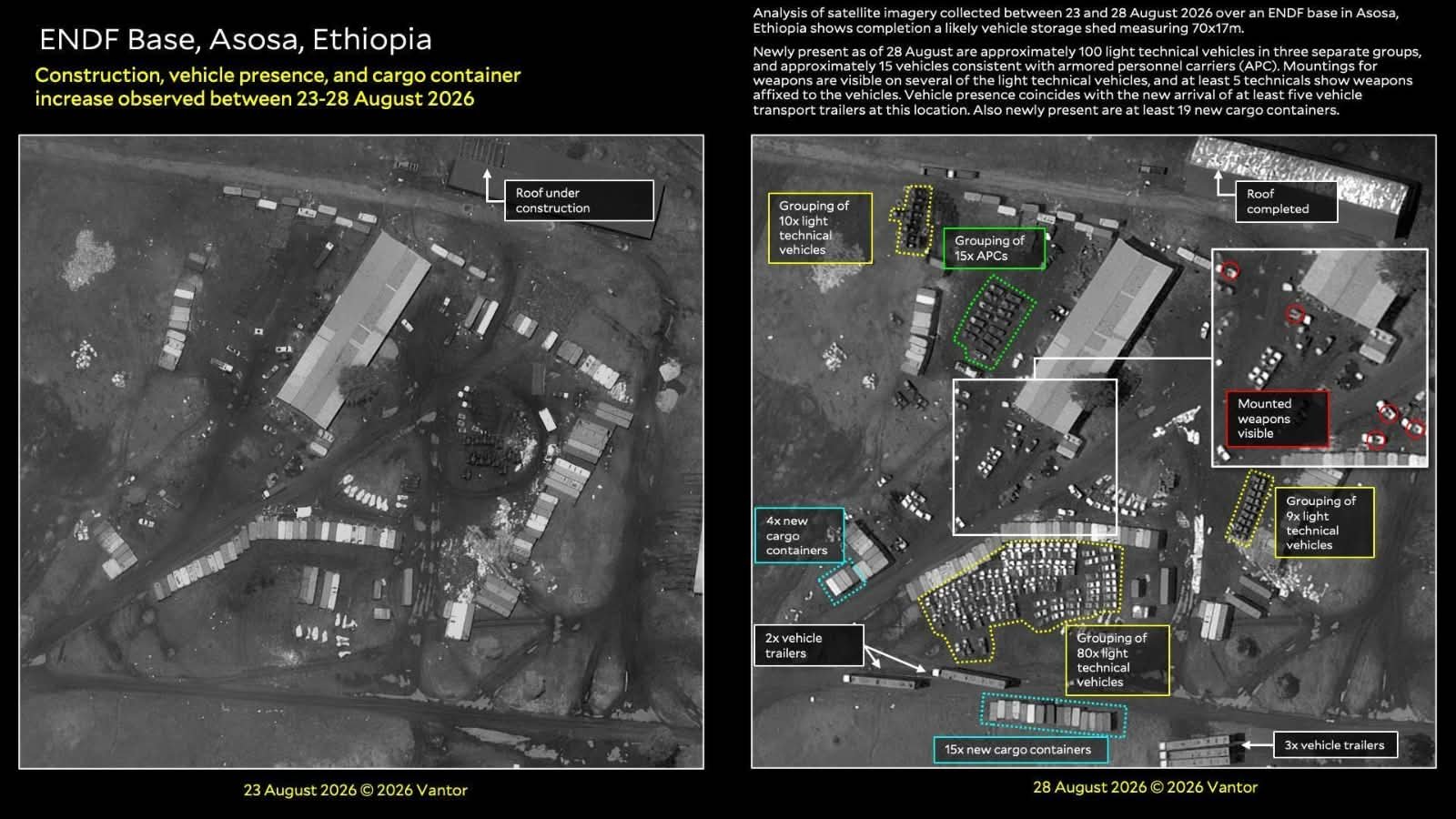
The Yale School of Public Health’s Humanitarian Research Lab identified several key findings, including what it described as a “significant escalation in activity and equipment” at the Ethiopian National Defense Force base in Asosa, Ethiopia, between August 23 and 28, 2026.
During this period, the lab observed approximately 100 newly deployed light technical vehicles divided into three groups, nearly six times the number present on August 23. The lab also observed visible weapons mounted on several of the technical vehicles, including at least five that appeared to be armed, as well as another group of approximately 15 vehicles believed to be armored personnel carriers.
The report said the new appearance of the vehicles coincided with the arrival of at least five vehicle transporters and 14 vehicle trailers. Each technical vehicle and armored personnel carrier is capable of carrying approximately six people.
The Yale Humanitarian Research Lab assessed that the number of new vehicles at the Ethiopian National Defense Force base is sufficient to form a large regimental- or brigade-sized force capable of transporting between 750 and 1,000 personnel.
The lab also observed an increase of at least 60 new shipping containers at the Ethiopian National Defense Force base between June 29 and August 23, 2026. Between August 23 and 28, the lab identified 15 additional shipping containers and at least eight cargo trucks at the same site.
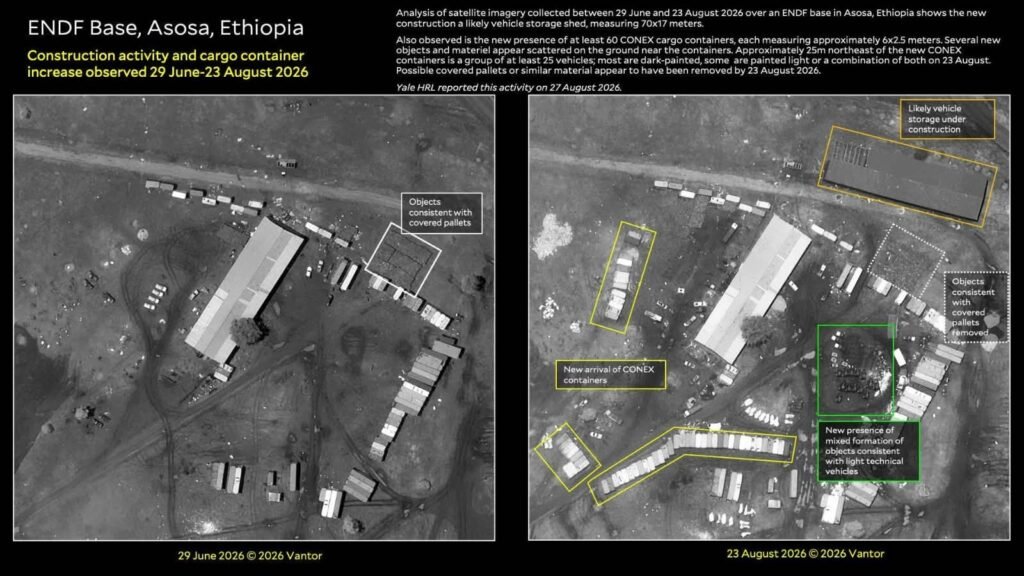
In addition, the Yale Humanitarian Research Lab observed that the roof of a building measuring approximately 70 meters by 17 meters had been completed by August 23. The structure is believed to be a vehicle storage warehouse. Construction workers had previously been observed at the site between June 29 and August 23.
The report noted that sources within the Sudanese Armed Forces had previously claimed that the RSF received supplies through Asosa Airport during its recently reported attacks on Kurmuk and Qeisan in Blue Nile State. The RSF was reportedly engaged in a counteroffensive in Kurmuk, Blue Nile State, on August 10, 2026.
According to the report, the human security analysis conducted by the experts based on these findings indicates that the increase in equipment and vehicles at the Ethiopian defense forces’ base in Asosa raises the risk of an imminent major RSF attack on Damazin, the capital of Blue Nile State.
The report warned that civilian casualties and displacement should be expected, including potential cross-border displacement into Ethiopia.
The Yale Humanitarian Research Lab further assessed that this buildup in Blue Nile may represent an attempt to weaken Sudanese Armed Forces positions in North Kordofan, indicating an increased risk of simultaneous military operations in El Obeid and other areas of North Kordofan.
Consequently, the report concluded that the human security risks facing civilians are increasing across both Blue Nile and North Kordofan states.
Shortlink: https://sudanhorizon.com/?p=17529