

Geography as a Service: How Port Sudan Turned a Military Berth into a Grain Silo
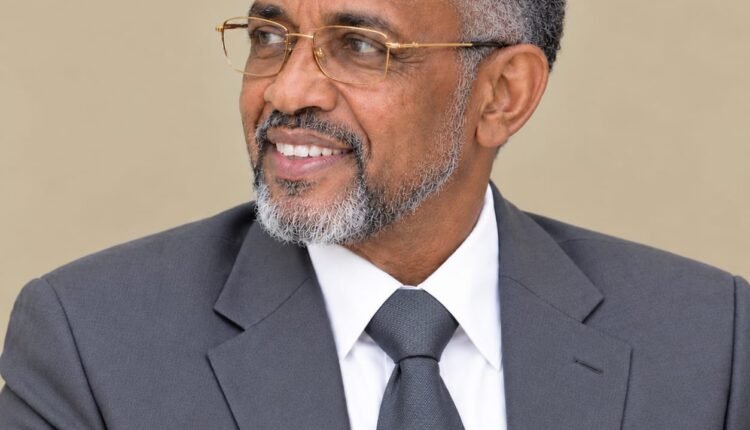
Mohamed Al-Shater Al-Amin Al-Hassan
Ahead of the third Russia–Africa Summit, news agencies had already written the headline: Putin presses for a Red Sea naval base. Research centres in Washington prepared reports on the Russian threat, while opinion in Khartoum and Port Sudan was divided between those who regarded such a base as a security guarantee and those who saw it as a poisoned deal. Yet what unfolded in the Kremlin was an answer to a different question – one that nobody had asked.
Al-Burhan did not reopen the file on the military base, which had been frozen since 2020. He did not request an air defence system, nor did he offer a 25-year agreement involving 300 troops. Instead, he proposed a Russian free trade zone on the Red Sea for storing grain and fuel, linked to a railway network and accompanied by formal mining contracts. The issue thus shifted from defence to investment. This is what I call Geography as a Service (GaaS).
In the modern economy, three models exist for exploiting geographical location. The first is the rentier model, in which a country sells land or leases a military base in return for an annual fee. Djibouti exemplifies this model. The state earns rental income but loses sovereignty. The second is the colonial model, in which a foreign company is granted a mining or port concession without oversight. The company profits, while the state loses control of its resources.
The third model is Geography as a Service (GaaS). Under this model, you neither sell the land nor lease the base; instead, you sell a paid logistics service: storage, milling, transport and supply. The land remains Sudanese, the operating company is a civilian entity registered in Sudan, the invoice is paid through the Central Bank of Sudan, and the commercial contract is governed by Sudanese law. This is the same model on which the Suez Canal and the Port of Singapore were built.
In business terminology, there is what is known as a poisoned deal: one that brings you gains today but tightens the noose around your neck tomorrow. A Russian military base on the Red Sea would be a poisoned deal par excellence. It might give you a berth, but it could cost you access to the World Bank, the International Monetary Fund and the protection of the UN Security Council. Sudan, fighting a war for its very existence, cannot afford such a price. Nor does Russia, already drained by the war in Ukraine, have the resources to finance a new base.
That is why Moscow chose a different theme for this summit: “Russia and Africa: Economy First”. Its official title was the Economic and Humanitarian Forum. In his opening address, Putin spoke not about weapons, but about grain, fertilisers and payment systems that bypass the dollar. While other leaders arrived seeking free grain, Sudan came offering Russia something it has sought for the past three years.
Russia today is a great power without a secure storage hub. A substantial proportion of its new exports is being redirected eastwards through the Red Sea and the Suez Canal following the imposition of sanctions. Its only base in warm waters, at Tartus, is now under threat, while the Strait of Hormuz has become a theatre of confrontation. Moscow has tried to secure storage facilities in Yemen, Djibouti, Berbera and Massawa, but without success. What it needs is not a place from which to launch missiles, but a safe location where it can store its grain and oil and sell them to Africa.
Port Sudan alone holds the key: a deep-water port, an existing railway, vast areas of desert land and an independent sovereign decision-making authority. What has been proposed is a free zone operated by Russian civilian companies. Under this arrangement, Port Sudan would become Russia’s principal gateway to warm waters, not under a military banner, but as a logistics hub.
This is where the legal ingenuity lies. A fuel depot in a free zone supplying a commercial vessel is a commercial activity. A grain store feeding the population is a humanitarian operation. A radar system operated by a private company to protect facilities is an investment. These activities serve some of the same purposes as a military base, but under a civilian framework that would make it difficult to impose sanctions on Sudan over them.
This is what enabled Putin to grasp the message immediately. During the bilateral meeting at the Kremlin, he told Al-Burhan: “Sudan is an important partner for us. We are celebrating 70 years of relations, and our cooperation is growing despite the conflict.” Putin did not call Sudan a military ally; he called it an important partner. In the Kremlin’s vocabulary, this is a major upgrade: from informal dealings with groups to state-to-state relations through formal contracts.
The proposal offers a dual benefit. It sends one message to Moscow: Come and buy gold through state contracts and official invoices paid into the Central Bank of Sudan, rather than through smuggling across borders. It also offers a secure storage hub from which to sell your grain and fuel to Africa.
It sends another message to Washington, Cairo and Riyadh: This is not a military base. It is a million-tonne grain silo complex, part of which will serve as a free strategic reserve for Sudan, sufficient to supply the country for two months if imports are interrupted. It includes fuel tanks with a capacity of 500,000 tonnes to prevent the state from grinding to a halt if the refinery is bombed; a Port Sudan–Atbara railway financed through investment, which would increase farmers’ incomes by 20 per cent and create 3,000 direct jobs; and a 150-megawatt power station to resolve Port Sudan’s electricity crisis.
To prevent Geography as a Service from becoming yet another poisoned deal, four safeguards are essential.
First: sanctions risks. The safeguard is to register the companies in Sudan, open their accounts with the Central Bank of Sudan, and publish their contracts as transparent commercial agreements.
Second: national security and sovereignty risks. The contracts must specify that supplies are intended exclusively for commercial and humanitarian vessels, and that any military supply requires the approval of the Transitional Sovereignty Council.
Third: the risks of a rentier economy. The free zone must be subject to local industrial development requirements: 30 per cent of the grain must be milled in Sudan, 50 per cent of the workforce must be Sudanese, and gold revenues must accrue to the national budget.
Fourth: domestic risks. Land ownership must remain 100 per cent Sudanese, with the foreign role confined to operational management. The contract should run for ten years, renewable, rather than 25 years.
Al-Burhan did not reject the Russian base; rather, he stripped it of its poison. He took off its military uniform and dressed it in the suit of an economic investor, moving it from a file stalled in the corridors of the Ministry of Defence to an active proposal within the Russian Direct Investment Fund.
Everyone had been waiting to hear the roar of artillery in Port Sudan. Instead, they heard the hum of milling machines and the whistle of a grain train.
That is the real turning of the tables: making it impossible for your adversary to punish you, impossible for your partner to reject you, and impossible for your people to feel you have surrendered their sovereignty.
In Moscow, Sudan did not grant Russia a military base. It offered Russia an opportunity to remain an economic power in the Indian Ocean region, while allowing itself to remain a state that controls its own decisions and puts its geography to work, rather than paying the price for it every day.
Shortlink: https://sudanhorizon.com/?p=19679