

How Levies Became the Most Dangerous Crisis Facing Sudan’s Economy
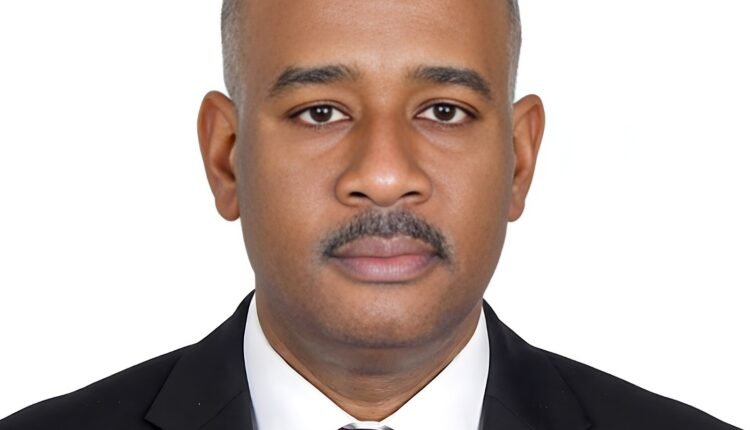
Mohannad Awad Mahmoud
In most countries around the world, when war strikes an economy, governments move to ease the burden on the private sector—deferring taxes and debts, offering incentives, and doing everything possible to keep production and trade alive. In Sudan, however, the picture has unfolded in a strikingly different way: the harsher the war has become, the higher the fees, levies, and taxes have risen—until many business owners now feel their battle is no longer only with the war, but with the very cost of survival.
The real problem is no longer destruction alone, but the way the state manages the economy. Instead of treating the private sector as a partner in rebuilding, it is often treated as a постоян target for revenue extraction.
In Omdurman alone, traders have lost their shops entirely—some markets were burned, looted, or destroyed, while others remained out of business for months. Yet many taxpayers were shocked to receive tax assessments for 2023 and 2024 as if nothing had happened—as though there had been no war, no closures, no looting, and no loss of capital.
Then came the harshest paradox: when some traders began returning and reopening their shops in Omdurman, Khartoum, and Al-Sajana, local authorities immediately demanded commercial licence fees, sanitation fees, signage fees, professional fees, and various activity charges—even though many were barely managing to restart after years of disruption and losses.
In this context, Prime Minister Kamil Idris’s decision to abolish certain levies, fees, taxes, and zakat was a positive step in principle—especially given his candid admission that these levies had impoverished citizens without enriching the state. But the real question is not merely about announcing abolition; it is about understanding what these levies actually are, how they function, who imposes them, and whether the central government truly controls them.
The Real Knot: A Fragmented Revenue System
Here lies the core problem. The term “levies” in Sudan has become a broad umbrella covering dozens of different collections:
Federal taxes (Ministry of Finance)
Zakat
State-level fees
Locality fees
Market fees
Transit charges
Service fees
Professional and licensing fees
Cleaning, signage, and transport fees
Inspection, clearance, and quality fees
Plus informal charges imposed along roads and markets
Economically, there is a clear distinction between a tax, a fee, and a levy.
A tax is imposed by law and feeds into the national budget.
A fee is meant to correspond to a specific service.
A levy, however, emerges when collection itself becomes the objective—when multiple entities impose repeated charges on the same activity with no regard for the overall economic impact.
This is why abolishing levies cannot succeed through a general political decision alone. The issue is not one fee or one tax—it is an entire economic philosophy built over years, based on the assumption that the easiest way to raise revenue is to impose another charge, rather than expand production, support exports, or stimulate the economy.
A System Beyond Central Control
Some charges are not even under the control of a single authority. A federal tax may be abolished, while state-level or local fees remain. Central reductions may occur, yet municipal and market fees continue unchanged.
Thus, the real challenge is not announcing abolition, but dismantling a complex web of extraction that has become a direct burden on the economy.
More dangerously, these charges are imposed at a time when the economy is already suffering from:
collapsing financing
rising operating costs
weak purchasing power
currency depreciation
deteriorating infrastructure
In other words, the state is adding burdens to an economy already staggering under the weight of war.
The “Stamp Duty” Example
Months before the war, a 1% stamp duty was imposed on all bank financing—introduced by the Ministry of Finance without clear justification. Bank employees jokingly dubbed it “Jibril’s stamp.”
True to Sudanese habit, humour became a coping mechanism. The recurring question inside banks and companies was simple:
Where is this money going?
No one had a clear answer.
By contrast, earlier levies—such as the so-called “Injured Stamp”—though widely mocked, were eventually linked to tangible outcomes: funding medical services under the armed forces, improving hospitals in Omdurman, Wad Madani, Kosti, Ad Damazin, and Dongola, as well as establishing a cardiac hospital in Khartoum. People could see something being built.
Today, however, citizens pay dozens of fees and levies without seeing improvements in roads, services, financing, or the investment climate.
An Economy Moving in Reverse
While other countries are lowering production costs, boosting exports, and attracting investment, Sudan’s economy is moving in the opposite direction. Producers, traders, and manufacturers are trapped under layers of costs from the outset.
The deeper issue is structural: Sudan’s economy is no longer managed as an integrated national system, but as fragmented islands.
Each state seeks its own revenue
Each locality imposes its own charges
Each institution extracts its own fees
Meanwhile, the central question is ignored:
How can the economy recover under such a burden?
The Outcome
The results are visible everywhere:
Rising prices
Declining exports
Capital flight
Expansion of the informal economy
Weak industrial activity
Erosion of competitiveness
Countries are not measured by how much they collect, but by their ability to create an environment where people produce, invest, and grow.
When economic activity itself becomes a target for fees and levies, the natural outcome is not increased revenue—but economic contraction and the erosion of the very tax base the state seeks to extract from.
The Way Forward
Sudan today does not need more fees. It needs a redefinition of the relationship between the state and the economy.
It needs a state that understands:
The trader reopening after the war should be supported, not burdened
The producer struggling to survive should be relieved, not taxed further
Real economic recovery begins not with extraction—but with enabling people to produce, work, and continue
Only then can the economy begin to breathe again.
Shortlink: https://sudanhorizon.com/?p=13766