

Heroes of the Word and the Camera: The Story of Marathon and the Laws Protecting Journalists in Conflict Zones
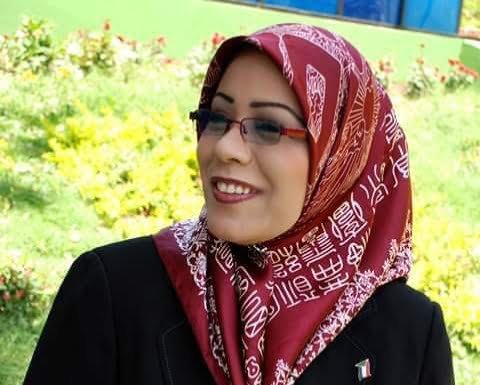
Dr Enas Mohammed Ahmed
We salute our valiant Armed Forces as they bring the Sudanese people a well-deserved victory, reclaim territory, and restore life to a number of towns and villages, allowing joy to spread in celebration of this great triumph. We pray that Almighty God heals the wounded and injured and receives the martyrs into the highest ranks of Paradise through His boundless mercy.
Once the war ends, God willing, and comprehensive peace prevails throughout our country, people will discover that many details of the battles and military operations were documented and preserved alongside the names of their heroes—the makers of glory—who sacrificed their lives to give our country peace, security, and safety, so that generation after generation may learn of their deeds.
This documentation was undertaken by another kind of soldier, whose weapons were the pen and the camera. They reported the news, photographed events, and recorded battles as they unfolded. These were the war correspondents.
Despite differences in place and time, and the varying stages through which the media have developed, some form of media presence has always existed, particularly during wars, to report developments and document events. Although there is an apparent conflict between the principle of secrecy in military operations and the principle of broadcasting and publishing information, there is a middle ground upon which the two may meet: professionalism and patriotism.
Historically, the world has preserved records of military publications dating back to the Assyrian state. These contained reports and accounts documenting ancient battles.
During the Greek era, Greece fought fierce battles against the Persians, including the famous Battle of Marathon, which took place in 490 BC during the wars between Athens and the Persian Empire. Following the Greek victory, a warrior named Pheidippides is said to have run approximately 40 kilometres from the battlefield on the Plain of Marathon to Athens to deliver news of the great victory.
He conveyed the news to the ruler of the city because he knew how eagerly the people awaited word of who had prevailed in the war. According to the traditional account, however, he collapsed and died from exhaustion and thirst after reaching the outskirts of Athens and announcing the victory.
Marathon races continue to be held today in commemoration of that warrior—or war correspondent—whose deed was recorded by the Greek historian Herodotus.
The Romans, meanwhile, would beat drums to signal the beginning of a war launched by the Roman emperor against his enemies. News of battles was transmitted personally, from one person to another, until it reached the imperial capital.
As time passed, human civilisation developed, writing became widespread, and printing was invented. Printing made it possible to gather information, news, and illustrations in a single newspaper. Initially, such publications served as records, but they were subsequently circulated among the public.
The importance of the war correspondent then increased, as newspapers depended on them to provide reports from battlefields. Correspondents would accompany armies during wartime.
International law’s historical record of armed conflict recognises the role of war correspondents, as numerous wars between states were documented through their publications and photographs. Among the most important were the American Civil War of 1861–1865, the Sino-Japanese War of 1895, the Greco-Turkish War of 1897, and the Russo-Japanese War of 1904–1905.
These conflicts contributed to the development of the war correspondent’s role, culminating in the First World War of 1914–1918. Reuters alone reportedly deployed 115 war correspondents to battle zones, 15 of whom were killed, while many others were reported missing or wounded.
Following the Second World War of 1939–1945, a substantial body of documentary recordings became available as a result of the work of war correspondents who reported and recorded the events and realities of the conflict.
What Is the Status of War Correspondents under International Humanitarian Law?
The distinction between combatants and non-combatants in armed conflict is a cornerstone of international humanitarian law.
Non-combatants are civilians and are protected under numerous international agreements. Those who accompany armed forces with official authorisation, however, are connected to the armed conflict itself and are therefore at greater risk of being targeted or exposed to danger.
They are consequently entitled to the international protection provided under the four Geneva Conventions of 1949. If a war correspondent is captured, they are to be treated as a prisoner of war under the Third Geneva Convention, supplemented by Additional Protocol I and customary international law, provided that they possess official authorisation to accompany combat forces in battle.
Journalists undertaking dangerous professional assignments in areas of armed conflict are protected under Article 79 of Additional Protocol I of 1977, which relates to international armed conflicts.
In situations of non-international armed conflict, they are also protected under Rule 34 of customary international humanitarian law, as published by the International Committee of the Red Cross in 2005.
Journalists and correspondents are additionally protected by international humanitarian law from attack or military targeting by virtue of their civilian status, provided that they do not participate in hostilities as combatants.
An intentional attack on a journalist or correspondent may amount to a war crime under the Rome Statute of the International Criminal Court.
War correspondents are frequently subjected to injury, arrest, arbitrary detention, torture, the destruction of their equipment, attacks on their offices, and the targeting of their families.
These individuals, premises, and objects are civilian in nature and are protected under international humanitarian law. Such prohibited conduct may constitute war crimes.
Article 8 of the Rome Statute, according to the author, identifies five elements relevant to the war crime of intentionally killing journalists:
A journalist or correspondent must have been killed.
The targeted individual or individuals must have been journalists or correspondents protected under the Geneva Conventions.
The perpetrator must have known that the targeted person or group consisted of journalists or correspondents.
The act must have occurred in the context of an international armed conflict.
The perpetrator must have been aware of the factual circumstances establishing the existence of an armed conflict.
Protection from Compelled Testimony
In the field of international criminal justice, the case concerning the testimonial immunity of Jonathan Randal, an American journalist with The Washington Post, is particularly significant.
The court sought to compel him to testify concerning an interview he had conducted. On 11 December 2002, however, the Appeals Chamber of the International Criminal Tribunal for the former Yugoslavia held that a war correspondent or journalist working in a conflict zone should not be compelled to testify unless two conditions were met.
First, the information sought must be of direct and vital importance to the case. Second, it must be unavailable through other means.
The tribunal also considered that a war correspondent should be treated as an independent observer rather than as a potential witness for the prosecution. Accordingly, such a correspondent enjoys qualified immunity from judicial testimony under the applicable rules of evidence.
The author further notes that Article 73 provides that communications made within the context of a professional journalistic relationship are privileged and are therefore not subject to disclosure as source material.
The Medellín Declaration and the Protection of Journalists
The Medellín Declaration, adopted in May 2007 under the auspices of UNESCO, addressed the safety of journalists, the prevention of impunity, and the protection of media professionals in conflict zones.
It urged member states to ratify Additional Protocols I and II to the Geneva Conventions and the Rome Statute, and to comply with the obligations contained in UNESCO Resolution 29.
That resolution called for legislation enabling the prosecution of those responsible for killing journalists and war correspondents. It was adopted by UNESCO’s General Conference at its twenty-ninth session in 1997 and is commonly known as the resolution condemning violence against journalists and correspondents.
Under international humanitarian law, the killing of journalists or correspondents during armed conflict may constitute a war crime. Those responsible, regardless of their status, may therefore be brought before the International Criminal Court.
Shortlink: https://sudanhorizon.com/?p=16426