

From Bogota to El Fasher: UAE’s Role in Sending Colombian Mercenaries and Providing Other Support to Sudanese RSF Militias
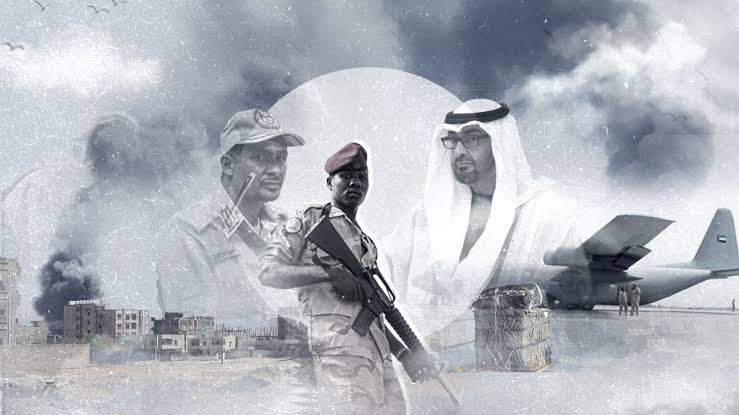
From Bogota to El Fasher: UAE’s Role in Sending Colombian Mercenaries and Providing Other Support to Sudanese RSF Militias
Human Rights Watch May 2026
Summary:
In October 2025, the Rapid Support Forces (RSF), a party to the conflict in Sudan, seized control of El Fasher, the capital of North Darfur state, after an 18-month siege that, along with constant shelling and drone attacks, starved civilians in and around the city. The RSF committed mass killings and other abuses against civilians and incapacitated combatants who had been disarmed or wounded and were trying to flee. They waited in a trench they had dug—three meters deep, along an earthen berm about two meters high—to ambush those attempting to cross.
“We encountered a group of RSF soldiers and they stopped us,” recalled Amal, 29. She said: “There were families with people with disabilities, like deaf people, and children with Down syndrome… One of the Rapid Support Forces called to another fighter and said, ‘Come and see this madman!’ And in the end, they killed them… After the killings, they arrested some of the women… and said, ‘Kill the slaves.’”
Amal said that those who carried out the killings were Sudanese Arabs, but standing next to them were white people who, she said, were shorter than the Sudanese fighters and, unlike them, were wearing military uniforms and helmets. “They had sniper rifles, small arms with silencers.” They were wearing something around their chests, short sleeves, and badges.”
Evidence gathered by Human Rights Watch indicates that an Abu Dhabi-based security company, licensed to work for the UAE government and with ties to the ruling family and senior Emirati officials, has allegedly been employing Colombian private military contractors since 2024. These contractors were then deployed to Sudan to fight alongside the Rapid Support Forces (RSF). Human Rights Watch believes that the fighters in white uniforms described by Amal were most likely Colombian military contractors. This report adds to a growing body of evidence documenting the UAE’s efforts to provide military support to the RSF, which the UAE consistently denies. The provision of Colombian military contractors is only one component of this support.
The UAE’s provision of military support to the RSF, including the recruitment and supply of private military contractors through a company acting as its agent, despite the RSF’s well-documented and serious abuses in Sudan, may constitute aiding, abetting, or otherwise materially contributing to the commission of such abuses by the Rapid Support Forces for War Crimes and Crimes Against Humanity.
Methodology and Evidence:
The information in this report on the deployment of Colombian military contractors is based on:
– Interviews with two of these Colombians who were sent to Sudan to assist the Rapid Support Forces.
– Three sources familiar with the companies recruiting Colombian military contractors and Emirati private security firms.
– Six residents of El Fasher who witnessed foreign fighters whom Human Rights Watch believes to be Colombians in the city.
– Two residents of El Fasher who identified captured Colombians, and other informed sources.
– Research conducted on social media platforms to identify, analyze, and verify the profiles of Colombian military contractors, including geo-locating videos and photos.
– Analysis of satellite imagery of crossing points.
– Review of documents, including two internal documents from the Global Security Services Group (GSL) and four licenses issued by Emirati authorities.
– Reports Publicly available from media outlets and other research organizations.
Recruitment and Deployment Details:
Media reports indicate that at least 300 Colombians have been deployed since August 2024. At that time, the Rapid Support Forces (RSF) were tightening their siege of El Fasher, the only remaining city in the region still under the control of the Sudanese Armed Forces (SAF) and its allies, and launching escalating ground and air attacks. Evidence gathered by Human Rights Watch indicates that Colombians participated in fighting in and around El Fasher and, according to media reports, provided training to RSF recruits—including child soldiers. The Colombian military contractors were likely the fighters in white uniforms described by Amal, who stood by while RSF fighters killed men and women, including people with disabilities.
Retired Colombian military personnel first learned of this job through A4SI, a Colombia-based recruitment agency that served as their point of contact. The first of these was A4SI. It worked closely with the Abu Dhabi-based global group, which presumably recruited the contractors deployed to Sudan.
The recruitment process appeared to be private, but this report shows that the contractors, en route to Sudan, passed through at least two military facilities in the UAE. Videos posted by the contractors on social media and analyzed by Human Rights Watch, along with other material submitted by contractors interviewed in person, identify the UAE’s Ghayathi military base and a suspected military facility in Al Wathba, both in the emirate of Abu Dhabi, as transit points. One contractor said he received training from Emirati nationals at one of these bases. In addition, Human Rights Watch identified four other contractors who were confirmed to have stopped in the UAE before being deployed to Sudan.
One contractor told Human Rights Watch that he departed Abu Dhabi from a “small private” airport outside the city. Another said that when he arrived in the UAE on a private flight, he bypassed the security procedures.
They were immediately transferred, along with other contractors, to the Emirati military base in Ghayathi. “They didn’t stamp our passports,” he said. “We went in and out, and a bus was waiting to take us to a military base.”
Human Rights Watch found that the contractors then traveled to Sudan via a complex network of supposedly private companies and transit points, using an air bridge spanning several countries and including transit points in eastern Libya, Bosaso—in the semi-autonomous region of Puntland in Somalia—and N’Djamena, the capital of Chad. Contractors who took the eastern Libya route traveled through the UAE to Benghazi and continued overland to Darfur. One contractor who took the Bosaso route flew on commercial airlines to the Puntland capital, where he stayed for about 10 days before flying to the UAE. From there, he took a private flight to N’Djamena, Chad, where he changed planes and flew to Nyala, the capital of South Darfur (Sudan).
Evidence of Involvement and Abuses:
The first public evidence of Colombian involvement came in videos posted on social media in November 2024, 19 months after the start of the conflict in Sudan. In the North Darfur desert, the Joint Force of Armed Movements, an alliance of armed groups allied with the Sudanese Armed Forces, intercepted a convoy of vehicles that had entered Sudan from Libya. In one video, a fighter films himself examining documents found in the convoy, including a passport, driver’s license, and other identification papers belonging to a Colombian man. The man filming says, “We captured mercenaries. Look, there isn’t a single Sudanese among them.”
The video also shows stockpiles of ammunition, including Bulgarian-made mortar rounds, which France 24 later revealed had originally been purchased for the UAE military—one of three cases Human Rights Watch learned of involving the alleged diversion of equipment from UAE military stockpiles to the Rapid Support Forces, in violation of end-user agreements.
International media outlets have reported that the UAE has been providing military support to the Rapid Support Forces (RSF) since April 15, 2023, when the current war in Sudan began. Since the outbreak of the war, the RSF has committed widespread human rights abuses and violations across the country, including unlawful mass killings, rape, gang rape, sexual slavery, looting, and the destruction of civilian infrastructure. In Darfur, Kordofan, and Gezira states, the RSF destroyed towns and villages, displacing millions. The RSF and its allied militias carried out a campaign of ethnic cleansing against the Masalit and other non-Arab communities in El Geneina, the capital of West Darfur state. These forces targeted civilians for killing based on their ethnicity, and the context of the RSF’s violations against the Masalit tribe raises the possibility of genocidal intent in El Geneina. The widespread sexual violence perpetrated by the RSF throughout the country also constitutes crimes against humanity.
The impact of the conflict on civilians has been devastating. It has caused the world’s largest humanitarian crisis, with at least 150,000 people likely to have died as a result. An estimated 12.9 million people have fled their homes. Half the country’s population is facing acute hunger, and famine is widespread—a direct consequence of both sides obstructing humanitarian access and of the Rapid Support Forces’ widespread looting and attacks on civilians and civilian infrastructure.
The Role of the Global Security Services Group and its Ties to the UAE:
Human Rights Watch has geo-located videos showing private military contractors fighting in El Fasher, including one from January 2025 showing a contractor operating a mortar. Two Colombians told Human Rights Watch that they provided direct support to Rapid Support Forces (RSF) operations in Sudan, one in late 2024 and the other in April 2025. One of them said he trained RSF recruits at training camps around April 2025 near Nyala—the de facto capital of the RSF in South Darfur—and that “many of them were young children.”
The Global Security Services Group is presumably the company employing the contractors deployed in Sudan. According to third-party data provided by The Sentry, a non-profit investigative organization, the group was founded in 2016 by Ahmed Mohammed Al-Humairi, the secretary-general of the UAE Presidential Court, which reports to Vice President Sheikh Mansour bin Zayed Al Nahyan, the brother of UAE President Mohammed bin Zayed Al Nahyan. In 2017, The Sentry reported that Al-Humairi transferred his shares in the group to Mohammed Hamdan Al-Zaabi, his longtime business partner. Human Rights Watch found that Mohammed Hamdan al-Zaabi, who has remained the group’s CEO since then, has extensive business and family ties to the UAE authorities.
Evidence suggests that the International Security Services Group (ISAG) has close ties to the highest levels of the UAE government and has continued to work closely with and on its behalf. The company boasts of being “the first private security firm in the UAE to be granted an armed security license.” Until recently, it also advertised key UAE ministries as its clients. A Human Rights Watch interview with a former ISAG employee and a trove of leaked emails it examined also indicate that prominent members of the ruling family were likely among the company’s clients.
The UAE is a highly centralized authoritarian state with little, if any, oversight of the president’s State Security apparatus, which is backed by pervasive mass surveillance. Therefore, UAE authorities should be fully aware of activities taking place on UAE soil, particularly on government property and military bases.
The UAE’s support for the Rapid Support Forces (RSF) is consistent with its pattern of behavior in the Middle East and Africa over the past decade and a half. Human Rights Watch has documented the UAE’s interventions in Yemen and Libya to support local armed forces and groups, including providing substantial funding and weapons, and training fighters. Media reports indicate that Emirati authorities have been recruiting Colombian security and military personnel since 2011 and deployed hundreds of Colombians to fight in Yemen in 2015. The UAE is presumably following a similar approach in Sudan.
Despite mounting evidence, the UAE has consistently denied providing any military support to the RSF. In a statement to The Associated Press in November, the UAE said, “We categorically reject any allegations of providing any form of support to either of the warring parties.” Instead, Emirati authorities have stated that they “support efforts to achieve an immediate ceasefire, protect civilians, and ensure accountability.”
All governments, including those of the United States, the United Kingdom, and EU member states, as well as international and regional organizations such as the United Nations and the African Union, are aware of the evidence of this support. Yet, in their statements on the conflict in Sudan, they have largely refrained from explicitly mentioning or condemning Emirati support for the Rapid Support Forces (RSF), which have committed widespread rape and unlawful killings of civilians. Instead, they have resorted to vague references to “external backers.”
The UAE’s allies, members of the UN Security Council, and the African Union should publicly call on the Emirati authorities to immediately and urgently cease providing the RSF with weapons, equipment, personnel, and other assistance. The Security Council should request its Panel of Experts to investigate the Global Security Services Group, as well as its CEO, Mohammed Hamdan Al Zaabi, and the company’s role in providing private military contractors to support the Rapid Support Forces’ (RSF) activities in Darfur, in violation of the Security Council arms embargo imposed since 2004.
Other actors, including private companies such as airlines and Emirati officials, should also be investigated to determine whether they are indeed involved in providing assistance to the RSF in Darfur, in violation of the Security Council arms embargo. Based on the Panel of Experts’ findings, the Security Council should impose targeted sanctions on those who assist and incite the RSF. The cycle of violations and atrocities will only end when the perpetrators and their enablers are held accountable for their actions.
Recommendations:
To the UAE:
– Demand that the RSF immediately and publicly cease its attacks on civilians and other widespread violations.
– Immediately halt all forms of financial and military assistance, including weapons, equipment, and personnel, provided to the RSF, including, ostensibly, private companies.
– Take immediate action to halt and prevent private companies from providing military or security assistance, including weapons, equipment, and personnel, to the Rapid Support Forces (RSF), including investigating and, where appropriate, prosecuting and punishing individuals found responsible for providing such support to aid and abet war crimes and crimes against humanity.
– Investigate, punish, or prosecute, as appropriate, any security personnel responsible for coordinating, facilitating, or supporting the provision of weapons, equipment, personnel, and other assistance to the RSF, including on the basis of aiding and abetting war crimes and crimes against humanity.
– Support ongoing international and regional investigations into war crimes, crimes against humanity, and other serious human rights violations throughout Sudan, including investigations by the International Criminal Court (ICC), the United Nations Independent International Fact-Finding Mission on Sudan (UNITAMS), and the African Commission on Human and Peoples’ Rights (ACHR) Joint Fact-Finding Mission to the Republic of Sudan.
– Support credible efforts to establish a fund to provide prompt and fair reparations to victims, survivors, and communities affected by Rapid Support Forces (RSF) violations, including compensation linked to ongoing independent international investigations.
– Support international efforts, particularly within the UN Security Council, to impose sanctions on individuals and entities responsible for violations, including violations of the arms embargo.
– Comply with existing UN and bilateral sanctions against individuals and entities responsible for violations in Sudan, including those imposed by the Security Council, the European Union, the United States, and other countries.
– Support the extension of the arms embargo on Darfur to cover all of Sudan.
– Ensure that no groups receiving any form of support are involved in the use or recruitment of child soldiers.
To the Rapid Support Forces:
– Issue public orders to all forces and allied militias to fully comply with international humanitarian law and take measures to end violations, including unlawful killings, arbitrary detention, enforced disappearances, torture, rape and other forms of sexual violence, looting, arson, and attacks on schools and hospitals. – Immediate, full, safe, and unhindered access for humanitarian personnel and the delivery of urgent humanitarian assistance throughout Darfur.
– Guarantee the protection of all relief and health personnel, as well as humanitarian and medical facilities and supplies, from attacks and looting, and ensure that health and relief workers and agencies can carry out their work without harassment or other interference.
– Arrest civilian and military officials.:those credibly implicated in serious human rights violations during the conflict in Sudan, particularly in Darfur, should be suspended from their duties pending investigations into their actions, including investigations by the International Criminal Court, the United Nations Independent International Fact-Finding Mission, and the African Commission on Human and Peoples’ Rights Joint Fact-Finding Mission on Sudan.
– Actions that could further destroy evidence necessary for investigations into serious human rights violations committed during the violence should be prohibited.
– Cooperation with the International Criminal Court and facilitating its full and unhindered access to all areas, as well as with the United Nations Fact-Finding Mission and the African Commission on Human and Peoples’ Rights Joint Fact-Finding Mission on Sudan, should be ensured.
– Immediate and fair indemnities should be provided to victims of violations or their relatives, including compensation and the restitution and return of looted property.
– All forms of recruitment and use of children under the age of 18 should be ended.
To all governments:
– Publicly demand that the UAE authorities immediately and urgently cease providing the Rapid Support Forces (RSF) with personnel, weapons, and all related equipment or assistance, in violation of the UN arms embargo on Darfur.
– Support ongoing international and regional investigations into war crimes, crimes against humanity, and other serious human rights violations throughout Sudan, including investigations by the International Criminal Court (ICC), the UN Independent International Fact-Finding Mission in Sudan (UNITAMS), and the Joint Fact-Finding Mission to the Republic of Sudan mandated by the African Commission on Human and Peoples’ Rights.
– Investigate the role, if any, of the Abu Dhabi-based Global Security Services Group (GSSS) in providing private military contractors to support RSF operations in Darfur, including on the basis of violating the UN Security Council arms embargo.
– Investigate Mohammed Hamdan Al Zaabi, as CEO of GSSS, for his potential role, if any, in providing private military contractors to support RSF operations in Darfur, including considering violations of the UN Security Council arms embargo, with a view to imposing sanctions on him.
– Investigate other actors, including private companies such as airlines and private airport operators used to transport private military contractors, and Emirati officials involved in providing assistance to the Rapid Support Forces (RSF) in Darfur, with a view to imposing sanctions on them as appropriate.
– Suspend all transfers of arms and other military equipment to the UAE, including arms, training, and maintenance agreements, given the risk of their diversion to the RSF.
– Suspend all ongoing military training and cooperation with the UAE.
– Support the investigation, under the principle of universal jurisdiction and in accordance with national laws, and prosecute those found to be involved in serious crimes under international law and in violations of end-user agreements or non-export agreements for arms, ammunition, or military equipment manufactured in European countries, as appropriate.
– Press for accountability for any senior Emirati officials credibly involved in providing arms, equipment, personnel, and other related assistance to the RSF, and impose provisional sanctions on Emirati officials credibly involved in ongoing violations and violations of the arms embargo on Darfur.
– Provide necessary support for child protection activities, including support for NGOs working to demobilize children from armed forces and prevent their future recruitment, and for demobilization, rehabilitation, and reintegration (DDR) programs that include vocational training, education, medical activities, and psychosocial support for former child soldiers, including those in camps for internally displaced persons or refugees.
To the European Union:
– Adopt targeted sanctions against the Global Security Services Group and Mohammed Hamdan Al Zaabi through the EU Global Human Rights Sanctions Scheme.
– Impose a comprehensive EU-wide arms embargo on the UAE, in line with the criteria set out in EU Common Position 944/2008/CFSP, and given the risk of complicity in atrocity crimes.
– Publicly condemn the UAE’s provision of substantial assistance to the Rapid Support Forces that may amount to aiding and abetting atrocity crimes in Sudan, including in high-level bilateral meetings and in statements issued at the UN Human Rights Council and other international forums.
– Use the leverage provided by negotiations on partnership and trade agreements with the UAE to ensure tangible and measurable progress on human rights in the UAE’s domestic and foreign policy.
– Conduct independent human rights impact assessments and thorough due diligence to ensure that bilateral trade and cooperation do not contribute to the violations identified in this report.
– Consider suspending negotiations if the UAE authorities fail to adopt the necessary reforms and policy changes to comply with international law and cease fueling atrocities in Sudan.
To the US Government:
– Impose sanctions on the UAE under the Child Soldiers Prevention Act of 2008, which prohibits certain forms of US military assistance to governments that recruit or use child soldiers or support non-state armed groups that recruit or use child soldiers.
To the UN Security Council and the African Union Peace and Security Council:
– Publicly call on the UAE authorities to immediately cease providing the Rapid Support Forces with personnel, weapons, and related equipment, or providing them with support, in violation of the UN arms embargo on Darfur.
– Expand the scope of the The International Criminal Court’s jurisdiction should be extended to include all of Sudan, and efforts should be increased to support the ongoing investigations being conducted by the Court’s Prosecutor.
-The Security Council’s Panel of Experts should be requested to investigate the role, if any, of the Abu Dhabi-based Global Security Services Group in providing private military contractors to support the Rapid Support Forces’ activities in Darfur, including consideration of violations of the UN arms embargo.
-The Security Council’s Panel of Experts should be requested to investigate other actors, including private companies such as airlines, and Emirati officials involved in providing support to the Rapid Support Forces in Darfur, including consideration of violations of the UN arms embargo on Darfur and the arms embargo on Libya.
– Impose targeted sanctions on all those credibly established to be assisting or inciting the Rapid Support Forces in their violations of the UN arms embargo, or in committing atrocities or other violations.
– Expand the arms embargo to a comprehensive arms embargo across all of Sudan.
– Call upon the UN Secretariat, in cooperation with the African Union Commission, to:
– Work urgently to develop options for a civilian protection mission in Sudan, with the aim of deploying a new mission.
– Include monitoring violations of international human rights law and international humanitarian law, including the obstruction of humanitarian assistance, and laying the groundwork for the safe return of internally displaced persons, within the mandate of the civilian protection mission.
– Include a robust police unit within the mission to focus on key locations where civilians are most vulnerable to deliberate attacks, including Darfur.
– Insist on providing adequate resources for the civilian protection mission, selecting personnel who have undergone rigorous vetting, and establishing a civilian oversight mechanism to report and mitigate violations.
To the Colombian Government:
– Take steps to prevent the recruitment of Colombian citizens as “mercenaries,” including criminalizing such activities under Colombian domestic legislation, in accordance with Colombia’s international legal obligations.
– Investigate and prosecute, as appropriate, Colombian citizens complicit in the heinous crimes and other serious human rights violations documented in this report.
– Investigate the Colombia-based recruitment agency, E4SI, and other companies and individuals involved, for their role in the recruitment of Colombians allegedly on behalf of the Abu Dhabi-based Global Security Services Group.
– Strengthen the programs and efforts led by the Ministry of Defense’s Directorate of Veterans Affairs and Comprehensive Rehabilitation to ensure that members of the armed forces receive technical and vocational training before retirement and comprehensive support after retirement in areas such as employment, mental health, education, and access to credit, among others, in order to reduce the economic vulnerability that makes recruitment attractive.
To the Government of Sudan:
– Strict adherence to Common Article 3 of the Geneva Conventions, which prohibits violence against captured combatants and those who have surrendered or are hors de combat—in particular murder, cruel treatment, and torture—as well as attacks on their personal dignity, degrading or humiliating treatment, and hostage-taking.
– Repatriation of any Colombian nationals held captive, where they should be investigated and, if necessary, prosecuted for complicity in international crimes, in accordance with international fair trial standards.
– Ensuring cooperation between the investigative authorities of the regional and contracting states and countries of origin in any criminal investigations against members of private military contractors.
– In accordance with customary international humanitarian law rules relating to respect for the dead, facilitating the repatriation of the remains and personal effects of any deceased private military contractors if requested by their relatives
Shortlink: https://sudanhorizon.com/?p=14252