

So That Our Valued Traditions Do Not Become Mere Relics of the Past!
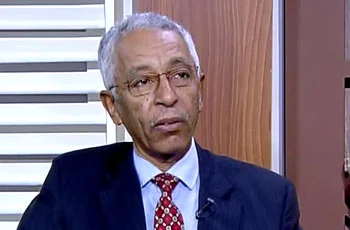
Dr Khidr Haroun
What remains for the generation of young Sudanese born in the late 1940s and throughout the 1950s, in terms of what is known as cultural survivals, is both considerable and deeply evocative of nostalgia and sorrow for a time that has slipped through our fingers, with all its good and bad. The term “cultural survivals” translates the English word survivals. In the seventeenth century, the British anthropologist Sir Edward Tylor defined them as customs, practices, beliefs and myths that prevailed in earlier civilisations and survived after those civilisations had disappeared. However, they had no practical purpose or function, and people often no longer knew their origins.
One example is the Hayub. Our friend, Professor Al-Hussein Ali Mohamed Ibrahim, a researcher in social and popular affairs, explained that the expression Hay Wub was used by women mourning the dead in Sudan. It survived from the days of the Shiite Fatimid dynasty (909–1171 AD) in Egypt, which left some traces in Sudan’s Northern State, and continued there until the 1970s.
The young men of the generation before ours used to mark Ashura by carrying a thick rope made from palm fibres, known as al-lalis. They would light one end, carry it from house to house, and eventually take it to the Nile. They would then beat their bodies with thick, green palm fronds until they bled. Curiously, they were doing precisely what young Shiites do in countries where Shiite communities exist: expressing remorse and seeking forgiveness for their ancestors’ failure to support Hussein ibn Ali, the Prophet’s grandson, and for having abandoned him. Yet they had no idea what the practice was meant to signify. To them, the Hayub was not a religious ritual but simply a custom that had survived, detached from the meaning it once embodied. It was therefore a remnant of a civilisation that had flourished and then vanished.
A related example is something I used to hear our grandmothers say in their prayers, asking for blessings from ninety-nine saints, the first being Muhammad and the last Ali. Among the surviving traces of the Fatimid dynasty are the name of Egypt’s capital, Cairo, given to it by Al-Mu’izz li-Din Allah, the dynasty’s first ruler, and the name Al-Azhar, derived from the name of Fatima Al-Zahra, may Allah be pleased with her. Al-Azhar was originally established as a centre for teaching Shiite doctrine, but, thanks to the perseverance of the Ayyubid dynasty, it became a centre for the teachings of Sunni Islam.
Perhaps women’s names among us, such as Zahra, result from a scribal corruption of Al-Zahra, rather than from the word for flowers. After all, we did not particularly value flowers and blossoms. In the Maghreb, the same name is pronounced with a damma on the letter z, after the planet Venus.
Another cultural survival is the practice of taking an infant to the Nile and immersing the child in its waters. It is said to be a remnant of baptismal rituals from the Christian period in Sudan’s history.
Buildings and physical objects, such as pyramids and temples, which once served particular purposes but whose functions have since ceased, should certainly be classified as cultural survivals. However, anthropologists in cultural anthropology do not regard them as such. Instead, they use terms such as artefacts, meaning material remains, objects or antiquities, and memorials.
Yet some of these inanimate structures have acquired a different kind of life. The pyramids and temples of Egypt, for example, are tourist destinations and generate substantial income. The Taj Mahal in India, and the ancient remains of Greece and Rome, similarly provide livelihoods for many people around the world through visitor revenue. Their original functions may have ceased, but their contribution to human life has not.
For our generation in Sudan, many names for things have become detached from any tangible content or meaning. Most of the terms for the various parts and attachments of the saqiya—the traditional waterwheel—and the agricultural vocabulary associated with its irrigation system are now little more than names.
The facial scarification marks on the cheeks, made with a razor and known as shulukh, which once indicated affiliation with particular tribes, as well as tattoos in the shape of a bird’s track, have disappeared with astonishing speed, almost as if they had never existed. Among urban women, these marks once carried aesthetic significance and inspired poets and singers. Indeed, those without shulukh were sometimes disparaged and called al-mirha’, a term used mockingly to suggest that a woman was karta, as though her scarification marks had been removed with a sharp instrument!
The word mirha’ is an authentic Arabic term, but it refers to a woman who does not adorn herself or use kohl around her eyes. It seems, therefore, that when applied to women without shulukh, it was intended to suggest that they were devoid of all adornment.
And what of the railway workers’ houses at railway stations, with their conical roofs painted white, known as qatati? What of the instructions given to train drivers, such as saffir (blow the whistle), for example? And what about sanda? When you encounter this word written beside railway lines, you might well be puzzled by its meaning if you did not live in those days.
It is a word carried on a signpost in the middle of nowhere. What does it mean? Here, it has nothing to do with support or assistance. Rather, it refers to a brief train stop at a place without buildings, distinguished by nothing more than a sign bearing the word Sanda. I remember Sanda Al-Matmar in the Ja’aliyyin area, when travelling to or from Khartoum by train. The train might be heading to Wadi Halfa or Karima, or perhaps to towns in the East, such as Port Sudan and the surrounding areas of Jebeit, Haya, and Sinkat, and possibly Suakin. All these journeys began in Atbara, the central hub and headquarters of the Sudan Railways.
In this sense, sanda is very much one of the things we have classified as cultural survivals. The word sanda can refer to a brief pause in anything, and that was precisely what happened here: the train would stop for about a minute.
Whenever I found myself in the town of Karima, nostalgia would overwhelm me and draw me towards the old railway station buildings. I would linger there, contemplating the shade of their magnificent neem trees, remembering how we used to wait for days when railway workers went on strike.
Khartoum, too, has buildings that tell stories. Take, for example, the Coliseum Cinema building, which still stands where it was built. It recalls a cinema that was once bustling with audiences, much like its Roman namesake, the Colosseum, the famous arena in Rome. Although the latter has long ceased to serve its original purpose, it still receives thousands of tourists every day, who queue in long lines to visit it.
The cinema buildings in Sudan have all become ruins and cultural remnants. Perhaps they, too, will eventually be demolished and swallowed by time, becoming obscure structures whose meaning future generations will struggle to understand when someone happens to mention them. The same applies to the old tram tracks in Greater Khartoum, the remains of the electricity poles that once supplied power to old Khartoum, and so on and so forth.
Time continues its rapid, ever-accelerating journey. The nature of things changes, and we are weighed down by the fear that good customs, sacred beliefs without which a sound life cannot be sustained, and landmarks whose foundations are deeply rooted in our collective consciousness may disappear. We pray that they do not become like the Wailing Wall, where people go to shed tears.
That, in essence, is the message behind these words: we must exercise caution and vigilance and not delay in protecting our homeland from the ravages of time. There is no substitute for one’s homeland other than one’s homeland, because it is not merely a place. It is everything that can be described, and much more than words can ever capture!
Have I made my point clear? I hope I have!
Shortlink: https://sudanhorizon.com/?p=19933