

Weep, My Beloved Homeland
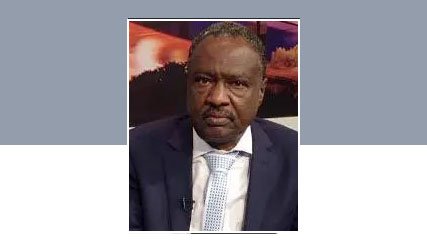
Rashid Abdel Rahim
The distinguished teacher, veteran musician, and gifted painter Sharhabil Ahmed was on his way home to Burri from his office at the Educational Publishing House of the Ministry of Education—as it was called before it became the Ministry of Education and Teaching. His route took him past the Secondary School of Commerce boarding houses. Late afternoon, a young man from the Congo sat on a chair beneath a tree, playing an instrument that seemed unfamiliar to him.
With his trained musical ear, Sharhabil Ahmed picked up its melodies and approached the young man. The story began with questions and admiration, then grew into a learning process. The instrument was the guitar, and this encounter marked the beginning of its introduction to Sudan.
Jazz music was introduced to Sudan around that time, and several bands formed, including Sharhabil’s own band, Jazz al-Diyum and Jazz al-Aqarib. Thus began an important phase in Sudanese music during the 1940s.
Sharhabil would return from his office after spending the day working on one of the most famous, oldest and most established children’s magazines, not merely in Sudan but throughout the Arab world. It was called Al-Sibyan (The Boys).
Khartoum Commercial School stood next to the historic Khartoum Secondary School. At the latter’s eastern entrance was a beautiful courtyard, with basketball and volleyball courts at its centre. The same grounds also hosted military training classes, known as cadet training.
To the south of this courtyard stood the arts hall, with its distinctive seating and display boards, next to the music hall, equipped with a variety of instruments. To the north-east was the school’s distinctive theatre.
This was Sudan: a country built on cultural, artistic and theatrical values, as well as drama and military discipline, where students were raised on elevated principles.
All these activities went hand in hand with the outstanding academic and scientific standards of both schools.
Sudan’s political life was also marked by high standards of performance. One of its most notable achievements was hosting the Arab Summit Conference, which witnessed the reconciliation between Egyptian President Gamal Abdel Nasser and His Royal Highness King Faisal of Saudi Arabia. The conference also produced the famous Three Noes resolutions: no peace, no recognition and no negotiations with Israel. It also helped resolve the Yemen crisis.
This conference was a Sudanese achievement, led by President Ismail al-Azhari and Foreign Minister Mohamed Ahmed Mahgoub.
Mahgoub was also a poet and one of the era’s leading literary figures, which produced many distinguished poets, including al-Tijani Yusuf Bashir, Idris Jamaa, Mohamed Mohamed Ali, and al-Fayturi, followed by Mustafa Sanad and others.
In sport, Al-Hilal and Al-Merrikh stood out, along with players such as Jeksa and Majid. During that era, Al-Hilal welcomed the Brazilian team Santos. Santos won 1–0, with the goal scored by the legendary footballer Pelé.
Has Sudan lost this battle?
Wars are among the major drivers of national renewal, as nations develop by confronting the challenges of war and peace. This happened in Japan, Germany, South Korea, and Rwanda in Africa. Will Sudan manage to do the same?
Are we united in our understanding of the war and its consequences?
Does Sudan have a vision we can all agree on?
What kind of national revival are we hoping to achieve?
As the war approaches its end, we face this moment under the government of Kamil Idris, amid poverty and hardship, with ministers and administrations so dismal that they have squandered the opportunities for progress created by the army’s victories. The army has shown itself to be brave and strong, while young people have answered the nation’s call through their own initiatives. They have abandoned comfortable lives and lucrative professions to support the Armed Forces—not merely with wishes and slogans, but by putting their own lives on the line.
We have a government that has failed to deliver even the most basic, obvious improvements, whether in public services or in the development of agriculture, industry, and other services.
The so-called Government of Hope has stripped away our hope that our nation might be rebuilt and restored to what it once was: a nation that stood in solidarity with peoples in Palestine, Malaya, Algeria, and elsewhere, all of whom were celebrated in the songs of the gifted artist Abdel Karim al-Kabli.
Just as we confronted the Janjaweed, with their war and killing, we must now confront the Janjaweed of complacency, negligence and the squandering of opportunities. We must act quickly, before we are left with nothing to say but: “Weep, my beloved homeland.”
Shortlink: https://sudanhorizon.com/?p=19393