

The Sudanese Memory: Zain al-Abidin al-Hindi’s Initiative — Stranded on the Bridge of Dialogue
Mohamed al-Sheikh Hussein
Whatever your position on the Sudanese situation, whether you are close to it or observing it from afar, you will find it difficult to predict either the future of those in power or their fate. The story is repetitive, and its chapters are familiar. The lengthy narratives of contemporary political life do not stray far from tales of power and control. When transparency is absent, restrictions multiply and sovereignty expands, leaving people—through their movements, bodies, and personal data—hostage to political and social policies, systems, and structures of authority.
These lines are written against the backdrop of the sounds of war surrounding us. War has a terrifying sound and a hideous colour. Yet the rebellion of the Rapid Support Forces militias, and those who support them in whatever form, has demonstrated, on the one hand, the strength and resilience of the Sudanese Armed Forces in defending the homeland, and, on the other, the solidarity between the Sudanese people and their army. Between these two stands the slogan ‘One Army, One People’, defeating all the nonsense and bluster of what is called the ‘civilian democratic government’.
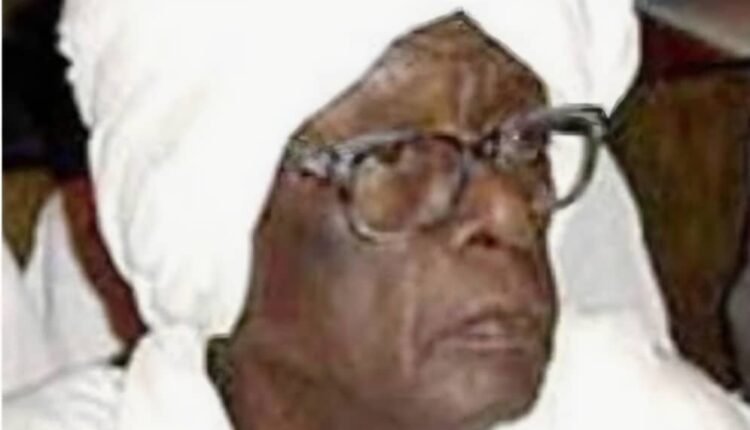
So we do not remain stranded on the scattered bridges of dialogue here and there, let us recall an experience in national dialogue from nearly thirty years ago. It was launched by the late Sharif Zain al-Abidin al-Hindi (1932–2006) and became known as the Comprehensive Popular Dialogue Initiative.
(1)
Those who fuel wars fail to appreciate the consequences of their decisions and bravado for ordinary people and their livelihoods. Wars may eventually end, but the daily suffering, pain, bereavement and wounds that never heal remain a bitter lump in the throats of ordinary people who have been scorched by the flames of war.
Herein lies the secret behind General Abdel Fattah Abdel Rahman al-Burhan’s insistence on ‘bringing the Rapid Support Forces militias to a definitive end’. There is no room for negotiations or a truce that would allow the RSF rebels to return to political life once again.
Despite all the wars, occupation, destruction and corruption surrounding us in this turbulent region, hope remains a valuable commodity in a market overwhelmed by frustration and disappointment. This week, The Sudanese Memory revisits dialogue initiatives in Sudan, exploring how their meanings have shifted as circumstances and times have changed.
(2)
This space is too limited to delve into our internal conflicts and how they have shaped Sudan’s image abroad, both in its immediate neighbourhood and further afield. However, we must consider Sudan’s cultural, ethnic, economic, and strategic reach, because this diversity and breadth have shaped an identity that is both resilient and adaptable.
The modern Sudanese state began to take shape following Muhammad Ali Pasha’s invasion of Sudan in 1821. There is no room to elaborate on the historical events here, but in 1996, thirty years ago, Sharif Zain al-Abidin al-Hindi launched the Comprehensive Popular Dialogue Initiative.
In fact, Sharif returned to Sudan in 1996 and made a famous statement: ‘The country is being eaten away at its extremities, and I fear that it will be eaten away from within.’ He called for dialogue between those who governed and those who were governed so they could reach a common understanding.
(3) What was the Comprehensive National Dialogue Initiative?
The initiative was neither a political bargain nor an arrangement to divide up positions of power. Instead, it offered a third way between the National Salvation Revolution’s harshness (1989–2019) and the extremism of the opposition National Democratic Alliance operating abroad.
The initiative helped protect the country from fragmentation. It led to greater political openness, paving the way for the return of pluralism through the enactment of the Political Association Act, the 1998 Constitution, and broad-based national participation.
Now, in 2026, thirty years after the initiative was launched, how should we approach it today? The starting point is not legal but national and moral. This is where the strength of the Sharif’s initiative lies.
The first principle: Dialogue must be Sudanese, without seeking to strengthen one’s position through foreign intervention. We recall the Sharif al-Hindi’s words: ‘Sudanese people are free to manage the affairs of their own country.’ Today, we see the exact opposite.
The second principle: Sudan’s unity is a red line.
The third principle: Dialogue must be popular, not confined to the political elite.
(4)
The present situation requires us to draw inspiration from the positive aspects of our recent history and use them to build our present, guided by the following experiences and initiatives:
1. From the Graduates’ Congress of 1938: We take the idea that Sudanese people are capable of managing their differences through reason, not weapons.
2. From independence in 1956: We reaffirm that unity was achieved through a national will that transcended sectarian and party affiliations, under the slogan ‘The Chinese plate — neither crack nor clatter’.
3. From the October Revolution of 1964: We see that when the people unite, they can overthrow dictatorship without weapons.
4. From the National Reconciliation of 1977: We learn that engaging in dialogue with an adversary takes greater courage than waging war against them.
5. From the April Uprising of 1985: We learn that the army sides with the people.
6. From Sharif Zain al-Abidin al-Hindi’s initiative of 1996: We follow the third way when dialogue takes place between those who govern and those who are governed, rather than between one political party and another.
7. From the Comprehensive Peace Agreement of 2005: We learn that civil war can end through an agreement when intentions are sincere.
8. From the December Revolution of 2018: We recognise that young people and women are the beating heart of Sudan, and that there can be no dialogue without them.
(5)
Returning to Sharif Zain al-Abidin al-Hindi’s 1996 initiative, we must not remain stranded on the bridge of dialogue for too long. This is a call to revive the unifying Sudanese spirit, guided by six fundamental principles:
1. Sovereignty over national decision-making: No seeking strength through foreign intervention and no embassies managing our dialogue or making our decisions.
2. Sudan’s unity is a red line: It must not be compromised. We will accept neither a new partition nor armed autonomy that threatens national unity.
3. The people are the source of legitimacy: Legitimacy does not come from the barrel of a gun or from statements issued abroad, but from the people inside Sudan. This includes eight constituencies:
The regular armed and security forces;
Established political forces;
Revolutionary forces, young people and resistance groups;
Native administrations and Sufi orders;
Women and professionals;
Farmers, pastoralists and workers;
Internally displaced people and refugees;
Sudanese people living abroad.
4. Transitional justice that uncovers the truth: It must provide redress for harm and prevent impunity.
5. Citizenship as the basis of rights.
6. Livelihoods before politics: The economy, agriculture and humanitarian relief must be the highest priorities.
(6)
One question inevitably arises: what guarantees would ensure the success of such dialogue if it were to take place?
The answer may seem apparent amid today’s heated political climate, but we propose four points that we hope will help bring about this dialogue and ensure its success:
1. Dialogue must take place inside Sudan.
2. Dialogue must be public and broadcast to the people.
3. Anyone who has taken up arms against civilians and has been proven to have been involved in war crimes must be excluded from the dialogue until they have been brought to justice.
4. Young people and women must occupy 50 per cent of the seats in the dialogue.
(7)
This message is written in a script ordinary people have not encountered—a script Sharif Zain al-Abidin habitually used. I do not know whether our brothers who have become adversaries within the Unionist Movement, across all its various factions and names, have read a message written by Sharif Zain al-Abidin al-Hindi before he died in 2006. Today, we read it as though he were still among us:
My sons,
If the day comes when the country begins to eat itself from within, just as it ate away at its extremities, do not look for the solution in London, Paris or Washington. Look for it in:
The khalwa of the faki in Gezira;
The rakuba where the tea lady sits in Darfur;
The enclosure of the Kabashi clan in Kordofan;
And the Halfaawi boat in the Northern Region.
There you will find the Sudan I loved: a Sudan without master or slave, a Sudan that gives rather than takes.
I kept my door open without a doorman, because the homeland does not need a doorman; it needs a heart.
Do not ask, ‘Who will rule?’ Ask, ‘How can we live together?’
And if you disagree, sit down on the ground, for the earth does not lie.
Your son, who loves Sudan to his very last breath,
Sharif Zain al-Abidin al-Hindi
Shortlink: https://sudanhorizon.com/?p=19334