

The State After the War: How Do We Build a Government Apparatus for the New State? (2-2)
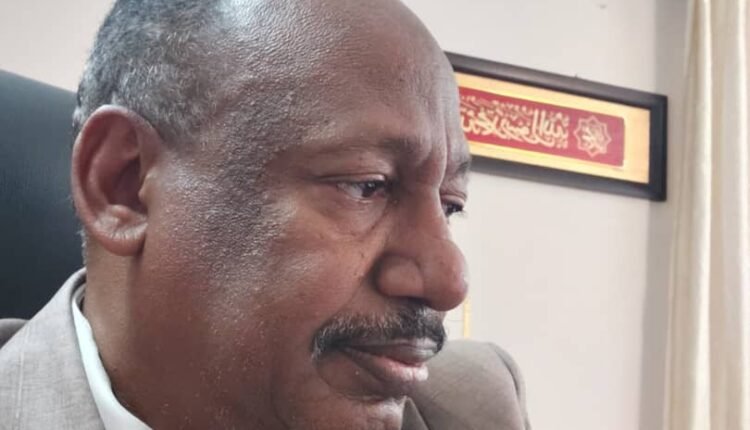
Dr Al-Sadiq Ali Haj Al-Sheikh
If the question in the first part was: What kind of civil service do we want for the Sudan that is emerging from the rubble of war? then the answer cannot simply be to amend a law or redistribute a number of posts.
We need to rethink how the state itself operates: its structures, employees, procedures, relationship with citizens, and how it measures success.
The next phase will not be ordinary. It will be a period of extensive reconstruction, requiring a government apparatus capable of planning, managing resources, contracting, implementation, monitoring and evaluation. Civil service reform must therefore be an integral part of the project of rebuilding the state, rather than a marginal administrative matter.
From Jobs to Missions
One idea worth considering is that, in much of its work, the civil service should shift from a focus on jobs to a focus on missions and results.
This does not mean abolishing permanent state positions. They are essential to the continuity of education, health, finance, records and other core functions. Rather, the aim is to manage much of government work as clearly defined programmes and projects, each with specific objectives, timeframes, resources, and expected results.
Instead of defining a government unit by the number of employees it has, it could be made responsible for a clearly defined portfolio of projects: digitising records, improving revenue collection, developing health services, rehabilitating schools, simplifying investment procedures, developing land resources, or establishing a national database. Each project would have an objective, a manager, a team, a budget, a timetable and performance indicators.
The employee would thus become part of a team working towards a specific outcome. Once the project was completed, that employee could move, with the experience gained, to another project where the state needed those skills.
This model does not abolish public employment. Rather, it gives it greater flexibility and turns government expertise into a national resource that can be deployed wherever it is needed.
Digitalisation: From Reducing Paperwork to Reducing Administrative Overhead
This vision, however, cannot succeed without genuine digital transformation.
The digitalisation we need is not simply converting paper files into electronic files. Introducing a computer into an institution that operates through flawed procedures does not make that institution modern.
What is required is to redesign the procedures first, and then digitise them.
If a citizen’s application passes through five different units when a single entity could process it, digitising those five units will not solve the problem. We will end up with electronic bureaucracy instead of paper-based bureaucracy.
Digitalisation should therefore begin by asking: What is the necessary step? What can be eliminated? What can be combined? Who needs this information, and why? And why is the citizen asked to submit the same document more than once?
Once this is addressed, government databases can be linked and a unified electronic personnel record can be established for public employees, outlining their positions, qualifications, salaries, training, promotions, and vacancies.
Data can also reveal overlap and duplication, and help the state determine where it needs more employees and where it has a surplus. In this way, digitalisation becomes a tool to reduce administrative overhead rather than merely a way to make it look more attractive.
Redesigning Ministries and Government Units
The reform process also requires a comprehensive review of ministries, their subordinate units, and independent bodies and institutions.
The question should not be: How many ministries do we want? Rather, it should be: What functions does the state need, and which entity is best placed to perform them?
Merging two units may prove more efficient. Separating a function from a ministry and assigning it to a more specialised body may be the solution. In other cases, converting certain units into shared services serving several ministries may be more effective.
But restructuring must not become merely a matter of changing names. What is required is genuine institutional redesign that clearly defines responsibilities, powers, resources and performance indicators.
A good structure is one through which the citizen knows where to go, the employee knows what to do, and the leadership knows who is responsible for the outcome.
The European Experience: The Lesson, Not the Model
Sudan can benefit from European experience in developing public administration, but without simply copying it.
The important European lesson is that a modern public service is based on professionalism, merit and institutional continuity. It also depends on investing in employees, developing leadership, using data and technology, and placing the citizen at the centre of service delivery.
European models themselves differ from one country to another. Sudan should therefore adopt the principles that suit its own circumstances and build a Sudanese model that draws on global experience without losing its distinctive character.
Most importantly, modern European reform does not view digitalisation as simply a technical project; it regards it as a redesign of how the state operates.
The Academy of Administrative Sciences: From a Training Institution to a Centre of Expertise
Sudan also has an important opportunity in the Academy of Administrative Sciences affiliated with the Council of Ministers. Rather than establishing new institutions, the Academy could be rehabilitated and its role modernised to become a national centre for preparing government leaders and developing public administration.
It could offer specialised programmes in strategic management, project management, public policy, human resources, digital transformation, public finance, local government and governance. It could also serve as a centre of expertise for the government in redesigning structures, reviewing institutional mandates, evaluating performance and developing leadership.
The Academy could work with Sudanese universities and research centres, as well as regional and international institutions, so that administrative knowledge becomes an integral part of the state-building process rather than merely a collection of isolated training courses.
The Employee and the State: A New Contract
Yet all these reforms will remain incomplete unless we establish a new relationship between the state and its employees.
Employees need fair salaries, a working environment that safeguards their dignity, a clear career path, opportunities for training and professional development, and a fair appraisal system. In return, the state needs employees who are disciplined, accountable, committed to continuous learning and capable of delivering results.
From this, a new equation can be built: fair pay in return for clearly defined work; professional development in return for responsibility; professional independence in return for accountability; and trust in return for performance.
This is preferable to viewing the employee as a cost, or the state as merely an institution whose role is to pay salaries.
The Federal Government and the States
Sudan also needs to settle the relationship between the federal and state levels of government.
The aim should not be to keep everything concentrated at the centre, nor should decentralisation result in multiple standards and significant disparities in service quality.
The relationship could be based on unified national standards, with decentralised implementation wherever it is more efficient.
The federal level would establish general standards for positions, human resources, training, data and performance. At the same time, the states would have the powers and resources necessary to manage services falling within their areas of responsibility.
In this way, decentralisation would become a means of improving services rather than merely transferring offices from one place to another.
Reconstruction as a Test of the Civil Service
Reconstruction will be the greatest test of the capacity of Sudan’s administrative apparatus. The projects ahead will require professional management of procurement, contracts, financing, planning, implementation, and oversight. They will require engineers, accountants, lawyers, planners, data and technology specialists, and project managers.
A national register of government expertise could therefore be established, enabling the state to know where its expertise lies and to form teams for major projects from within the civil service, rather than creating a new administrative apparatus for every project.
Sudanese professionals abroad could also be engaged in training, consultancy and knowledge transfer, while institutional mechanisms are developed to ensure that this expertise becomes embedded within the state.
Measuring Success by the Citizen
Ultimately, the success of reform should not be measured by the number of new regulations, the number of training courses, or the number of electronic systems introduced.
The real measure is the citizen:
How long does a citizen have to wait to complete a transaction? How many times must they visit the institution? Do they know where to go? Do they receive the service on time? And can they lodge a complaint and receive a response?
These questions should become genuine performance indicators for public institutions. Public administration that does not tangibly improve the citizen’s experience has failed to achieve its purpose, however impressive its organisational structure may appear.
Conclusion: Building Beyond the Ruins
Perhaps the greatest losses caused by war are not those that we can count. What can be counted can be replaced; what has been destroyed can be rebuilt; what has been burned can be constructed again. But the loss of institutional experience, public trust and the state’s capacity to act may take years to recover from.
That is why Sudan’s next battle will not simply be to rebuild physical structures, but to rebuild capacity.
The capacity of the employee to work with dignity; the capacity of the institution to understand its mission; the capacity of the ministry to deliver; the capacity of the state to provide what falls within its responsibility; and the capacity of the state as a whole to see its citizens not as numbers in official records, but as the very purpose for which the state exists.
In this equation, the employee should not be an adversary of the state, nor should the state regard its employee as merely a burdensome figure on the payroll. Both need one another.
The state needs a qualified, committed and capable employee, while the employee needs a state that provides fair pay, a professional working environment and development opportunities. Between the two, a new administrative contract can emerge: the state provides trust, opportunity and fairness, while the employee provides competence, discipline and results.
At that point, the entire image of the government apparatus could begin to change. Ministries would no longer remain isolated islands; government units would no longer be shadows where responsibilities are repeatedly duplicated; and procedures would no longer be mazes where citizens become lost.
Institutions would be redesigned, duplication eliminated, and digitalisation used to shorten the distance between citizens and the state. Projects would become arenas for joint endeavour, bringing together people with the expertise and competence to deliver specific, visible objectives.
Perhaps the finest thing Sudan can do after these difficult years is not to try to restore yesterday exactly as it was, but to learn from it and then move beyond it.
Nations do not rebuild themselves merely to return to the point at which they were devastated; they rebuild in order to open a window onto another era.
The civil service we want is not one that merely survives the war, but one that helps Sudan rise after it. It is not an administration of the past, but the memory of the past, the mind of the present, and the bridge to the future.
If reconstruction is to restore Sudan’s buildings, roads and facilities, then rebuilding the civil service can restore something deeper: its capacity to dream, to plan and to deliver—and to make the state once again a place where the citizen’s aspirations meet the institution’s ability to turn them into reality.
Shortlink: https://sudanhorizon.com/?p=18566