

US Military Magazine: UAE Purchased Chinese Weapons for RSF, Prolonging the Sudanese Conflict
Khartoum – Sudanhorizon
The African Defense Forum (ADF), a quarterly US military magazine published by the US Africa Command (AFRICOM) – which describes itself as providing an international platform for African security experts – published an article explicitly naming the United Arab Emirates for purchasing weapons from China and dispatching them to the Sudanese Rapid Support Forces (RSF) militias. The article specifically mentions the names, types, and uses of these weapons.
The ADF, which covers all 54 African countries and includes specialized articles on current security issues such as counterterrorism strategies, civil-military relations, transnational crime, and all other issues affecting peace, stability, and good governance, referred to what it described in its headline as “The Influx of Cheap Chinese Weapons Prolongs the Sudanese Conflict.”
The magazine emphasized that the United Arab Emirates UAE supplied the Sudanese Rapid Support Forces militia with weapons, including drones, resulting in devastating consequences for civilians in affected areas of Sudan.
The magazine explained that the human toll was catastrophic, with thousands of lives lost and countless communities torn apart. A massive number of civilians were displaced from their homes, with many fleeing to safer areas within Sudan, while others sought refuge in neighboring countries.
The magazine stressed that external actors have fueled the ongoing conflict by providing military supplies and equipment, and noted that published reports, including one in The Wall Street Journal, show that the UAE supplied these armed militias with advanced Chinese-made drones and a wide range of Chinese weapons, representing a dangerous and alarming escalation of foreign intervention in the conflict.
The magazine’s report quoted Brian Kastner, head of crisis research at Amnesty International, condemning the international community’s failure to hold the United Arab Emirates accountable for transferring Chinese weapons to the Rapid Support Forces (RSF), and calling for an immediate halt to arms transfers.
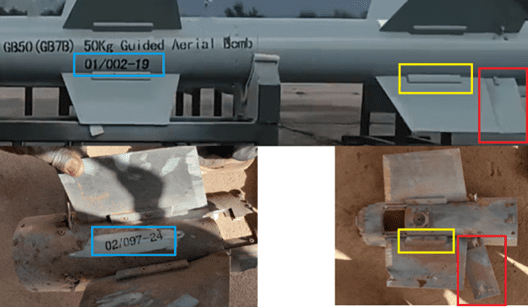
The article confirmed that Amnesty International had documented instances of RSF fighters possessing GB50A guided bombs and AH-4 155mm howitzers.
Kastner was quoted as saying in May of this year that civilians are being killed and injured because of international inaction, while the UAE continues to violate the arms embargo. “The UAE must immediately stop transferring weapons to the RSF.”
The report noted that China has increased its arms exports to Africa in recent years. In 2024, China surpassed Russia to become the largest arms exporter to sub-Saharan Africa, and at least 21 countries received significant arms shipments from China between 2019 and 2023.
According to the magazine, in September 2024, China announced a plan to spend $140 million to train 6,000 military personnel in Africa. Furthermore, the Chinese defense giant Norinco opened a regional office in Dakar in 2023—its fourth in Africa—and used this presence to expand its sales of military equipment to Burkina Faso, Mali, and Niger. In exchange for security assistance, these African countries have contributed to advancing China’s geopolitical ambitions, increasing their interdependence.
In Sudan, the magazine noted that since the beginning of the war, the United Arab Emirates has been supplying the Rapid Support Forces (RSF) with a wide range of Chinese weapons. The magazine specified that these weapons include guided bombs, howitzers, drones, and advanced FK2000 air defense systems.
It also pointed out that reports indicate the UAE purchases weapons and then re-exports them to the RSF through various routes in Libya and Chad. The magazine added that the UAE has officially denied sending weapons to the RSF despite widespread reports of this activity. Politics
The magazine stated that Chinese weapons played a significant role in bolstering the Rapid Support Forces’ (RSF) military capabilities during the conflict. These weapons helped the RSF achieve battlefield gains against the Sudanese Armed Forces.
The magazine emphasized that one of the main advantages of Chinese weapons is their affordability, making them accessible to non-state armed groups like the RSF.
It also noted that these weapons are often supplied without strict government oversight or regulatory scrutiny, facilitating their acquisition. As a result, the RSF’s reliance on Chinese weapons is expected to increase as the conflict continues.
The magazine warned that based on the RSF model, the relationship between Chinese arms dealers and African armed groups could deepen over time, and Chinese weapons could exacerbate conflicts in other parts of the continent. This expansion of influence raises serious concerns among policymakers and security analysts.
The magazine lamented the heavy human cost of allowing such developments. The report confirmed that the Rapid Support Forces (RSF) militia uses drones to attack populated areas before launching ground offensives, causing extensive damage and destroying vital infrastructure.
The report indicated that the Chinese supply line from the UAE to Sudan is not precisely defined, but generally, weapons are transferred to the RSF through neighboring countries such as the Central African Republic, Chad, and Ethiopia, according to the French newspaper Le Monde.
The report explained that one way to curb this deadly arms supply is for foreign powers to exert diplomatic pressure on the UAE.
The second approach involves escalating the issue to the international arena through the UN Security Council. The magazine wrote, “By raising this issue in these global forums, external actors can draw broader international attention to the illegal flow of weapons into the conflict zone.”
The article, published on July 22, 2026, noted that a key part of this strategy is calling on all parties to respect the arms embargo on Darfur. This embargo, specifically designed to prevent the transfer of weapons to the Darfur region, has been largely ignored by various actors. Renewed international pressure could help strengthen adherence to this legally binding agreement. Together, these two strategies represent the most realistic and effective ways to curb the dangerous proliferation of Chinese weapons in Sudan.
Shortlink: https://sudanhorizon.com/?p=16230