

Sudan After the War… Is This Not the Way Forward?
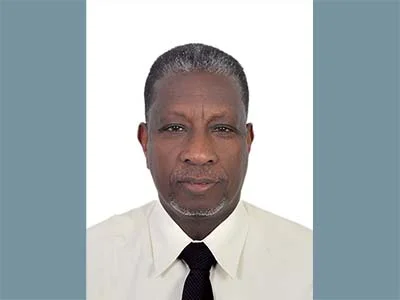
Professor El-Tigani Abdel-Qader Hamid
(1)
Now that Sudanese people have managed to cast off much of the burden imposed upon them by the rebel militia, they may finally be able to recognise clearly that, over the past two years, they were indeed exposed to “existential” dangers that came close to destroying them altogether—as a state, a people and a country.
This was the first time in their modern history that they found their state under siege, their people hunted, and their land and homes occupied. It was also the first time that they awoke to find their armed forces—the institution entrusted with safeguarding their national security—completely encircled by one of their own armed militias. The Armed Forces lost control of most of their sources of strength, including command headquarters, ammunition factories, fuel depots, military camps and communications networks. They looked around in every direction but found no friend or ally coming to their aid. (We still do not know, of course, what led to this catastrophe—treachery, conspiracy or a lack of military competence.)
The situation was saved only because the wounded Armed Forces, under an exceptional and rare set of circumstances, turned to their popular base and mobilised citizens to defend the homeland. Young people responded, at great personal cost and with profound consequences, by going to training camps before rapidly moving to the battlefield to fight shoulder to shoulder with the Armed Forces until victory was achieved.
(2) An Existential Question
The first lesson that should be drawn from this bitter experience, in which hundreds of people were killed or wounded, is that the question of “existence”—the existence of the people, the land and the heritage—must take precedence over all other issues, and that every avenue leading to a similar catastrophe must be closed.
To preserve this existence, Sudanese people will, in my view, face three fundamental dilemmas that they must confront and seek to reconcile: national security, economic development and political legitimacy.
The debate over these dilemmas has been, and will continue to be, lengthy and heated, and opinions may diverge over their details. Yet, if they have learnt anything from this war, they must come together and unite around three courses of action:
(a) Consolidating state sovereignty, so that there remains a unified authority with sufficient military capability to protect lives, control the territory, safeguard the borders and exercise firm control over Sudan’s national resources—its gold, seas and airspace—particularly because the existential battle is not yet over. The aggressor and its allies continue their attacks, launch drones and incite neighbouring countries.
(b) Strengthening investment in social capacity—that is, mobilising the country’s social and scientific energies and directing them towards a national project aimed at multiplying domestic productive capacity in defence, food and medicine simultaneously.
This necessarily requires a dual plan. On the one hand, it must modernise the defence and security base and maximise its capabilities and readiness in preparation for a second wave of aggression. On the other, it must protect the domestic productive base against the shocks arising from volatility in financial markets, inflation and recession in the global economy and among its regional agents.
Such a dual plan can only be achieved if the mobilisation process continues and is deepened, so that young people return to the fields of battle whenever the need arises, while army units, in times of peace, enter the fields of construction, production and manufacturing.
In other words, the successful “defensive” partnership that led to victory in the “Battle of Dignity” should be transformed into a successful “constructive” partnership in the battle for production—agriculture, industry, transport, communications, development and recycling.
This could be a practical translation of the slogan “One Army, One People”, a slogan that the public continued to chant throughout the years of war. The barriers between the “military trench”, the “scientific laboratory” and the “factory” producing food, medicine and ammunition would disappear, giving rise to a vast development project.
No one should be surprised by such a vision. If they are, they should revisit part of the history of the great projects that built nations, such as the Manhattan Project (1942), to see how American academics, military teams and industrialists worked together during wartime, and how the United States achieved, through that collaboration, scientific, technological and military superiority that has endured to this day—not to mention similar military-academic-popular-industrial partnerships through which many other countries achieved remarkable advances.
(c) Elevating community and professional forces to positions of decision-making.
We should remember that these resilient community forces and the professional forces living abroad are sources of strength within Sudanese society. The current war has genuinely tested the ability and resilience of both groups in the face of catastrophe. They were the ones who sheltered, fed and treated thousands of families who escaped the hell of war. They also made a major contribution to the Battle of Dignity and supported the Armed Forces with money and workforce.
We should also remember that the militia and its regional allies did not seek merely to destroy the state. They also sought to destroy the sources of strength within Sudanese civil society and cut off the resources that sustain it.
Whenever the militia entered a city, it destroyed water wells, electricity transformers and transmission lines, disabled mills, looted pharmacies, hospitals and dialysis centres, and targeted local community leaders, doctors, pharmacists and engineers alike.
(3) The Constraints of Reality
The call to rally around these proposed courses of action has not emerged from an imaginary world; the realities on the ground have prompted it.
There is no doubt that Sudan, particularly following the destruction caused by the recent war, faces extremely difficult humanitarian and social conditions, as well as a deteriorating economic situation.
Making matters worse is a frightening “leadership vacuum”. The political elites—both those who preceded the December 2018 uprising and those who rose in its aftermath—are experiencing internal and mutual conflicts, divisions and hostilities that currently prevent them from turning their attention to the existential dangers surrounding Sudan and the calamities that have befallen Sudanese society: the collapse of its institutions, the loss of its wealth and the destruction of its young people’s future.
Those divisions and hostilities also prevent Sudan from taking advantage of opportunities that may open up because of its natural resources, agricultural land, precious minerals, and strategic location.
As for the major external powers—the United States and Europe—they currently have enough internal crises of their own, as well as fierce trade wars. Under these circumstances, they are unlikely to open their coffers to support Sudan or anyone else.
It is therefore unwise to make Sudan’s future depend on its political parties, or for Sudanese people to rely too heavily on their current political elites. These elites do more harm than good. Some suffer from the shortcomings of their origins, while others suffer from the ailments of old age. None possesses a grand “idea” capable of inspiring the public, nor does any have great “leaders” capable of generating ideas and galvanising popular energy.
It would therefore be preferable to let these parties address their own internal affairs at their own pace, repair their relationships, and review their programmes and objectives. Meanwhile, other social blocs, actors and solidarities should be developed independently of them—comprising researchers and experts, local community forces, farmers, businesspeople, industrialists and ambitious young people who have a genuine stake in development. Such forces may be better placed to undertake the task of rebuilding Sudan at the present stage.
The political parties can join the national effort at the next stage, once they have recovered.
If we accept this proposition, it will have many implications, most importantly that we must reconsider our current economic and political approaches.
(First) The Economic Model
We must begin by acknowledging that we are suffering from alarmingly high unemployment, similarly high living costs, a disastrous decline in domestic production, deterioration in infrastructure and institutional structures, and worsening problems in the health and education sectors.
But it is equally important that we do not deceive ourselves by building our hopes around foreign aid or promises from donor countries and reconstruction funds.
We must reconsider our economic model of thought and replace it with another whose fundamental premise is that the way out of this great catastrophe must begin with the establishment of a “strong and responsible state” that first guarantees security, then mobilises energies and galvanises determination towards a principal strategic national objective: restarting the wheel of production and increasing its output, and then using the resulting resources to meet the basic needs of its citizens—security, health and education.
We must keep before us the examples of rising societies, China for instance, which managed to build roads and bridges through the labour and efforts of their own people, drawing inspiration from the example of their forebears who transformed mountains and achieved remarkable feats, rather than relying on externally donated equipment and machinery.
In this connection, I am reminded of an example cited by a perceptive thinker to illustrate the difference between material resources and social capacity.
Suppose, he says, that a massive earthquake destroyed the city of New York. The United States, relying solely on its material resources, could not simply buy another city like New York. But by relying on its social capacity, it could build—and rebuild—hundreds of cities like New York.
Social capacity, rather than material resources alone, determines the fate of nations.
By the same token, it could be argued that three to five million determined and highly trained young Sudanese people could rebuild Sudan—if given the opportunity—and contribute to its renaissance, just as they have contributed to the development of other countries that once amounted to very little.
(Second) The Political Model
We Sudanese must change our model of political thinking. For now, we should stop chasing political workshops, conferences abroad, draft constitutions, and political charters. We have tried these things before and harvested nothing but ashes.
At the same time, we must stop pursuing an “ideal” political model that we currently lack the logistical, security and economic conditions to implement.
Instead, during this stage of strengthening our existence, we should begin with a minimum programme of democracy based on justice and the rule of law, geographical popular representation, and consultation with experts, and then gradually move towards a more complete form of democracy.
Insisting that we must immediately, and from the outset, achieve a fully competitive, party-based democracy like that of the stable and economically prosperous Western capitalist countries is misplaced.
Those Western countries themselves did not arrive at their current democratic systems—imperfect though they may be—in a single step.
How many societies in our African neighbourhood and elsewhere have continued to struggle, learn, and progress from an authoritarian system concerned primarily with maintaining security to a hybrid system that is better than the previous one, and then to a third system that comes closer to sound and responsible governance?
(Third) What Can We Expect?
If the developmental economic model outlined above succeeds, it may do more than merely repel aggression, preserve security and raise living standards.
It could also narrow the gap between the military, academics and businesspeople; reduce dependence on the outside world; lower the political temperature between rival political groups; and restore a degree of balance between marginalised communities and the urban centres that have historically dominated them.
The persistence of such grievances and resentments can only generate social and psychological environments hostile to democracy and receptive to dictatorship—as occurred in some neighbouring regional societies following the well-known Arab Spring uprisings.
And there is no strength or power except through God.
Shortlink: https://sudanhorizon.com/?p=18205