

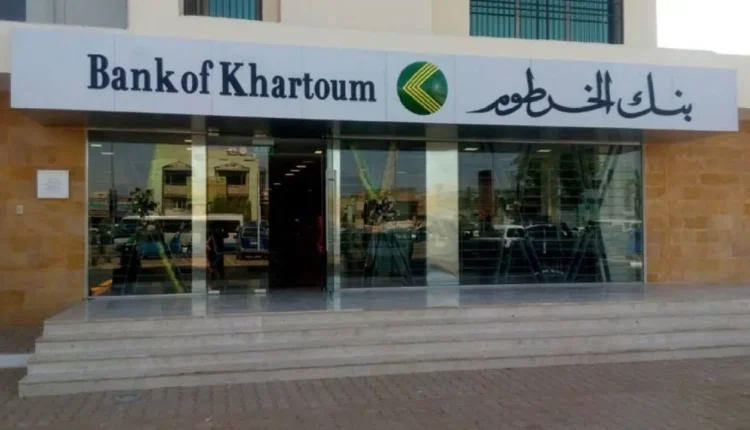
After Announcing $1 Billion in Financing, Bank of Khartoum Puts Commercial Banks to a New Test
Sudanhorizon – Follow-ups
Sudanese citizens credit Bank of Khartoum’s electronic banking application, Bankak, with standing by them during the early days of the war following the collapse of the country’s banking system and the systematic destruction of banks across the country by the militia. At the time, Bankak helped millions of displaced people and refugees inside and outside Sudan, while transfers enabled them to secure their livelihoods during that difficult period.
Yesterday, Bank of Khartoum Chief Executive Officer Lamia Satti confirmed in press statements that the same application had contributed to the appreciation of the Sudanese pound against foreign currencies following the sharp rise witnessed in parallel markets last week and the subsequent decline. Satti attributed the improvement to the stability and effective operation of the application.
The developments did not stop there. Satti revealed that Bank of Khartoum had secured $1 billion from external sources as revolving financing for the import of strategic commodities. She explained that the move comes as part of the Central Bank of Sudan’s efforts to encourage banks to contribute to providing credit lines for the import of strategic commodities, calling on importers wishing to import goods to complete their procedures.
With this announcement, Bank of Khartoum has opened the door wider for commercial banks to play a role and contribute to broader economic activity.
Satti said Bank of Khartoum had managed to provide more than $2 billion for the import of strategic commodities, contributing to the stability of the pound’s exchange rate during the early period of the war. She stressed that the national bank’s role toward its customers and the Sudanese economy is clear through its work and achievements, which speak for themselves.
Strategic planning and digital transformation expert Dr. Marwa Fouad Qabbani said the decline in foreign exchange rates against the Sudanese pound comes within the context of improved financial transaction efficiency, alongside indicators of cash flows.
Speaking to Sudanhorizon, Qabbani stressed that the technical stability of banking services represents key infrastructure for the economy, but does not, on its own, constitute a complete solution to the exchange-rate crisis.
Qabbani explained that the stability of Bank of Khartoum’s Bankak application directly contributes to improving the efficiency of money flows and reducing financial bottlenecks, thereby strengthening confidence in the banking system and reducing reliance on informal channels.
At the same time, she noted that the exchange rate remains governed by macroeconomic factors, including the volume of supply and demand for foreign currency, external remittance flows, export activity, domestic liquidity, and the monetary and fiscal policies in place.
Qabbani attributed the greater impact on the foreign exchange market to Bank of Khartoum’s announcement that it would inject $1 billion in revolving financing for the import of strategic commodities, noting that directing these resources through the banking system reduces importers’ reliance on the parallel market and eases pressure on it.
She called for detailed data on the actual utilization and timing of the flows to be made available in order to measure their direct and sustainable impact on the markets.
She also called for lessons to be drawn from previous financing experiences and for confidence in Sudan’s banking sector to be rebuilt through three interconnected tracks: stabilizing electronic payment systems, increasing foreign currency resources through official channels, and directing financing toward productive sectors, exports, and essential commodities. She stressed that integrating these tracks is the only way to turn the temporary recovery of the pound into a sustainable economic trend.
For his part, banking expert and institutional development consultant Noman Yousuf Mohammed said the latest statements by Bank of Khartoum’s chief executive carry significant importance.
He stressed the need to distinguish between three fundamental economic concepts: the stability of the Bankak application, the provision of foreign currency to finance imports, and the improvement in the Sudanese pound’s exchange rate.
Speaking to Sudanhorizon, Yousuf explained that the stability of Bankak is a fundamental pillar for sustaining transactions and strengthening confidence in official banking channels. However, he cautioned against attributing too much weight to these technical factors, saying it would be economically impossible to attribute the decline in foreign currency prices over two days solely to the application’s stability without accurate data on the volume of transfers, liquidity movements, and demand for foreign currency.
Regarding the announcement of $1 billion in financing through a financing portfolio for strategic commodities, Noman said the move is among the tools with the most direct and significant impact on the parallel market. He praised the Central Bank of Sudan’s announcement regarding the operation of the portfolio, which is led by Bank of Khartoum under the bank’s direct supervision and oversight, ensuring that resources are directed toward strategic purposes.
Yousuf stressed that securing more than $2 billion during the first months of the conflict represents a significant achievement that should be evaluated on the basis of clear figures and timelines to distinguish the bank’s individual contribution from other broader economic factors.
He concluded that the stability of the national currency cannot be achieved through a single factor, but is instead the result of a balance between foreign currency supply and demand, the volume of exports and remittances, gold flows, domestic liquidity, and the level of confidence in monetary policies. He stressed that “the parallel market does not respond to announcements and intentions as much as it responds to actual and regular foreign currency flows when they become reality and meet genuine demand.”
Shortlink: https://sudanhorizon.com/?p=18190