

The Sudanese Dialogue: From a State Party to a State Guarantor
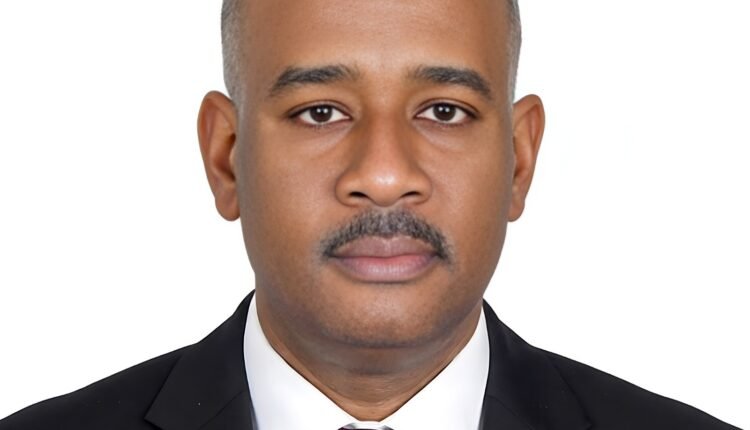
Muhannad Awad Mahmoud
Discussion of the Sudanese dialogue today is almost entirely confined to whether the Preparatory Committee is independent of the state. This is a legitimate and necessary question, but it is not the most important one. Sudan does not need a state that disappears from the political process so much as it needs a state that knows how to be present without owning everything: providing protection, guarantees and resources without allowing these functions to become instruments for controlling the participants, the agenda or the outcomes.
In my view, this is one of the most important issues that any serious Sudanese dialogue will test in the coming phase.
In a country at war, where state institutions have been damaged, and millions of Sudanese have been dispersed between displacement and refuge, it is impossible to envisage a broad national dialogue as a simple civil-society activity. Who will secure participants’ movement? Who will guarantee the entry and departure of opponents? Who will protect the meetings? Who will address the legal restrictions that may prevent certain forces from returning or participating? And who will bear the logistical costs of an initiative seeking to reach Sudanese people in different regions?
The realistic answer is: the state. But the institutional answer must immediately add: the state does all this, and then stops at its own boundaries. This is where the difference lies between the state acting as guarantor of the dialogue and the state becoming its owner.
A state guarantor provides the law, protection, freedom of movement, facilitation, and necessary resources, but it does not decide who participates and who is excluded; it does not set the agenda, determine the political ceiling, or impose the outcomes.
A state party, by contrast, provides facilities and then regards them as grounds for tutelage; it provides funding and then demands a political price; it protects a meeting and then seeks to determine who deserves protection and who does not.
I believe that the experience of the Preparatory Committee for the Sudanese–Sudanese dialogue, although still at an early stage, has so far offered a practical model for separating the state’s role from ownership of the political process. The state’s role has remained confined to providing the necessary guarantees and logistical facilities, without intervening in the committee’s composition, determining the forces with which it communicates, shaping the dialogue’s agenda or deciding its outcomes. In my view, this approach represents the model of a state guarantor rather than a state owner. It is, fundamentally, one of the principles upon which the committee was established and its mandate defined from the outset.
For this reason, financing the dialogue requires clarification. The state has undertaken to bear the cost of a broad national process, while fully respecting the institutional boundaries that clearly distinguish between those who provide resources and those who possess decision-making authority.
This is not an unfamiliar concept in state work. The state funds the judiciary, but it does not own the judge’s decision. It funds universities, but it does not dictate what a university professor should say or teach. It funds elections, but it is not supposed to determine what voters choose. By the same principle, the state’s assumption of the cost of the dialogue, and its provision of facilities and guarantees, does not grant it the right to own the dialogue or control its agenda and outcomes.
It is equally important that the state has affirmed its readiness to provide the same facilities and guarantees to its opponents, provided that they enter the process by peaceful means. Such facilities are not a reward for supporters; rather, they form part of the state’s responsibility to enable different forces to participate in a safe and open national dialogue.
This is why legal guarantees matter. The true value of any guarantee does not become apparent when supporters benefit from it, but when a determined opponent can enter the country, sit in the dialogue hall, openly criticise the authorities and then leave without his political participation becoming a means of retaliation.
Only then does the discussion of guarantees become more than a legal provision; it becomes a practical translation of the idea of a state guarantor that opens up the political space without monopolising it.
From this perspective, we must also reconsider what the dialogue’s independence means. Independence does not mean that the process must be severed from the state or transformed into an island detached from it. Genuine independence means that clear functions and boundaries define the relationship between the two.
The state is responsible for the environment, but Sudanese people are responsible for politics. The state provides security, but the participants determine the agenda. The state facilitates access, but it does not choose who gains access. The state provides logistical support, but it cannot purchase the right to interfere in outcomes.
It is important here to distinguish between the state and the government. The state, with its institutions and resources, belongs to all Sudanese people, whereas the government administers those institutions for a specific period. When the state uses its resources to facilitate a national dialogue, this does not mean that the government owns the dialogue or has the right to control its agenda and outcomes.
Conversely, the Preparatory Committee must keep this separation clear in practice, ensuring that its decisions, communications, and working methods remain independent and open to the various Sudanese forces and components, including those that are hesitant about or opposed to the initiative.
The same principle applies to the international community. Its role should remain supportive, facilitating and complementary to the Sudanese effort, without replacing Sudanese people in designing or owning the process. The United Nations, African Union, Arab League, European Union and neighbouring states can assist, provide expertise, open channels and support efforts to reach parties that are difficult to contact. However, ownership of the process, its agenda and its outcomes must remain Sudanese.
In this sense, the dialogue becomes a practical application of the model of the state guarantor rather than the state owner. At the same time, it confirms the Preparatory Committee’s independent character and its specific role in paving the way for a dialogue owned by Sudanese people themselves.
Sudan needs a state that is present and capable of performing its essential functions in protection, law enforcement, and providing the guarantees and facilities required for the political process, while maintaining the distance necessary to safeguard the dialogue’s independence and Sudanese ownership. Strength here does not mean control over the process, just as independence does not mean the state’s absence from it.
This is the model to establish and build on: a state that performs its function and knows its limits; a state that protects without monopolising, funds without owning, and guarantees without dictating.
If the Sudanese dialogue succeeds in consolidating this principle, it may accomplish something greater than bringing those who disagree together around a single table. It may lay a practical foundation for a clearer and more mature relationship between the state and society, between support and ownership, and between facilitation and decision-making.
Shortlink: https://sudanhorizon.com/?p=17987