

UNSC Session Expected This September on Extending Sanctions on Darfur
New York – Sudanhorizon
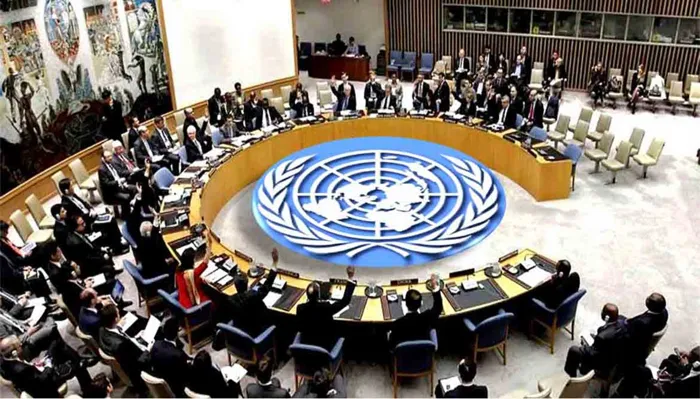
The official media website of the UN Security Council states that the Council is expected to vote this September on a draft resolution to extend the sanctions regime imposed on Sudan (Darfur). This regime expires on September 12, and the mandate of the Panel of Experts assisting the Sudan Sanctions Committee, established under Resolution 1591, ends on October 12, unless the extension is approved.
The press briefing published on the website reviewed the military, humanitarian, and political developments in Sudan over the past few months. These included Rapid Support Forces (RSF) attacks on civilian facilities and infrastructure, clashes between the army and the RSF on several fronts, the actions of the African Union Peace and Security Council and the Quintet Committee, and UNICEF reports on the state of education in Sudan.
The United States submitted a draft resolution last August proposing to expand the sanctions regime to include all of Sudan and to add drones to the list of prohibited weapons. However, the US draft resolution, which remained under consultation, received support only from European countries, while Russia and China expressed reservations.
According to the UN Security Council website, the most significant recent developments in Sudan related to this issue include: On August 12, the Rapid Support Forces (RSF), a Sudanese militia, launched simultaneous suicide drone attacks targeting several major cities, including El Obeid, Atbara, Omdurman, and Khartoum. El Obeid, the capital of North Kordofan State, is facing increasing pressure amid a large buildup of RSF forces and allied fighters around the city. Repeated drone strikes have targeted infrastructure in and around El Obeid, including power and fuel stations, forcing medical facilities and water stations to shut down. As hostilities continued, displacement camps in the city expanded, and residents fled the violence in surrounding areas. The security situation remained extremely tense, with waves of drone strikes within the city and fighting southwest of El Obeid resulting in the deaths of dozens of civilians.
The website noted that in late July, the Sudanese Armed Forces (SAF) launched a large-scale ground offensive in North Kordofan, subsequently announcing the recapture of the export highway and five key towns along it: Bara, Umm Sayala, and Jabra Sheikh, following two days of fierce clashes with the Rapid Support Forces (RSF). Since then, the SAF has consolidated its control over most of the corridor, although the RSF reportedly continues to challenge these gains.
The website also reported that in Blue Nile State, the security and humanitarian situation deteriorated after fighting intensified around the towns of Kurmuk and Qaysan on the Ethiopian border. Media reports indicated that the Rapid Support Forces (RSF), in cooperation with its ally the Sudan People’s Liberation Movement-North (SPLM-N), recaptured the two towns in mid-August. The clashes raised concerns about the conflict spreading regionally, amid allegations that the RSF receives external support, including claims that it uses Ethiopian territory as a supply corridor for its operations, and reports that its latest attack in Blue Nile was launched from within Ethiopia.
The Quintet – comprising the African Union, the European Union, the Intergovernmental Authority on Development (IGAD), the League of Arab States, and the United Nations – held consultations in Addis Ababa in late July and early August with Sudanese political blocs and parties.
These latest consultations built upon the Quintet’s initial meetings with a range of Sudanese civil society actors on the sidelines of the International Sudan Conference held in Berlin on April 15, and further consultations in early June 2026. Media reports indicate that some groups, including Samoud and Ta’sis, declined to participate in this round of talks, expressing reservations about the mediators’ mechanism in the consultation process.
On August 16 and 17, a delegation from the African Union Peace and Security Council conducted a field visit to Sudan, meeting with senior Sudanese officials, including the Commander-in-Chief of the Sudanese Armed Forces, Lieutenant General Abdel Fattah al-Burhan, and the Transitional Prime Minister, Kamil al-Tayeb Idris. Discussions covered the political, security, social, economic, and humanitarian situation in the country, as well as governance challenges and efforts toward an inclusive national dialogue.
The African Union sought to reopen its liaison office in Sudan to facilitate communication with stakeholders at various levels and provide technical support to the country. Sudan’s membership in the African Union was suspended following the 2021 military coup.
On August 7, Somalia, co-hosted by the Democratic Republic of Congo and Liberia, held an Arria-formula meeting entitled “Protecting Education in Sudan: Investing in Peace, Recovery, and Stability.” The opening remarks were delivered by Ambassador Abubakr Dahir Osman (Somalia) and UN Deputy Secretary-General Amina Mohammed. A briefing was given by UNICEF Deputy Executive Director for Management Hanan Suleiman and Executive Director of the Global Alliance to Protect Education from Attack Lisa Chung-Bender.
Shortlink: https://sudanhorizon.com/?p=17771