

Amnesty: Civilians in El Fasher Face Killings, Unlawful Detention and Torture One Year After RSF Seized the City
Sudanhorizon– Mohamed Othman Adam
Amnesty International (AI) has urged all nations to halt arms supplies to the United Arab Emirates (UAE), stating that the UAE “supports a militia that continues to torture and detain thousands of civilians” in the city of El Fasher, following acts of genocide committed in 2025.
A new report released by the organization—marking one year since the city was occupied by the rebellious Rapid Support Forces (RSF)—notes that “crucially, the UAE continues to support the RSF, while governments with significant influence have largely failed to identify, condemn, or hold the UAE accountable for its role.”
The report states that Amnesty International(AI) “reiterates its call for an immediate ceasefire and the urgent deployment of an international force to protect civilians. Furthermore, all states must immediately cease the supply of arms and ammunition to all parties involved in the conflict in Sudan.”
The new Amnesty International report, titled “Sudan: Civilians in El Fasher Suffer Unlawful Killings, Detention, and Torture One Year After RSF Seizure of the City – New Testimonies,” specifically calls on all nations to “halt arms transfers to the UAE until it ceases supplying the RSF with weapons—a practice that violates the UN arms embargo on Darfur.” The organization also urged the UN Security Council to expand the existing arms embargo on Darfur to encompass the entire country. The detailed report presents testimonies from civilians who managed to escape the city, as well as accounts from families who paid exorbitant ransoms to secure the release of their loved ones.
The report emphasizes that the (RSF) must immediately release all those arbitrarily detained and put an end to torture and unlawful killings within detention centers and elsewhere. Furthermore, the use of forced labor—which is prohibited under international law—must be brought to an end.
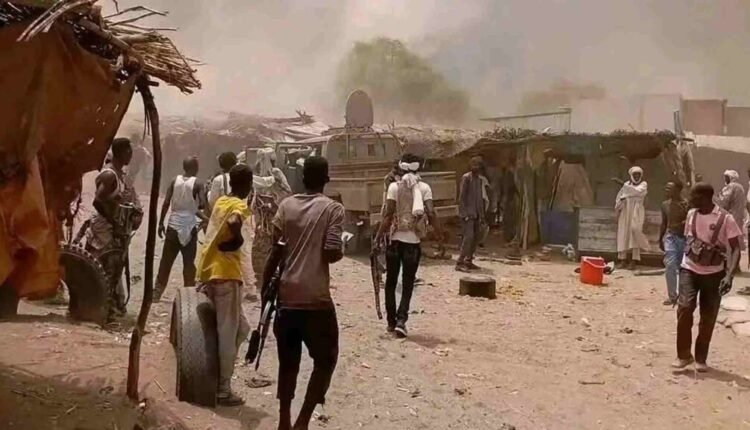
An Amnesty International report reveals that civilians in El Fasher, North Darfur (Sudan), continue to endure detention, torture, and restricted access to humanitarian aid, a year after the RSF took control of the city and committed atrocities against the civilian population.
According to the report, residents who recently escaped the city recounted to Amnesty International how schools were converted into detention centers, how their movements were subjected to strict surveillance, and how unlawful killings became widespread.
The report states that, based on statistics compiled by humanitarian organizations operating in the city, the current population of El Fasher is no more than 70,000—a sharp decline from the pre-war population of over one million. Access to humanitarian aid remains limited, and both aid workers and other civilians in the city are under constant surveillance. The risk of arbitrary detention remains extremely high for civilians and humanitarian personnel alike.
Agnès Callamard, Secretary General of Amnesty International, stated: “The Rapid Support Forces’ (RSF) claims that El Fasher is safe for the return of civilians—following the horrific massacres that took place a year ago—are far from the truth.”
An atmosphere of fear hangs over the city of El Fasher today. Men and women live under the constant surveillance of the RSF, facing the persistent threat of arrest, torture, and killing.
The report notes that, a year after El Fasher fell into the hands of the RSF, the international community has failed to take the necessary steps to address the dire plight faced by civilians amidst the ongoing conflict. There has been, at best, minimal accountability for the abuses committed in North Darfur. Efforts toward a ceasefire have been lackluster, and Amnesty International is unaware of any diplomatic initiatives to establish an international force capable of effectively protecting civilians.
According to the report, Amnesty International conducted interviews in August and September 2026 with 25 civilians—including 19 local residents and six humanitarian aid workers—regarding the situation in El Fasher. Fifteen of the residents left the city between July and August 2026, while one remained; the other three had fled earlier. On October 9, Amnesty International contacted the RSF regarding these findings, but no response had been received by the time of publication.
In July 2026, Amnesty International released a significant report documenting the commission of crimes against humanity and ethnic cleansing by the Rapid Support Forces (RSF) during their campaign to seize El Fasher, in which specific ethnic groups—including the Zaghawa—were targeted with grave abuses.
Shortlink: https://sudanhorizon.com/?p=19413