

“Villa Tayyiba” Bids Farewell to Its Master for the Last Time: A Diverse Gathering of Sudanese, Arab, and International Figures Attends Al-Mirghani’s Condolence Ceremony in Cairo
Cairo – Sudanhorizon – Sabah Mousa
In a solemn scene marked by profound grief and deep-felt loyalty—where the act of saying goodbye became a reflection on the life of a man whose name is inextricably linked to pivotal moments in Sudanese history.
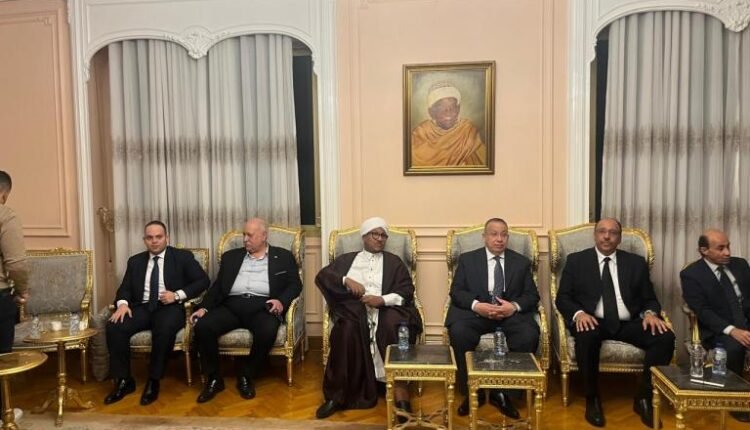
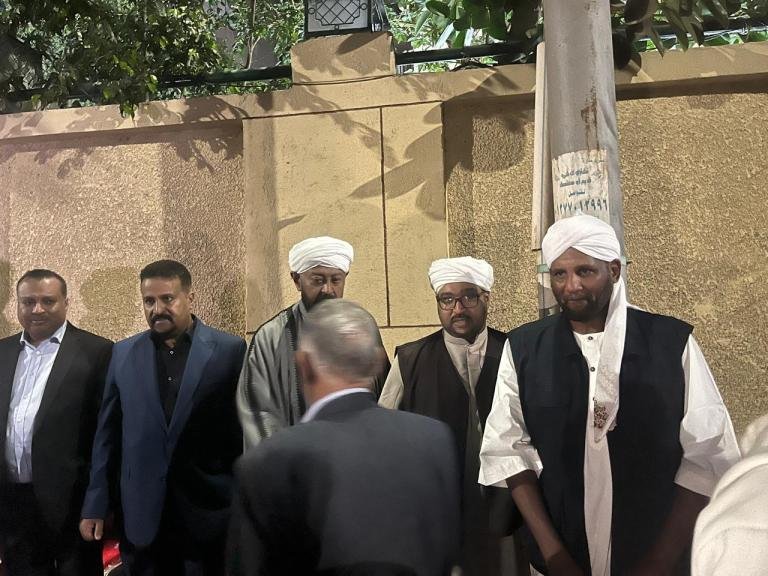
“Villa Tayyiba,” located in the Heliopolis (Masr al-Jadida) district of Cairo, hosted a condolence ceremony yesterday evening (Sunday) for the leader of the Democratic Unionist Party (Original) and spiritual guide of the Khatmiyya Sufi order, Mawlana Mohamed Osman Al-Mirghani. The event drew a wide array of attendees, a testament to his significant political, spiritual, and social standing, as well as the breadth of his connections both within Sudan and abroad.
A Broad Spectrum:
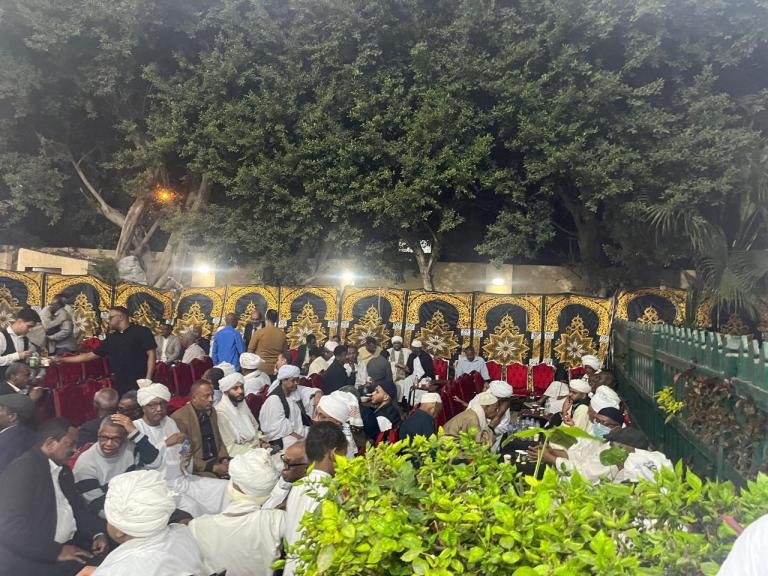
The ceremony saw a notable presence from across the entire spectrum of Sudanese politics, alongside leaders of traditional native administrations, prominent religious and public figures, and Egyptian officials—including representatives from the Ministry of Foreign Affairs, led by the Assistant Foreign Minister for Sudanese Affairs. Also in attendance were numerous Arab and foreign ambassadors. The gathering brought together individuals of diverse backgrounds and orientations, all united in their sorrow over Al-Mirghani’s passing. This was more than a mere formal expression of condolences or a farewell to a political leader and religious guide; it served as a reflection of deeply human stories and relationships spanning decades—bonds that had connected the late leader to generations of Sudanese people from all walks of life and every station. Amidst the tears of those who held him dear and the sharing of cherished memories, it became clear that every person present carried a unique story or an unforgettable moment involving Al-Mirghani. The farewell transcended the boundaries of politics, party affiliation, or religious order, revealing the profound human impact he left upon so many.
Villa Tayyiba:
Villa Tayyiba—a place whose doors had remained wide open to visitors and delegations for years—welcomed those coming to bid farewell to Al-Mirghani. Four of his sons, with Ja’far al-Sadiq al-Mirghani among them, stood to receive condolences for their late father. The villa’s salon—where *Mawlana* (Al-Mirghani) would typically sit at the head of the room to welcome his guests—was filled with people who had come to pay their respects and reflect on the years of his presence, his stances, and the memories shared with him. His time at the villa was more than just a residence; it was a hub for fostering connections and hosting visitors. Consequently, Villa Tayyiba became an essential stop for any Sudanese official visiting Cairo, as well as a meeting point for political and social leaders and prominent Sudanese public figures.
Today, the man who occupied that seat is gone, and the face so familiar to those who frequented the villa is no longer there. Yet, his memory remains vivid in the hearts of those who loved him. The salon, which once hosted his many encounters, continues to resonate with his legacy—even though it is now empty of the man with whom the place had been so deeply intertwined for all these years.
Farewell to an Era:
That night, the villa seemed to be bidding farewell to an entire chapter of its history—turning the page on the life of a leader who had lived among the people, leaving an indelible mark upon both the place and the hearts of those who knew him. After years of gatherings, receptions, and dialogues, the final departure arrived; at seven o’clock on Monday morning, the remains of Al-Mirghani left Cairo, bound for Khartoum. He was to be laid to rest at the Sayyid Ali Al-Mirghani Mosque—beside his father and brother—in the soil of Sudan, a land to which he was bound by name, life’s journey, and deep-seated devotion.
A Great Loss:
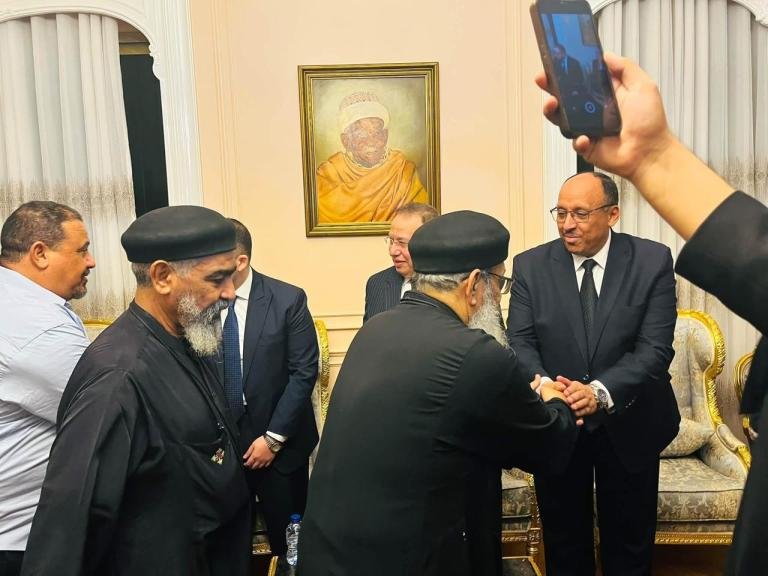
Against the backdrop of a scene that brought together Sudanese people of all backgrounds, Hatem Al-Sir—a prominent leader in the Democratic Unionist Party (Original)—told Sudanhorizon that the passing of Al-Mirghani, at such a critical juncture for the country, represents a profound loss. He described Al-Mirghani as a voice of wisdom and moderation, a man of vast experience and a distinguished national record spanning the period from Sudan’s independence to the present day. Al-Sir emphasized that, throughout his life, Al-Mirghani never wavered from his nationalistic stance, remaining steadfast in his commitment to Sudan’s unity, democracy, freedom, and civilian rule. He noted that Al-Mirghani was widely recognized in Sudan as a man of peace and reconciliation—passing away at a time when the country is in dire need of both. Al-Sir added that the initial funeral gathering in Cairo embodied the diversity of the Sudanese people, with representatives from across the political, social, cultural, athletic, and religious spectrums in attendance. He suggested that this gathering serves as a model for what Sudan needs to overcome its current crisis: national consensus, agreement, and inclusive dialogue. He further asserted that such dialogue is the only safe path forward for the nation. While acknowledging the magnitude of the loss, Al-Sir expressed hope that Al-Mirghani’s passing would inspire his successors to follow in his footsteps, uphold his legacy, and remain committed to his principles of reconciliation and accord. He stressed the importance of embracing the vision of Sudan as a shared homeland for all its citizens—transcending regional, partisan, or tribal divisions—and affirmed that what truly unites the Sudanese people is their shared belonging to one nation.
Arrangements for Succession:
Regarding the period ahead, Al-Sir expressed his hope that it would be a phase of consensus and dialogue—one that leads to safety and peace, while preserving the unity of the land and its people—principles that Al-Mirghani never compromised. He noted that the responsibility of the Unionists has grown even bigger following the loss of their leader, who had consistently worked to unify the party’s ranks. He explained that the matter of succession has been left to the leader’s family and children, as it is an internal affair of the Al-Mirghani household. He anticipates that they will soon make a statement to reassure the party’s supporters and followers. He added that it is the wish of the Unionists, the Khatmiyya order, and a broad spectrum of the Sudanese public that the leadership should continue to come from within this family, which has borne this responsibility for many years. The goal is to select the right individual—someone capable of continuing the journey and fulfilling the mission their father carried out. Expressing his confidence in Al-Mirghani’s six sons, he described them as qualified and patriotic, stating that any one of them—provided there is consensus—would be capable of filling the significant void left by their father’s passing and continuing the path in the proper manner.
An Eventful Life:
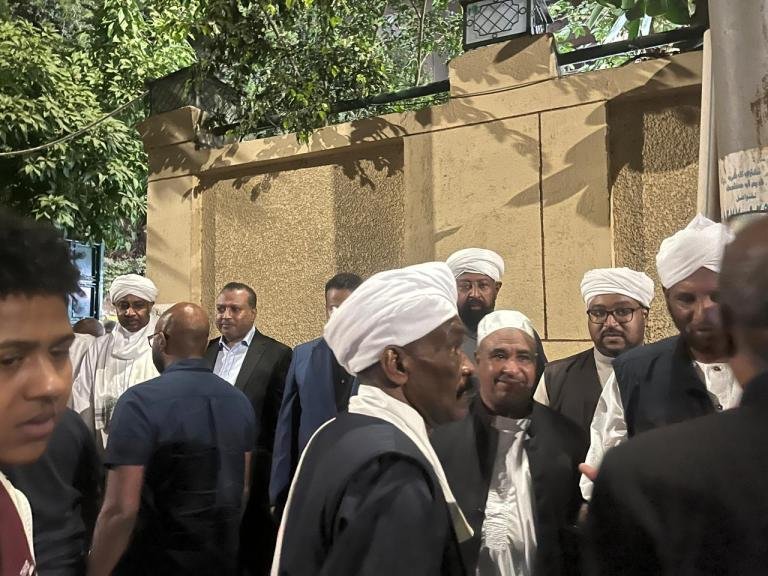
For his part, Abd al-Rahman al-Sadiq al-Mahdi—Deputy Chairman of the -Majlis al-Hal wa al-‘Aqd- (Council of Resolution and Contract) within the Ansar Affairs Authority—told Sudanhorizon that al-Mirghani has passed away following a life rich with noble achievements and a dedicated struggle for civil governance, -shura- (consultation), the empowerment of Islam, civil society, and democracy in Sudan. He added that al-Mirghani was truly a man of a gentle and accommodating nature—someone who fostered harmony and was easily befriended by others. He prayed that God might weigh these deeds in his favor and grant him the best of rewards. He further emphasized that the Sudanese people, regardless of their diverse ideologies or backgrounds, all attest to al-Mirghani’s goodness and the blessings he brought, expressing his hope that peace and consensus would soon be achieved in Sudan.
A profound loss:
For his part, Moataz Al-Fahl, Political Secretary of the Democratic Unionist Party, described the passing of Al-Mirghani as a profound loss for the Sudanese, Arab, Islamic, and African nations. He noted that Al-Mirghani was a symbol of sovereignty, generosity, nobility, sincerity, and dedication. His absence marks a pivotal turning point in the Sudanese political landscape, especially given the current phase the country is enduring. Al-Fahl told Sudanhorizon that Sudan is facing a devastating war, and that Al-Mirghani was a leader in his patriotic stances—steadfast in his commitment to the nation’s sovereignty and unity, and in his support for the armed forces. He also served as a model of dedication, humility, and openness to opposing views, even when doing so came at the expense of his own political position.
Al-Fahl recalled that Al-Mirghani survived an assassination attempt in 1988, following his agreement with the late leader of the Sudan People’s Liberation Movement, John Garang. He remarked that Al-Mirghani’s presence had provided a sense of reassurance and security, and that his passing raises concerns about the period ahead. Nevertheless, he expressed confidence and hope that the Sudanese people would realize Al-Mirghani’s aspirations for peace, security, and consensus. He added that the scene at the funeral in Cairo reflected the unity of the Sudanese people across their various political, religious, and ethnic backgrounds; those in attendance did not merely offer condolences, but also provided mutual comfort to one another.
Al-Fahl pointed out that the true challenge lies in upholding Al-Mirghani’s path and approach—preserving national unity, strengthening relations with Egypt and the Nile Valley, and maintaining the unity of Sudan, which stands as a cornerstone of his national legacy.
Premature:
Regarding arrangements for the coming phase, Al-Fahl stated that it is still too early to discuss the internal reorganization of the Mirghani family. He emphasized that the family follows established rules and traditions, and that there is a clear consensus among the Mirghani sons regarding the general direction and management of family affairs. He noted that four of the sons—Ja’far, Muhammad, Abdullah, and Ahmad—were present to receive condolences, while Hassan and Ali remained in contact with their brothers from the United States, unable to attend due to travel constraints; he added that they would join the others soon to address their personal arrangements. He stressed that there is consensus within the Mirghani family on public, political, and national issues, affirming, “We stand for the sovereignty and unity of Sudan and for the Sudanese Armed Forces”—a principle rooted in the legacy of their great-grandfather, Ali al-Mirghani. He underscored that public service is not a matter of inheritance, and that the Mirghani sons will collectively agree on who among them should take the lead. Pointing out that the nature and diverse composition of the Democratic Unionist Party (DUP) allow for a plurality of opinions, he expressed optimism that no significant conflicts would arise in this regard.
An Honorable Legacy:
Meanwhile, Mahmoud Al-Sharif, the head of the Syndicate of the Descendants of the Prophet (Naqib al-Ashraf) in Egypt, extended his condolences to the government and people of Sudan, as well as to the entire Arab and Islamic world. Speaking to “Sudanhorizon,” Al-Sharif expressed condolences for the loss of a dear, pious, and virtuous man—a pillar of the *Ahl al-Bayt* (the Prophet’s family) whom they held in high esteem. He extended his sympathies to the family, followers, and admirers of Al-Mirghani, noting that the late leader leaves behind an exemplary legacy defined by the noble character of the Prophet. He prayed that God might grant him mercy, forgiveness, and a place in the highest reaches of Paradise, in the company of the beloved Prophet.
Unity of the Ranks:
As Al-Mirghani departed Cairo for his final resting place in Sudan, the scene at the “Tayba” villa—where condolences were received—served as a testament to a stature that transcended the boundaries of any single political party or *tariqa* (Sufi order). His political, spiritual, and humanitarian legacy now places a profound responsibility upon his successors and followers: to preserve the unity of the ranks and to continue the pursuit of the peace, reconciliation, and national unity for which he had long advocated.
Shortlink: https://sudanhorizon.com/?p=20283