

Former Egyptian Minister: Ethiopia Must Properly Manage GERD Instead of Urging Us to Conserve Water
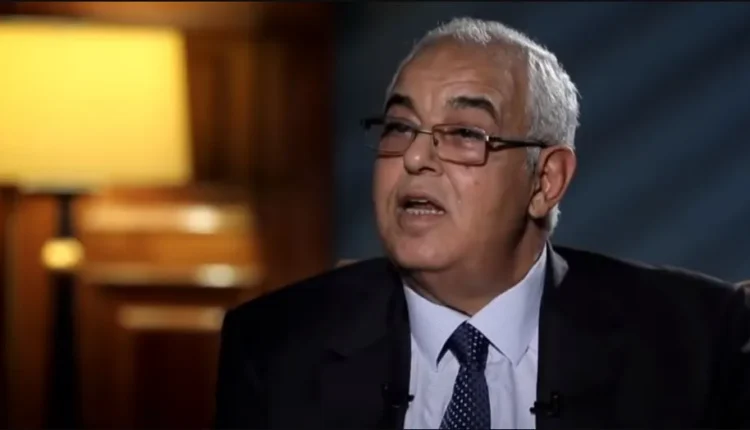
Cairo – Sudanhorizon – Sabah Musa
Former Egyptian Minister of Water Resources and Irrigation Dr Mohamed Nasr El-Din Allam has affirmed that any Ethiopian retention of Nile waters means a reduction in the water shares of Egypt and Sudan. He stressed that Ethiopia’s unilateral actions in managing the Grand Ethiopian Renaissance Dam (GERD), coupled with its failure to exchange information with the two downstream countries, pose serious risks to water use in both countries.
In an exclusive statement to Sudanhorizon on Sunday, Allam explained that the average annual flow of the Blue Nile before the construction of the GERD ranged between 48 and 50 billion cubic metres, a volume representing a major part of the water shares allocated to Egypt and Sudan. He noted that reducing any portion of these flows necessarily means a deduction from the two countries’ shares.
According to the information available, he said, the Ethiopian dam has retained approximately 74 billion cubic metres of water, in addition to losses estimated at between 5 and 7 billion cubic metres, whether through evaporation or seepage. He considered these losses another deduction from the water allocation, from which neither downstream country benefits, nor does Ethiopia itself.
Allam highlighted the danger of retaining such an enormous volume of water inside the dam, warning against Ethiopia’s unilateral actions. He cited the artificial flooding that inundated parts of Sudan and caused the loss of water that the two downstream countries were unable to store or use.
He added that water in such circumstances loses its value and may even become a source of harm. He compared this to conditions in the Equatorial Plateau countries, where the inability to drain water can turn it into a harmful resource rather than a beneficial one.
He stressed that mismanagement of water can have a significant impact on water use, citing the damage caused to Sudanese land during the flooding and the resulting direct consequences for Egypt. He attributed these impacts to poor management of the Ethiopian dam and the absence of information exchange with the downstream countries.
Responding to statements by Ethiopia’s Minister of Water and Energy urging Egypt to rationalise its domestic water consumption, Allam said Egypt had been implementing water conservation measures, particularly in irrigation and agriculture, since the 1960s.
He explained that land reclamation projects launched by the late President Gamal Abdel Nasser following the construction of the High Dam, including those in Tahrir Directorate in the Western Desert and Nubariya west of the Nile Delta, relied on sprinkler irrigation techniques for crop cultivation. Egypt subsequently introduced drip irrigation for watering vegetables and fruit crops.
He added that Egypt repeatedly reuses irrigation drainage water and treated wastewater for irrigation, either directly or after mixing it with water from irrigation canals. He noted that Egypt’s focus on treating agricultural drainage and sewage water dates back decades, with the aim of maximising the efficiency of water use.
Allam pointed out that Egypt’s annual water allocation stands at 55.5 billion cubic metres, of which no less than 10 billion cubic metres is allocated to drinking water, industry and navigation. Water transport losses range between 2 and 3 billion cubic metres, leaving approximately 42 billion cubic metres annually to irrigate at least 8.5 million feddans.
This means that each feddan receives approximately 5,000 cubic metres annually, in predominantly clay-based agricultural land, reflecting water-use efficiency of no less than 70%, he explained.
He compared this with water-use efficiency levels in Ethiopia and most Nile Basin countries, which range between 30% and 40%, stressing that there is no basis for comparison with Egypt, either in terms of water-use efficiency or the limited availability of renewable water per Egyptian citizen.
Egypt’s annual renewable water availability per capita is less than 500 cubic metres, compared with approximately 1,500 cubic metres in most upstream countries, in addition to the rainfall available to them, he said.
Allam attributed the recent increase in Ethiopian statements on water issues to what he described as efforts to target Egypt, coinciding with major challenges facing the Horn of Africa. He asserted that Ethiopia was using a technical issue for political purposes.
Ethiopian Minister of Water and Energy Habtamu Itefa called on Egypt on Saturday, in statements to the official Ethiopian News Agency, to improve its management of water resources and rationalise consumption. He criticised Cairo’s objections to Ethiopian water projects and urged it to negotiate and cooperate with Nile Basin countries rather than oppose development projects in upstream states.
The Ethiopian minister defended the GERD, claiming that it causes no harm to downstream countries and instead provides benefits to Egypt and Sudan, including regulating water flows, increasing water availability during drought seasons and reducing evaporation losses compared with the Aswan High Dam.
Shortlink: https://sudanhorizon.com/?p=20261