

UNESCO and UNICEF: Noise and Abandonment
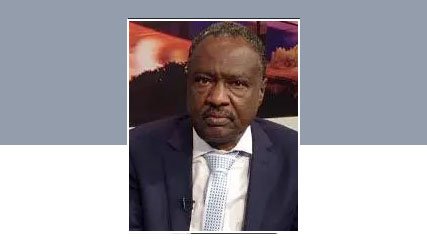
Rashid Abdel Rahim
A year before I began my university studies, I worked as a teacher at Sheikh Mustafa Al-Amin School, may God have mercy on him, in Khartoum’s Arab Market area.
As teachers, we were better than mere subsistence, though far from a life of luxury.
At the time, our breakfast siniya—the large communal tray around which we gathered—was laden with all manner of good food: shiyya, liver, chicken, eggs, dessert and then cold juice, followed by tea.
After meeting the expenses of my profession, I could contribute to the household’s needs and save whatever remained to fund my university studies.
To educate the largest possible number of children, the government of General Abboud introduced what it called “Nomadic Schools”, in which teachers travelled with the tribes as they moved in pursuit of the rainy season—or “fleeing from a wretched tsetse fly”, as the Means of Livelihood in Sudan song put it.
At one point, teachers themselves became objects of sympathy and were held up as examples of hardship. Yet the profession retained its dignity, prestige and respect, and continued to enjoy the appreciation of the entire nation. The teacher remained the teacher.
This made it possible to preserve the quality of education, which did not deteriorate at the same rate as in countries that endured circumstances similar to ours.
Sudanese teachers played an active and significant role in developing education in many countries, including Chad, Yemen, Saudi Arabia, and the Gulf states.
Graduates of Sudanese universities—not only the historic and well-established institutions, but even newer and state universities that opposition parties used to ridicule—have continued to find excellent employment opportunities in many countries, including Europe and the United States.
A Sudanese doctor who qualifies as an intern doctor finds opportunities before him and competes successfully in the Gulf labour market.
These universities have produced many leaders of African and Asian countries.
UNICEF and UNESCO have issued a report on education in the aftermath of the war, stating that eight million children and young people under the age of 18 are outside the school system.
They also report that 10,400 schools are either closed or struggling to operate, while 100 universities and scientific institutions are affected: some are operating at a minimal level, some are completely out of service, and others lack basic necessities.
Yes, the war has created difficulties and complexities. But education has continued wherever circumstances have allowed.
These international organisations that make so much noise and issue so many statements—what have they actually done for education in Sudan during the war?
The billions spent on these two organisations have not reached Sudanese pupils and students in safe areas or in countries abroad. Instead, families and Sudanese expatriates have continued, with remarkable dedication and determination, to shoulder the financial burden of education themselves.
Organisations with far fewer resources than UNESCO and UNICEF can compile statistics.
Sudan seems to receive little from international organisations beyond being used as a vehicle for publicity and cheap propaganda—claims that they are doing this and doing that, so that their standing rises, contributions from donor countries continue to flow, and their dollar salaries and international travel remain secure.
Through the solidarity of the Sudanese people and their children, the number of young people outside education and universities, beyond the reach of the educational system, will decline.
If only international organisations would reduce their statements and multiply their actual work.
Education will return better than it was, now that peace has begun to cast its shadows over our country.
Shortlink: https://sudanhorizon.com/?p=17745