

Double Standards and Multiple Measures: Reflections on Yesterday’s UN Security Council Session on Sudan
Sudanhorizon – Mohammed Osman Adam
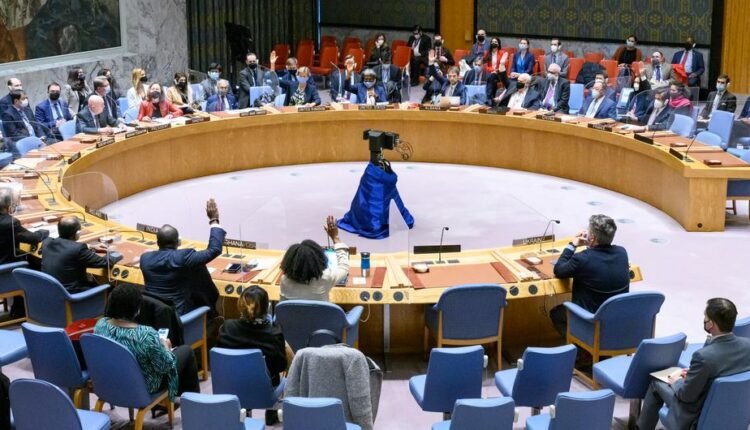
Yesterday’s (Monday) discussion at the United Nations Security Council on Sudan seemed more political than humanitarian or moral. By “political”, I mean a display of geo-economic interests.
It is true, as the speakers said, that more than 33 million Sudanese have been directly affected by the fighting and its consequences, and that the impact is not confined to Sudan but extends to neighbouring countries. Yet the arguments advanced by member states in their statements were not grounded in humanitarian or moral principles, whether they supported or opposed Sudan and its army.
Except Russia, Pakistan, Greece, Saudi Arabia, Egypt and China, the member states did not unequivocally condemn those responsible for genocide, ethnic cleansing or even sexual violence. Experts dispatched by the United Nations system identified these crimes, and they clearly named their perpetrators. Yet, except for a few states, none of the members publicly condemned these practices at such a meeting or declared that these morally abhorrent and legally condemnable acts were among the reasons why they sought additional measures in Sudan beyond those already provided for in UN resolutions issued over many decades—or slightly less. Instead, these states avoided addressing the matter and resorted to referring to “both parties to the conflict” whenever their arguments came under pressure.
This was evident when the representative of the United Kingdom stated that the type and scale of crimes differed between the two parties. The representative chose to mention the crime of kidnapping for ransom, which is committed by only one side. Yet he did not name that side, because it was not the Sudanese army. One can only imagine what the reaction would have been had the Sudanese army been responsible for such crimes and atrocities.
There is another point. Western “democracies” place great, almost unquestioning, faith in the media and regard what it publishes as established fact—indeed, as one of the trusted sources of information and public awareness. Yet the media and press in all the Security Council member states, particularly the five permanent members, have reported and documented allegations that the United Arab Emirates was involved in arming a rebel group and a militia in another country—not even a neighbouring state, but one on another continent. Evidence of arms shipments, mercenaries and financing, as well as political and media support, has been widely reported. Nevertheless, no one mentioned the United Arab Emirates by name or referred to what the author regards as its negative contribution to the suffering of millions of Sudanese.
Imagine if Sudan were the country backing a militia or rebel force attacking the United Arab Emirates. What would the reaction have been, and what measures would have followed?
Most of the interventions, however, followed the same pattern, as though the speakers were copying from one another:
“Therefore, we call on all external actors to fully comply with the relevant Security Council resolutions, including Resolution 2791 of 2025, and to respect Sudan’s sovereignty, unity and territorial integrity by refraining from any interference or armed support that fuels hostilities. Anyone who contributes to prolonging the conflict or violates the UN arms embargo, directly or indirectly, must be held accountable in accordance with international law and relevant Security Council resolutions.”
Yet no names are mentioned in such a situation. As the saying goes: “Call a spade a spade.” Things should be called by their proper names.
One positive development, however—and one that undoubtedly serves the geo-economic interests of many states, especially in light of the contrary outcome witnessed in a neighbouring country—was what came close to a consensus, if it did not fully reach one: all speakers rejected the establishment of any parallel structure that could ultimately lead to the division of the country and undermine its sovereignty. They also rejected any parallel executive authority to the government in Khartoum.
Most went further. Egypt, Saudi Arabia, Pakistan, Russia and China, among others, stressed that the Sudanese army remains one of the institutions that must be preserved and one of the essential pillars holding the Sudanese state together as an entity.
What pleased me most throughout the deliberations, however, was the clear impact of Sudanese diplomacy. This was reflected in the interventions of African, Arab and Asian states, which helped blunt the intensity of the attacks and overturned the vessels of those applying double standards.
Shortlink: https://sudanhorizon.com/?p=17358