

In Egypt, Markets Are Opened; in Sudan, Files of Claims Are Opened
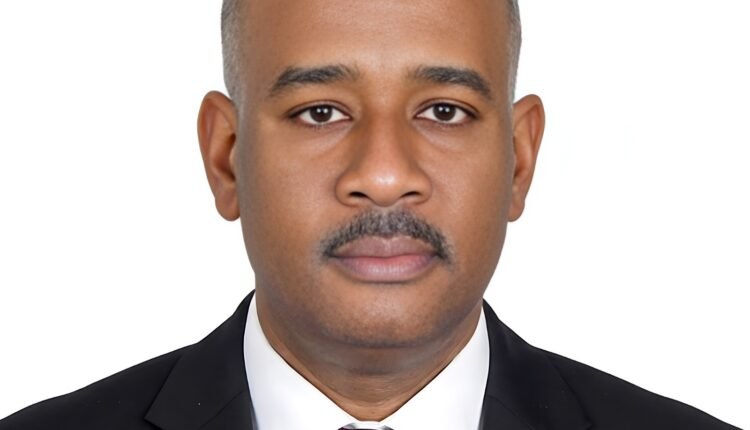
Muhannad Awad Mahmoud
In my previous article, “Egypt Turns Towards Africa Through Economic Diplomacy”, I discussed the positive side of what we witnessed at the El Alamein–Africa Forum. Today, I turn to the painful side of the comparison with Sudan, hoping to offer constructive criticism to help correct policies and ease the private sector’s burdens. Perhaps, if we knock on enough doors, one will eventually open, and our complaints may finally translate into action.
By hosting a forum established by a decision at the African Union Summit, Egypt brought national leaders, ministers, financial institutions, and the private sector around one table. It turned political engagement into an economic opportunity, where investors could meet decision-makers and project owners could meet those able to finance their ventures.
In Sudan, by contrast, many business owners are looking for ways to resume operations, while some institutions are looking for them to recover outstanding payments. There, investors are asked, “How can we help your business?” Here, the question comes before the greeting: “How much do you owe?”
I am not comparing the capabilities of a stable country with those of a country exhausted by war. Rather, I am comparing how the private sector is treated. Businesses expected to create jobs, increase exports and contribute to reconstruction must first regain their ability to produce.
Business owners have lost factories, warehouses and goods. Some have also lost their homes and savings. Financing obtained before the war to operate productive projects has become debt with no source of repayment. Yet business owners are expected to rebuild, purchase goods and repay instalments with capital that seems to have acquired a new name: “barakah”!
Two years after the outbreak of war, the Central Bank of Sudan issued a circular in April 2025 extending repayment periods for certain pre-war financing instalments by eighteen months, effective from October 2024. After all that waiting, the outcome was essentially that banks, too, should wait a little longer for their customers!
The banks are suffering, and their customers have been devastated. So the injured party sat waiting for the stricken one, while the policymaker’s only contribution was to distribute patience between them. Patience is a virtue, certainly, but it has never been known to finance a factory or pay an instalment!
What was needed was economic intervention to help banks manage their losses while enabling businesses to obtain financing to resume operations. Merely extending repayment periods leaves the fundamental question unanswered: where is a business owner supposed to find the money to repay a loan when the very project for which it was obtained has been looted or burnt down?
During the avian influenza crisis, when a decision was issued to cull birds belonging to affected companies, the Central Bank of Sudan instructed banks to grant those companies a three-year repayment period. At the time, the country was not experiencing a war on this scale, and business owners had not lost both their income and their property. How, then, could such relief be extended to a poultry crisis but not to a catastrophe that has struck the entire productive base?
This does not mean banks and depositors’ rights should be disregarded. But recovering those rights requires customers who are capable of producing and repaying their debts. Nevertheless, banks have continued to put pressure on customers and threaten to liquidate their assets, as though whatever survived the war must now be prevented from surviving debt-recovery procedures!
So why not sell the assets, allow the banks to recover their dues, and transfer whatever remains to business owners in the diaspora? They could deposit it in banks and live in peace and tranquillity. After years of production, employment and exports, they have discovered that depositing money is less arduous than putting it to work in their own country.
Meanwhile, Sudan continues with its extraordinary programme of replacing business owners: experienced entrepreneurs with capital and commercial connections leave, and we wait for replacements to start from scratch—until their turn comes to face the claims. In this way, we settle the debt accounts while liquidating the producers along with them. Then we hold a conference to ask: why has production declined?
On taxation, the Prime Minister announced during his visit to Sajjana Market in May 2026 that traders would be exempt from Zakat, taxes, and standards-related fees for 2023, 2024, and 2025. This is a welcome policy direction, but it requires a clearly defined scope and publicly announced implementation procedures.
Yet those of us in the private sector see that claims for the same years continue to be issued without any reduction. Business owners have every right to know who qualifies for the exemption and how to benefit from it. Exemptions have acquired a life of their own in the news, while claims remain alive at the collection counter: the first reassures the trader, and the second promptly removes that reassurance!
Business profits tax requires profits to be verified and actual losses to be assessed. The war years cannot be treated as periods of prosperity. A business owner whose goods have been burnt needs a fair examination of the accounts, not a demand to extract profits from the ashes. No matter how hard an accountant tries, ashes cannot be turned into an income statement!
As for levies, the Prime Minister directed that no new fees or taxes should be imposed at border crossings and rejected unregulated collection. But the value of such a directive becomes apparent when a lorry passes through a checkpoint, not when the news bulletin reports the announcement.
In previous articles, I have discussed the impact of fees, transport costs and financing costs on exports of sesame, groundnuts and gum arabic. These burdens accumulate until a commodity’s cost exceeds what the overseas market can bear. The exporter is then asked why exports have declined. It is as though we load his pockets with stones and then demand that he win the race!
If an indicative price is also imposed that bears little relation to market realities, exporters are expected to persuade buyers to pay more out of respect for an administrative decision. But buyers compare suppliers’ offers, and the global market has no window labelled “Please take account of the difficulties faced by Sudanese exporters”.
More worrying still is the prospect that a fall in the value of the Sudanese pound becomes the only thing temporarily rescuing some deals. Ordinary citizens pay for this opportunity through higher living costs; it is no sound foundation for competitiveness. What is needed is lower production and export costs, so producers can earn returns through efficiency.
On top of their losses, many business owners have shouldered additional social responsibilities: helping relatives, supporting employees’ families, and contributing towards housing, healthcare and education. This spirit of mutual support has helped many Sudanese in Egypt, Oman, Saudi Arabia and elsewhere maintain a measure of stability and dignity. Such support has strengthened society’s resilience and should be recognised as part of the recovery effort.
We understand that the state faces the costs of war and enormous financial pressure. But depleting the productive base only compounds the problem. Revenue collected today at the expense of a business closing its doors may cost the state jobs, exports and revenue for years to come.
We therefore need a debt-resolution framework that links repayment to the resumption of business activity; support for banks that enables them to finance restarting operations; a definitive resolution of tax and fee exemptions for the war years, followed by their implementation; and an effective halt to unlawful levies.
We also need a forum that brings together the government, the Central Bank, commercial banks, and business owners, with clear decisions and implementation deadlines. The files are already full of meeting minutes, while factories continue to wait for electricity and capital.
At El Alamein, a businessperson sat beside someone who could help open a new market for them. In Sudan, we hope businesspeople find someone beside them who can help them reopen their factory, company, or office.
Shortlink: https://sudanhorizon.com/?p=18845